
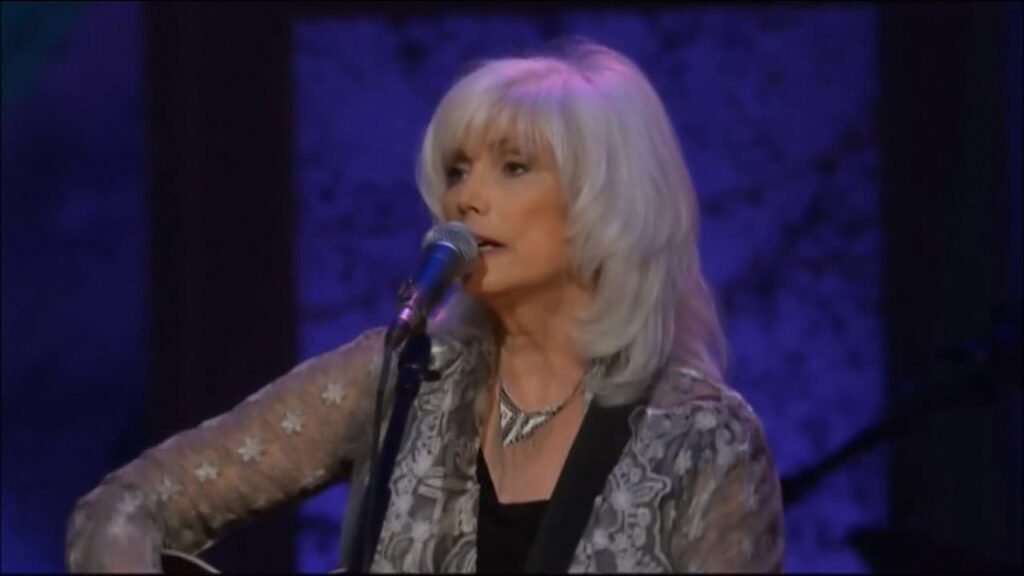
A Quiet Acceptance of Fate and Faith, Sung With Grace and Memory
When Emmylou Harris stepped onto the stage of the Ryman Auditorium in 2017 to sing “Guess Things Happen That Way”, she was not simply revisiting a country standard. She was opening a long, reflective conversation between past and present, between loss and acceptance, and between the roots of American country music and a voice that has spent decades preserving its soul. The song itself carries a deep history, and Harris’s interpretation at the Ryman felt less like a performance and more like a gentle reckoning with time.
“Guess Things Happen That Way” was written by Jack Clement, one of the most influential architects of early country and rockabilly music. It was first recorded and released by Johnny Cash in 1958 on Sun Records, at a time when Cash was redefining what emotional honesty could sound like in popular music. The song reached No. 1 on the Billboard Hot Country and Western chart and crossed over to No. 11 on the Billboard Hot 100, a notable achievement for a sparse, somber ballad built on resignation rather than bravado. Even in its initial success, the song stood apart. It was quiet. It did not plead. It did not accuse. It simply accepted.
The narrative of the song is deceptively simple. A man watches the woman he loves walk away, possibly with someone else, and he offers no resistance. Instead, he repeats the line that gives the song its title, not as a slogan but as a coping mechanism. This is not bitterness turned inward. It is sorrow acknowledged without theatrics. In the late 1950s, when country music was often filled with dramatic heartbreak and moral absolutes, Johnny Cash delivered something more human. The pain was still there, but so was humility.
That emotional restraint is precisely what made the song a natural fit for Emmylou Harris. Throughout her career, Harris has gravitated toward material that values emotional truth over spectacle. By 2017, her voice had changed. The youthful clarity of her early recordings had given way to something deeper, weathered, and profoundly expressive. At the Ryman Auditorium, often referred to as the Mother Church of Country Music, that voice carried the weight of lived experience. Each line sounded like it had been considered, tested, and finally accepted.
Harris did not attempt to reinterpret the song radically. She honored its structure and spirit. What changed was perspective. Sung by a woman who has navigated decades of love, loss, collaboration, and survival in the music industry, the song’s meaning subtly shifted. It no longer sounded like the immediate aftermath of heartbreak. It sounded like memory. The kind that returns quietly, without warning, and settles in the room with you.
The Ryman itself played an unspoken role in the performance. Its history is inseparable from the evolution of country music. Performing “Guess Things Happen That Way” there placed Harris in a direct lineage with the artists who first gave the genre its emotional vocabulary. The song’s themes of acceptance, faith in time, and the limits of human control resonated deeply in that space. There was no need to explain them. They were already understood.
What makes this song endure, and why Harris’s performance felt so affecting, is its refusal to offer easy answers. The title phrase is not comforting. It is simply realistic. Life does not always provide closure. Love does not always reward patience. Sometimes all that remains is the decision to keep going without rewriting the past. That idea, delivered without bitterness or sentimentality, is rare in popular music.
In singing “Guess Things Happen That Way”, Emmylou Harris was not looking backward in nostalgia alone. She was affirming the quiet strength of songs that trust the listener to feel without being instructed. In an age of constant noise, that restraint feels almost radical. The performance reminded us that some songs do not age because they were never tied to their moment. They wait. And when the right voice finds them again, they speak as clearly as ever.