
A Quiet Reckoning With Love, Time, and What Remains When a Heart Looks Back
In the long and carefully tended career of Emmylou Harris, there are songs that announce themselves with harmony and grace, and others that arrive almost unnoticed, like a private thought spoken aloud. When I Was Yours belongs firmly to the latter category. First performed publicly during the Austin City Limits Songwriter’s Special in 1986, the song later appeared on her album Thirteen, released the same year. It was not issued as a commercial single and therefore did not enter the Billboard singles charts, yet its absence from the rankings only deepens its mystique. This was never a song designed for airplay dominance. It was written to linger, to be discovered slowly, and to speak most clearly to those who had lived long enough to understand what it was saying.
By 1986, Emmylou Harris was no longer simply the luminous harmony singer who had emerged alongside Gram Parsons in the early 1970s. She had become an artist defined by taste, restraint, and emotional intelligence. Albums like Pieces of the Sky, Elite Hotel, and Blue Kentucky Girl had already secured her place in American music history. With Thirteen, she made a subtle but meaningful shift. The album felt more introspective, more adult, less concerned with genre boundaries and more invested in emotional truth. When I Was Yours sits at the heart of that transition.
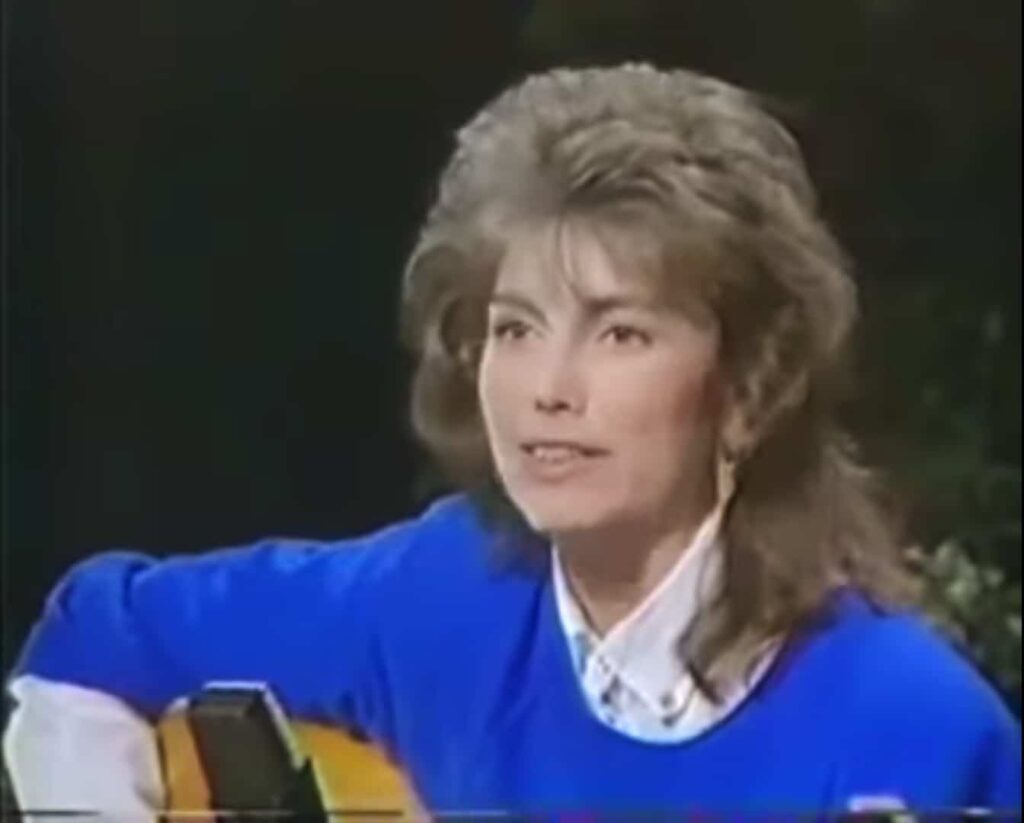
Performed on Austin City Limits, the song appeared without spectacle. No elaborate arrangement. No dramatic build. Just Emmylou Harris, her voice steady but wounded, delivering lines that feel like the quiet aftermath of love rather than its collapse. The television performance is often remembered for its stillness. Harris does not oversell the emotion. She trusts the song. She allows space for the listener to step inside it.
Lyrically, When I Was Yours is a song about belated recognition. It is not about betrayal in the dramatic sense, nor about heartbreak in its rawest phase. Instead, it addresses something more unsettling. The realization that love was not fully seen, not fully valued, until it had already passed. The narrator speaks from a place of distance, looking back at a time when devotion was present but perhaps taken for granted. The pain comes not from anger, but from understanding.
This perspective gives the song its enduring power. It does not ask for sympathy. It does not assign blame. It simply acknowledges regret as a quiet companion that arrives later in life, often uninvited, often unavoidable. For listeners who have known long relationships, marriages weathered by time, or loves that ended without proper closure, the song feels less like a story and more like a mirror.
Musically, the arrangement is understated, rooted in acoustic textures that allow Harris’s voice to remain front and center. Her singing here is restrained, almost conversational, yet weighted with experience. By this point in her career, her voice had lost some of its youthful brightness, replaced by something richer and more human. That evolution serves the song perfectly. When I Was Yours could not be sung convincingly by a younger voice. It requires time in its grain.
Within Thirteen, the song contributes to an album that feels reflective without being mournful. The title itself suggests a threshold, a point between phases. Harris was approaching forty, an age when perspective sharpens and illusions soften. This context matters. When I Was Yours is not merely a song about a relationship. It is about memory, about how time rearranges emotional priorities, and about the humility that comes with hindsight.
For those who encountered the song during its original broadcast in 1986, or discovered it years later through the album, its impact tends to deepen rather than fade. It is the kind of song that waits patiently, growing more resonant as life adds its own verses. In the vast and varied catalog of Emmylou Harris, When I Was Yours may never be the most famous title, but it remains one of her most truthful moments. A song that understands that some of the most important realizations come only after the door has quietly closed.