
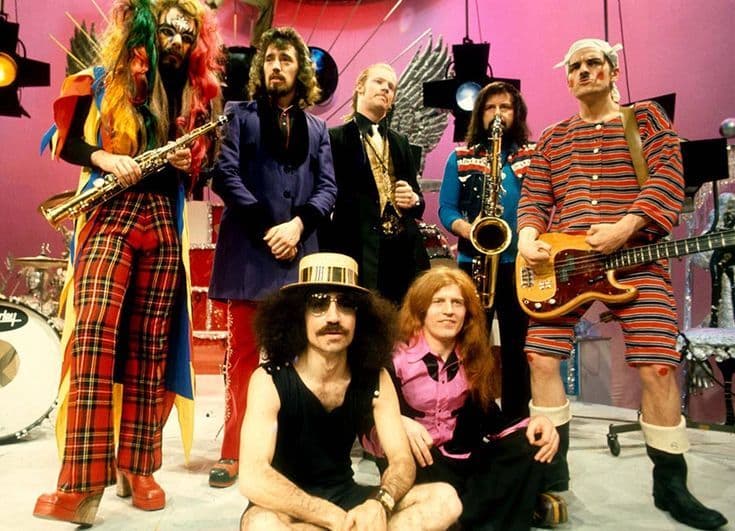
I Wish It Could Be Christmas Everyday — a joyful dream of innocence, warmth, and the Christmas we all remember
From the very first blast of bells, brass, and childlike wonder, “I Wish It Could Be Christmas Everyday” by Wizzard feels less like a song and more like a memory unfolding. Released in December 1973, at the height of the British glam rock era, the song quickly became one of the most enduring Christmas records of all time. Upon its original release, it reached No. 4 on the UK Singles Chart, held back from the top spot only by another seasonal giant of the era. Yet history has been kind — perhaps kinder than the charts ever were — and today the song stands as one of the most beloved and instantly recognizable Christmas anthems in the English-speaking world.
The song was written and produced by Roy Wood, the creative force behind Wizzard, and already a legendary figure thanks to his earlier work with The Move and Electric Light Orchestra. By the early 1970s, Wood had stepped away from the path of polished orchestral rock and embraced something far more playful, extravagant, and emotionally direct. With Wizzard, he built a sound that felt like childhood imagination turned into music — loud, colorful, slightly chaotic, and full of heart.
“I Wish It Could Be Christmas Everyday” was the purest expression of that vision.
At a time when Christmas songs often leaned toward gentle crooning or traditional carols, Wizzard delivered something gloriously excessive. Sleigh bells crash against booming drums, brass sections shout with joy, and a children’s choir lifts the chorus into something almost mythical. It feels like Christmas morning itself — wrapping paper everywhere, laughter echoing through the house, and the sense that time has briefly stopped being cruel.
But beneath the joyful noise lies a surprisingly thoughtful idea. The wish at the center of the song is simple: to freeze a moment when the world feels kinder. Christmas here is not about decorations or gifts; it’s about a shared pause in life. A season when grudges soften, strangers smile, and the weight of the year is set down, even if only briefly. Roy Wood understood that longing deeply, and he gave it a melody big enough to carry it.
The lyrics are uncomplicated, almost naïve — and that is precisely their strength. They speak with the voice of someone who remembers how Christmas felt before adulthood complicated everything. When Wood sings “when the snowman brings the snow,” it’s not meteorology — it’s imagination. It’s the way winter once felt magical rather than inconvenient, when belief mattered more than logic.
Over the decades, the song has returned to the charts many times through re-releases and seasonal airplay, becoming a fixture of December in the UK and beyond. Yet it never feels worn out. Perhaps because it doesn’t belong to a specific year; it belongs to an emotional place. Each time it plays, it quietly invites the listener back to a younger version of themselves — not younger in age, but in spirit.
For those who have lived long enough to see Christmases change — faces missing from the table, traditions softened by time — this song carries a particular resonance. The joy it offers is not loud celebration alone; it is remembrance. It acknowledges, without ever saying it aloud, that the reason we wish Christmas could last forever is because we know it never does.
That is why “I Wish It Could Be Christmas Everyday” endures. It isn’t just festive noise. It is a bright, defiant wish set against the passing of time. A reminder that even as years move forward, the feeling of warmth, wonder, and togetherness can still be summoned — if only for the length of a song.
And when those opening bells ring out once more, something inside us answers instinctively. For a few minutes, the world feels lighter. Kinder. Sheltered. And we find ourselves wishing, once again, that it could be Christmas every day.