
Walk Through the Bottomland — a barefoot journey through love, loss, and the quiet dignity of memory
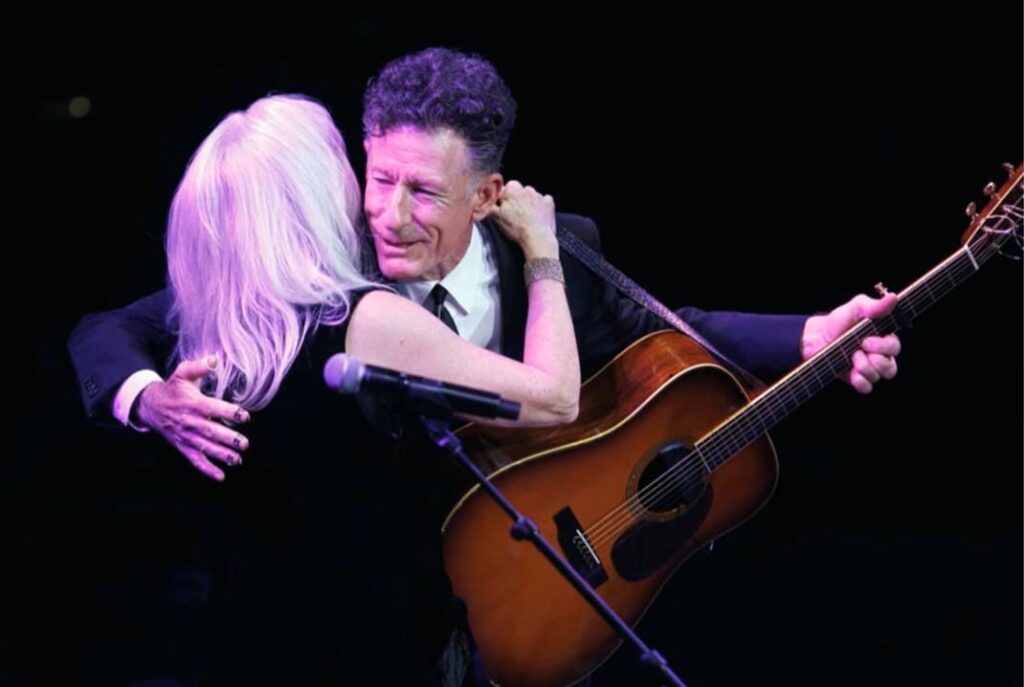
There are songs that announce themselves loudly, and there are songs that arrive like a slow tide, almost unnoticed at first, until you realize your feet are already wet. “Walk Through the Bottomland”, performed by Lyle Lovett with the unmistakable harmony of Emmylou Harris, belongs firmly to the second kind. It is a song that does not seek attention; it earns it, patiently, through storytelling, restraint, and emotional honesty.
Released in 1987 on Lyle Lovett’s album Pontiac, the song emerged during a period when Lovett was quietly reshaping the boundaries of country music. Pontiac was not a commercial spectacle, but it made a significant impact, reaching No. 12 on Billboard’s Top Country Albums chart and introducing a wider audience to Lovett’s literate songwriting and understated delivery. In this context, “Walk Through the Bottomland” stood out as one of the album’s most atmospheric and emotionally resonant pieces, a song that lingered long after the record stopped spinning.
At its heart, this is a story song — one of Lovett’s great strengths. He tells the tale of a New Jersey woman who falls in love with a cowboy, a pairing that already suggests imbalance and inevitability. From the opening verses, there is a sense that this love is genuine but fragile, built on admiration and longing rather than shared ground. The cowboy belongs to the road, to the open spaces, to a life that resists being held. She, on the other hand, offers devotion, patience, and hope — perhaps more than the situation can ever return.
The phrase “walk through the bottomland without no shoes” becomes the song’s emotional core. Bottomland, low and fertile but often flooded, is not an easy place to cross. To do so barefoot is to accept pain, vulnerability, and uncertainty. In Lovett’s hands, it becomes a metaphor for loving without protection, for giving oneself fully even when the ground beneath is unstable. It is a striking image, simple yet profound, one that resonates deeply with anyone who has loved knowing — or slowly realizing — that love alone may not be enough.
What elevates the song further is the presence of Emmylou Harris. Her harmony does not overpower; it hovers, soft and knowing, like a memory that refuses to fade. Harris has long been known for her ability to add emotional gravity to any song she touches, and here she acts almost as a witness — a voice that understands the cost of loving someone who cannot stay. Her harmonies feel less like accompaniment and more like a shared breath, reinforcing the song’s sense of quiet endurance.
Musically, the arrangement is deliberately sparse. Gentle acoustic guitar, subtle steel, and an unhurried tempo allow the narrative to unfold naturally. There is no rush, no dramatic crescendo. The song moves at the pace of reflection, mirroring the way memory works — circling, pausing, returning. Lovett’s voice, calm and conversational, carries the weight of the story without ever dramatizing it. That restraint is precisely what makes the emotion so potent.
As the song progresses toward its conclusion, the story does not resolve in triumph or bitterness. The cowboy dies, the woman is left with memory rather than fulfillment, and yet the song never feels cruel. Instead, it acknowledges a truth many come to understand with time: some loves are not meant to last, but they are meant to matter. Their value lies not in permanence, but in what they leave behind.
For listeners who have lived long enough to look back on love with clear eyes, “Walk Through the Bottomland” feels achingly familiar. It does not romanticize suffering, nor does it dismiss devotion. It simply honors the quiet courage it takes to love deeply, even when the path ahead is uncertain. The song feels like an old photograph — edges softened, details slightly faded, but the emotion still unmistakably present.
In the collaboration between Lyle Lovett and Emmylou Harris, this song becomes more than a track on an album. It becomes a meditation on the human heart — its willingness to walk barefoot through difficult terrain, carrying love like a memory that refuses to be washed away.
 Oldies Songs