
A Voice That Carried Country Music Across Borders and Back Home Again
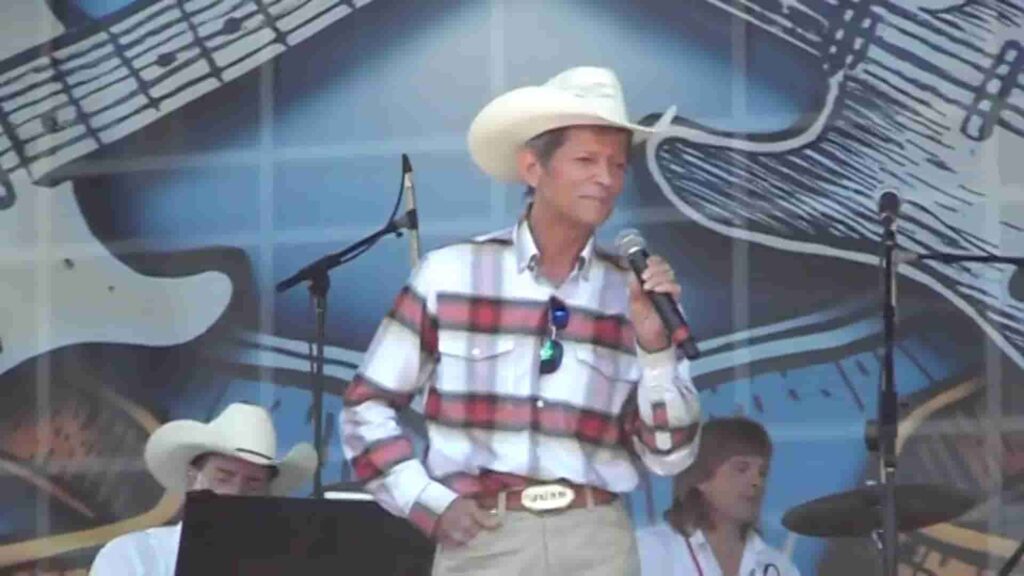
In June 2007, when Johnny Rodriguez stepped onto the Chevy Zone stage at CMA Fan Fair in Nashville, the moment was less about spectacle and more about continuity. This was not a comeback in the dramatic sense, nor a farewell. It was something quieter and more meaningful: a seasoned voice returning to a community that had grown up with it. For those who understood the deeper currents of country music history, Rodriguez’s appearance represented a living bridge between the genre’s traditional roots and its long, complicated journey toward inclusiveness and emotional honesty.
Johnny Rodriguez emerged in the early 1970s as one of the most distinctive voices in country music, both musically and culturally. Born in Texas and raised on a mix of honky-tonk, traditional country, and Spanish-language music, he became the first major Hispanic star in mainstream country. That fact alone made history, but it was the emotional directness of his singing that secured his place. When his debut album Introducing Johnny Rodriguez was released in 1973, it reached No. 1 on the Billboard Top Country Albums chart, an extraordinary achievement for a new artist. The album set the tone for what followed: songs rooted in heartache, regret, longing, and dignity.
His early singles arrived with remarkable force. “Pass Me By (If You’re Only Passing Through)” reached No. 9 on the Billboard Hot Country Singles chart in 1972, signaling that a new voice had entered the room. Then came the run that defined his career. “You Always Come Back (To Hurting Me)” went to No. 1 in 1973. So did “Ridin’ My Thumb to Mexico”, another chart-topper that same year, followed by “That’s the Way Love Goes”, which also reached No. 1. These were not novelty hits. They were carefully written, emotionally restrained songs that trusted silence as much as sound.
By the time Rodriguez appeared at CMA Fan Fair in June 2007, the industry had changed dramatically. Country music had grown louder, more polished, and more commercial. Yet Fan Fair has always been a place where memory matters. Now known as CMA Fest, the event began as a gathering where artists and listeners met on equal ground, sharing stories as much as songs. The Chevy Zone stages in particular were known for their intimate atmosphere, allowing veteran performers to reconnect with audiences who remembered where those songs fit into their own lives.
Rodriguez’s performance at Fan Fair was not about chasing current charts. It was about presence. His voice, weathered but intact, carried the same emotional weight that once pushed his records to the top of the Billboard listings. There is something deeply reassuring about hearing a singer who does not overexplain emotion. Rodriguez always trusted the listener to bring their own experiences to the song. In that way, his music aged gracefully, because it was never tied to trends.
The deeper meaning of Johnny Rodriguez’s work lies in its quiet insistence on universality. His songs spoke of love lost, pride wounded, and hope delayed, themes that resonate more strongly with time. For listeners who had lived through the decades alongside this music, hearing him in 2007 was a reminder that good country songs do not expire. They wait. They gather weight. They become companions.
CMA Fan Fair has always honored that idea. On the Chevy Zone stage, Rodriguez stood not as a relic, but as a reminder of a period when chart success and emotional truth were not separate goals. His legacy is written clearly in the record books, with multiple No. 1 hits and a groundbreaking career. But its real value is found in moments like that June afternoon, when a familiar voice once again filled the air, steady and unhurried, carrying with it decades of memory and meaning.
In the end, Johnny Rodriguez did not need to reinvent himself for the stage in 2007. He simply needed to sing. And that was enough.