
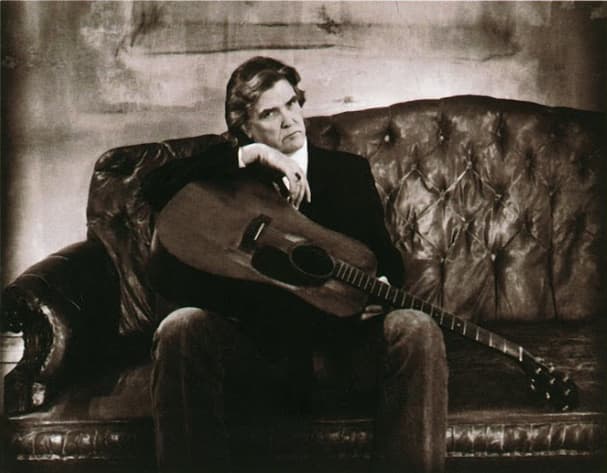
“Hangin’ Your Life on the Wall” — a wry and reflective anthem on aging and the art of not clinging to illusions.
When Guy Clark released Dublin Blues in April 1995, it stood not just as another album in his catalogue but as a testament to the depth and craft of a songwriter who had spent decades refining stories that feel lived-in and true. Dublin Blues appeared on the Asylum Records label and captured the mature voice of an artist who had long exchanged the aspirations of youth for an honest appraisal of life’s twists and turns. The album itself did not produce chart-topping singles in the conventional sense you will not find Hangin’ Your Life on the Wall in the Billboard Hot 100 or Country Singles charts but its warm embrace among listeners of Americana and country storytelling firmly cemented the record’s status as a later-career highlight in Clark’s discography.
From the first lines of “Hangin’ Your Life on the Wall,” Clark and co-writer Verlon Thompson conjure a mosaic of past selves Juanita’s old boyfriend, an ex-bullrider, a young man chasing firetrucks for listeners to sit with. By bringing together these vignettes of youthful bravado and eventual quiet reflection, the song becomes less about lost glory and more about the wisdom that comes when one looks back with affection rather than regret. These snapshots, each delivered with the lyric simplicity that became Clark’s hallmark, function metaphorically: each vignette represents something once worthy of being mounted proudly on the wall, only now revealed to be an artifact of youthful hustle rather than lasting meaning.
On Dublin Blues, “Hangin’ Your Life on the Wall” sits alongside other narrative gems such as “Stuff That Works” and “The Randall Knife” to form a cohesive meditation on memory, consequence, and the tenderness of retrospect. Recorded with sparse yet rich acoustic arrangements and featuring harmony from the legendary folk voice Ramblin’ Jack Elliott whose presence imbues the chorus with a weathered, conversational feel the song feels like a long-remembered story told by an old friend in a living room rather than a performance on a polished stage.
In its chorus, where Clark counsels to “hang on just as long as you can” and then to “shake it off, and go ’round again,” there is both a gentle encouragement and a wry wink at life’s inevitable ebb and flow. The phrase don’t be hangin’ your life on the wall cleverly reframes ambition and success; where once mounting trophies and accolades might have defined one’s worth, it now suggests a simpler existential truth: life is lived in perpetual motion, not in static display.
The beauty of the song is in its ability to balance rueful humor with genuine affection for the imperfect selves we have all inhabited. The jaunty string of memories lost belt buckles, firetruck pursuits, thrown fastballs—reads like a personal scrapbook of follies that ripple into wisdom. For listeners who have sat with their own regrets and triumphs, Clark’s narrative feels intimate and universal at once: we have all carried pieces of ourselves into unlikely places.
Dublin Blues did not seek to conquer charts as a mainstream product. Instead, it claimed its place in the hearts of those who prize lyrical craftsmanship, emotional truth, and the quiet assurance that comes when a songwriter truly understands the human condition. “Hangin’ Your Life on the Wall” may not have been a commercial single hit, but it is emblematic of Guy Clark’s enduring legacy: songs that feel stitched into the fabric of life itself, offering solace, laughter, and reflection with every listening.
For those who remember porch sessions and late-night records by heart, this song resonates like that familiar old guitar in the corner its wear telling stories far richer than any polished new instrument ever could. In Hangin’ Your Life on the Wall, Clark offers not just a song but a gentle reckoning with time and a reminder that the things most worth cherishing are the moments lived, not the medals earned.