
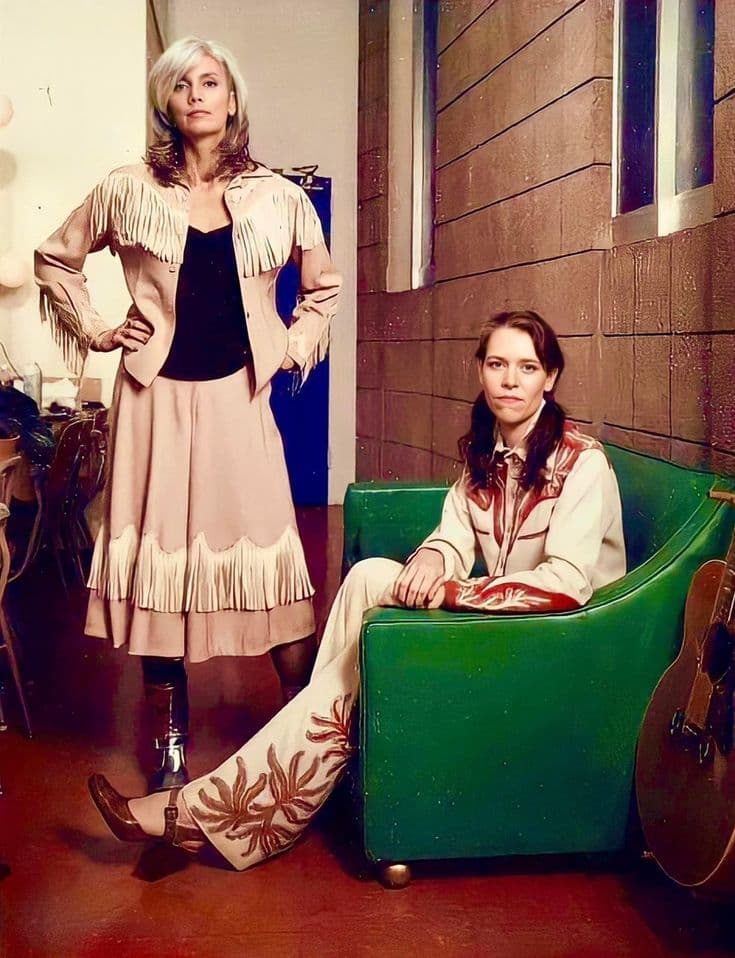
I’ll Fly Away — a humble hymn about leaving sorrow behind and trusting the promise beyond this life
Few songs carry the quiet dignity and spiritual reassurance of “I’ll Fly Away”, and when Gillian Welch sings it, the hymn seems to slow time itself. Her version does not try to modernize or dramatize the song. Instead, it gently opens a door to memory, faith, and the deep human longing for peace after hardship.
Important facts first:
- “I’ll Fly Away” is a traditional gospel hymn written in 1929 by Albert E. Brumley, one of the most enduring composers of American sacred music.
- Gillian Welch recorded the song for the soundtrack album O Brother, Where Art Thou? released in 2000.
- While Welch’s recording was not released as a charting single, the album O Brother, Where Art Thou? (Soundtrack) reached No. 1 on the Billboard 200 and became one of the most successful soundtrack albums of all time.
- The soundtrack also won the Grammy Award for Album of the Year in 2002, bringing renewed attention to traditional folk, gospel, and old-time music.
The story behind “I’ll Fly Away” begins long before Gillian Welch ever sang a note. Written during the hardships of the early twentieth century, the hymn speaks plainly about mortality, suffering, and hope. Its message is simple yet profound: when this life, with all its burdens, comes to an end, the soul will rise — light, free, and unafraid. That promise resonated deeply with generations who lived through poverty, war, and personal loss.
When Gillian Welch recorded the song, she approached it not as a performer seeking attention, but as a caretaker of tradition. Her voice — restrained, clear, and unadorned — carries the humility the song demands. There is no flourish, no attempt to overpower the melody. Instead, Welch allows silence, space, and restraint to do the emotional work. Each line feels like a breath taken slowly, deliberately, as if the singer herself is contemplating the words while singing them.
This approach fits perfectly within the world of O Brother, Where Art Thou?, a film deeply rooted in themes of wandering, redemption, and spiritual longing. In that context, “I’ll Fly Away” becomes more than a hymn — it becomes a quiet companion to lives shaped by dust roads, broken dreams, and unwavering faith. Welch’s interpretation captures the soul of people who carried their beliefs not loudly, but steadily, like a lantern held low in the dark.
What gives this version its lasting power is its honesty. There is no denial of pain here. The song does not pretend life is easy. Instead, it acknowledges weariness — “Some glad morning, when this life is o’er…” — and gently lifts the listener toward the idea of rest. Not escape, but release. Not forgetting, but understanding.
For listeners who have lived long enough to know that joy and sorrow often walk side by side, this song speaks with uncommon clarity. It recalls church pews worn smooth by generations, voices rising together not in performance, but in shared belief. Welch’s voice feels like one among many, blending into a larger memory that stretches far beyond any single lifetime.
In a modern world that often rushes forward, “I’ll Fly Away” invites stillness. It asks the listener to pause, to reflect, and to remember that there is dignity in simplicity and comfort in faith — whether spiritual, emotional, or deeply personal. Gillian Welch does not reinterpret the hymn; she simply honors it, and in doing so, allows its meaning to reach us anew.
This is why her version endures. It is not a song meant to impress. It is a song meant to stay. And long after the final note fades, its promise lingers quietly — like a thought you return to when the night grows long — reminding us that beyond weariness, beyond time itself, there is a gentler place waiting.
 Oldies Songs