
A Gentle Dream of Love and Longing in a Changing America
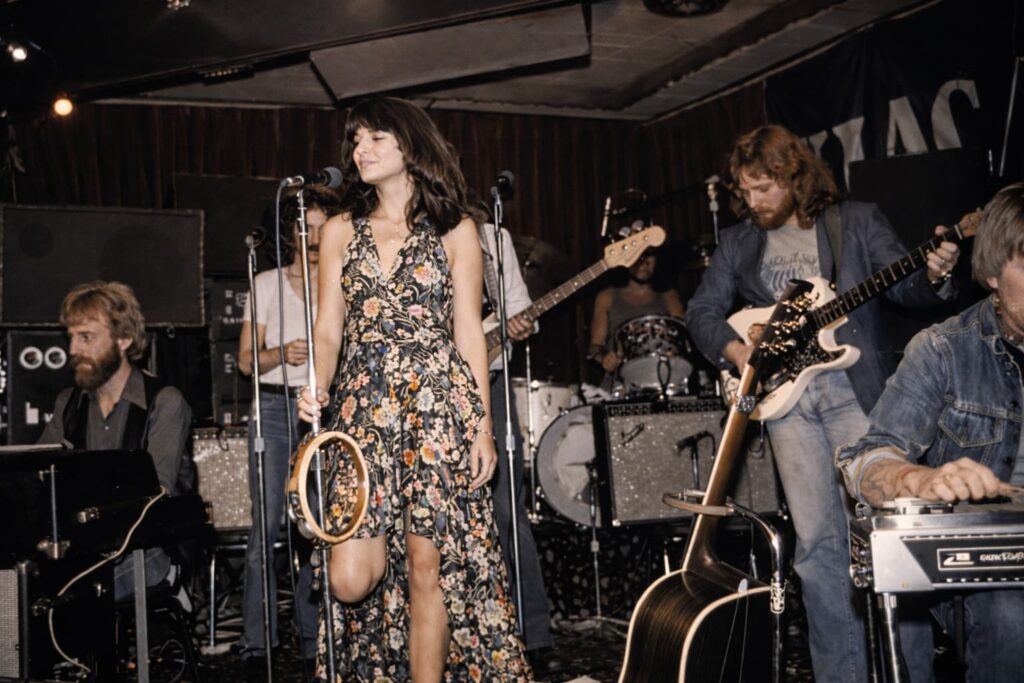
When “An American Dream” was released in late 1979, it arrived like a soft breeze from a quieter decade—carrying with it the warmth of nostalgia and the ache of love remembered. Performed by the Nitty Gritty Dirt Band (often simply called the Dirt Band) and featuring the luminous harmony of Linda Ronstadt, the song became one of the band’s most successful singles. It climbed to No. 13 on the Billboard Hot 100 and reached No. 3 on the Billboard Hot Country Singles chart in early 1980. At a time when pop radio was increasingly shaped by slick production and disco rhythms, this song stood as a tender bridge between country storytelling and adult pop sophistication.
Written by the acclaimed songwriter Rodney Crowell, “An American Dream” was included on the Dirt Band’s 1979 album “An American Dream”. Crowell, known for his sharp pen and emotional candor, was already gaining recognition as one of Nashville’s finest writers. Yet this song feels less like a Nashville product and more like a reflection of a generation coming to terms with what love costs—and what it leaves behind.
The Dirt Band had already established themselves as pioneers of country-rock, especially after their landmark 1972 project “Will the Circle Be Unbroken”, which brought together traditional country legends and younger musicians in a spirit of reverence and renewal. By the time “An American Dream” was recorded, the band had evolved into seasoned storytellers, able to deliver songs with both polish and sincerity. Inviting Linda Ronstadt—whose voice defined the 1970s California sound—was more than a strategic decision; it was an artistic reunion of kindred spirits. Ronstadt had long moved effortlessly between rock, country, and pop, and her voice here does not overpower but rather weaves itself gently into the song’s emotional fabric.
The production of “An American Dream” is subtle and spacious. There are no grand gestures, no dramatic crescendos. Instead, the arrangement unfolds like a memory: acoustic guitar lines shimmer softly, the rhythm section remains restrained, and the harmonies float with an almost wistful restraint. It is precisely this understatement that gives the song its enduring power.
Lyrically, the song tells a story of love shaped by time and change. It speaks of a romance that once felt limitless—an “American dream” of possibility, freedom, and youthful certainty. Yet as the verses unfold, we sense the fragility beneath the ideal. The dream is not shattered in anger; it simply fades under the weight of reality. The phrase itself—“an American dream”—carries layered meaning. On the surface, it evokes hope and promise. But within the song, it hints at the bittersweet truth that not all dreams endure unchanged. Love, like a nation’s mythos, can be both beautiful and imperfect.
There is something particularly poignant about the duet aspect. When Linda Ronstadt enters, her voice brings a reflective tenderness, as if offering a second perspective on the same shared memory. The interplay between male and female voices suggests two people who once stood side by side, now looking back from different emotional distances. It is not a confrontation but a quiet reckoning.
Upon release, the song resonated strongly with audiences who had come of age in the 1960s and 1970s. By 1979, the cultural landscape had shifted dramatically. The optimism of youth had given way to a more complicated adulthood. In that sense, “An American Dream” felt timely—it acknowledged that dreams evolve, that love matures, and that sometimes letting go is itself an act of grace.
Critics praised the song for its melodic clarity and emotional authenticity. While it did not reach the very top of the pop charts, its strong crossover success confirmed the Dirt Band’s ability to navigate between country and mainstream audiences. More importantly, it became one of those songs that lingers quietly in personal memory. It may not thunder from stadium speakers, but it finds a home in the heart.
Listening to “An American Dream” today is like opening a faded photograph album. The colors may be softer now, but the feelings remain vivid. The Dirt Band and Linda Ronstadt captured something fragile and universal: the way we hold onto what once seemed permanent, even as time gently teaches us otherwise.
In the end, the song is less about loss than about acceptance. Dreams may change shape, but they still belong to us. And in that gentle realization, the music continues to glow—quietly, faithfully, like a promise remembered.
 Oldies Songs