
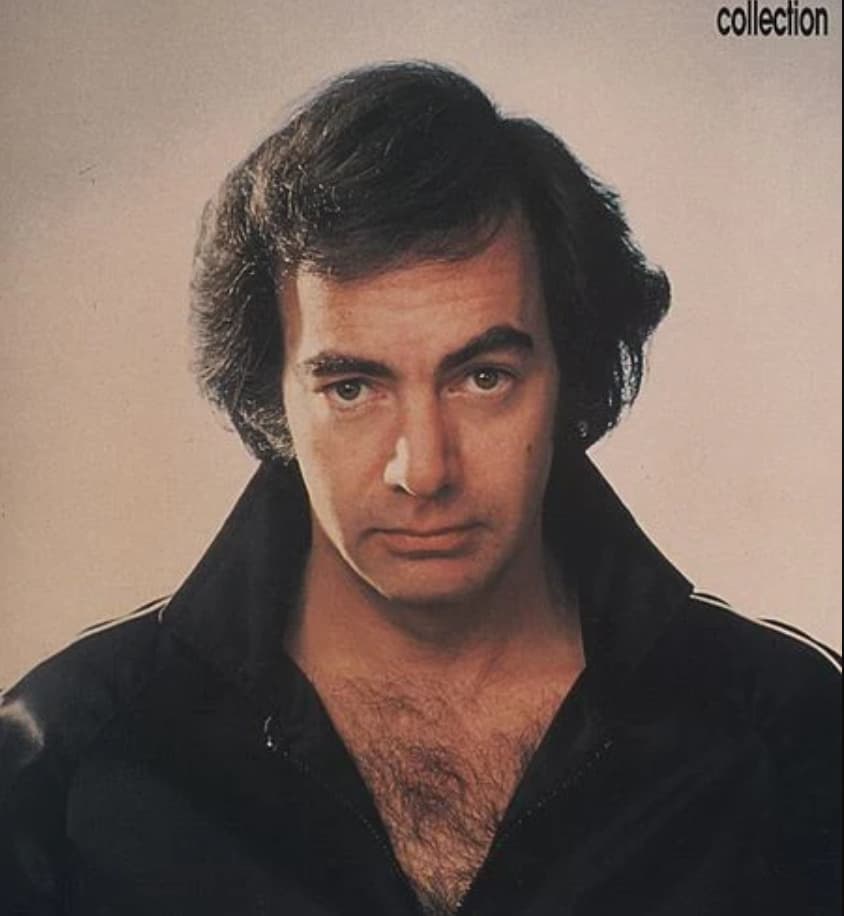
A tender portrait of longing, maturity, and the fragile threshold between youth and adulthood
When “Girl, You’ll Be a Woman Soon” by Neil Diamond was released in 1967, it quietly carried with it a depth of emotional nuance that would outlast many louder hits of its time. Issued as a single and later included on the album Just for You, the song climbed to No. 10 on the Billboard Hot 100, marking one of Diamond’s early breakthroughs as both a performer and a songwriter of remarkable sensitivity. It also reached No. 1 in Canada, further cementing its place in the late-60s pop landscape.
At first listen, the song feels deceptively simple—a young man addressing a girl on the cusp of womanhood. But beneath that surface lies a delicate, almost aching meditation on time, change, and the emotional turbulence of growing up. Neil Diamond, who had already begun to establish himself as a writer capable of introspection, infused the song with a sincerity that feels both personal and universal. This was not merely a pop tune; it was a quiet conversation, a confession whispered rather than declared.
The story behind the song reflects Diamond’s early years navigating the music industry, a period when he was transitioning from songwriter-for-hire to a voice of his own generation. In interviews, Diamond often spoke about capturing moments of emotional truth, and this song stands as a prime example. It was inspired not by a single event, but by a broader observation—the fragile, often misunderstood space between adolescence and adulthood, where feelings are intense but words are still searching for their shape.
Musically, the arrangement is restrained yet purposeful. The gentle rhythm, paired with Diamond’s unmistakable baritone, creates an atmosphere that feels almost suspended in time. There is a subtle tension in the melody, as if mirroring the uncertainty of the narrator himself. Unlike many contemporaneous hits that leaned heavily on exuberance or rebellion, this song leans inward, inviting the listener to reflect rather than react.
Lyrically, “Girl, You’ll Be a Woman Soon” touches on themes that remain timeless. The narrator pleads for understanding, expressing frustration at being judged and a longing to be seen for who he truly is. There is a quiet defiance in lines that suggest the world may not approve of him, but he asks the girl to trust her own feelings. In this way, the song becomes not just about romantic affection, but about identity, acceptance, and the courage to stand by one’s emotions.
What makes the song particularly enduring is its ambiguity. Is it a love song? A coming-of-age reflection? A subtle protest against societal expectations? In truth, it is all of these at once. That layered meaning allows each listener to bring their own memories into the experience, to hear echoes of moments when life felt uncertain yet full of possibility.
Over the decades, the song has found new audiences, most notably through the haunting cover by Urge Overkill in the 1990s, featured in the film Pulp Fiction. Yet even in reinterpretation, the core emotional weight remains intact—a testament to the strength of Diamond’s original composition.
Looking back, Neil Diamond’s recording stands as a gentle reminder of a time when songs were allowed to breathe, when storytelling in music was less about spectacle and more about sincerity. It invites us to pause, to remember the uncertain steps of youth, and to recognize how those moments—so fleeting at the time—become the very foundation of who we are.
In the end, “Girl, You’ll Be a Woman Soon” is not just a song from 1967. It is a quiet companion to memory itself, a melody that lingers long after the final note fades, carrying with it the bittersweet beauty of becoming.
 Oldies Songs