
A Quiet Rebellion in Song: When “Hard to Be an Outlaw” Became a Testament to Time and Truth
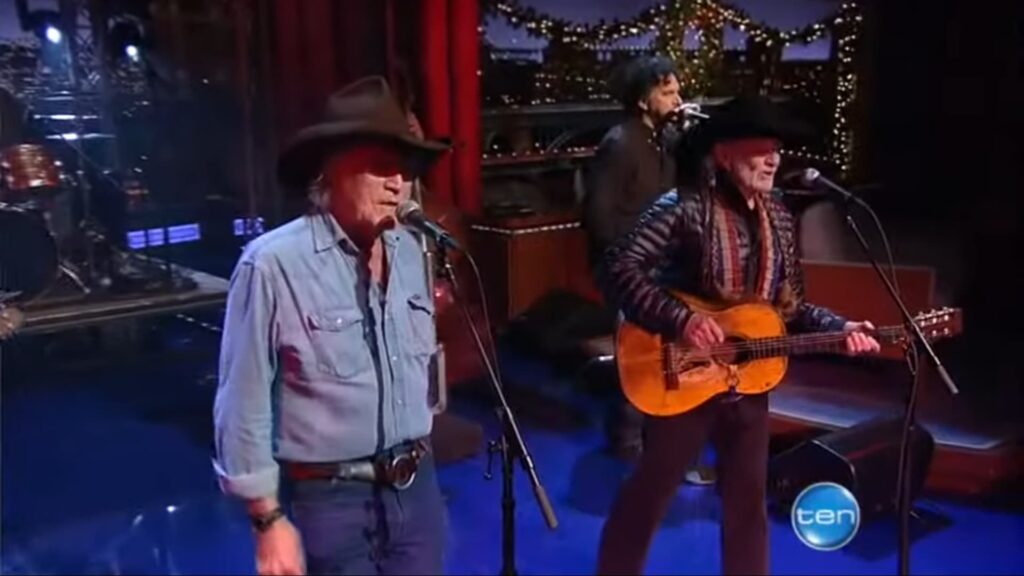
In 2014, two enduring figures of American country music, Willie Nelson and Billy Joe Shaver, shared the stage to perform “Hard to Be an Outlaw”, a song that carried more weight than its title might suggest. The performance coincided with the release of their respective albums, “December Day” and “Long in the Tooth”, both reflective works shaped by decades of life, loss, and loyalty to the roots of country music.
The introduction, lighthearted and almost playful, hinted at something deeper. A quiet understanding passed between audience and performers. This was not just another musical segment. It was a reunion of spirits who had helped define the outlaw country movement, now standing not in defiance, but in reflection.
As the opening lines unfolded, Shaver’s weathered voice led the narrative. The lyrics painted vivid images of restless youth, fleeting pleasures, and the consequences that follow. When Nelson joined in, his unmistakable phring added a layer of calm acceptance, as if the years had softened the edges of rebellion without erasing its memory. The refrain, “it’s hard to be an outlaw,” no longer sounded like a boast. It felt like a confession.
Midway through the performance, the song turned inward. References to changing times and a music industry drifting from its roots echoed with quiet urgency. Lines about “superstars” losing touch carried an authenticity that could not be manufactured. These were not criticisms from the outside, but reflections from men who had lived every word they sang.
The chemistry between Willie Nelson and Billy Joe Shaver was effortless. No grand gestures, no theatrical flourishes. Just two voices, seasoned and sincere, weaving a story that resonated far beyond the stage. Each note felt anchored in lived experience, each pause filled with unspoken history.
By the final chorus, the audience understood. This was not about outlaws in the traditional sense. It was about endurance. About holding on to identity in a world that constantly asks for reinvention. As the applause rose, the moment lingered. Not loud, not dramatic, but deeply human.
In that brief performance, “Hard to Be an Outlaw” became more than a song. It became a reminder that time changes everything, except the truth carried in a voice that has nothing left to prove.