
When the Thrill Fades, the Blues Remains—A Master’s Voice Still Telling the Truth
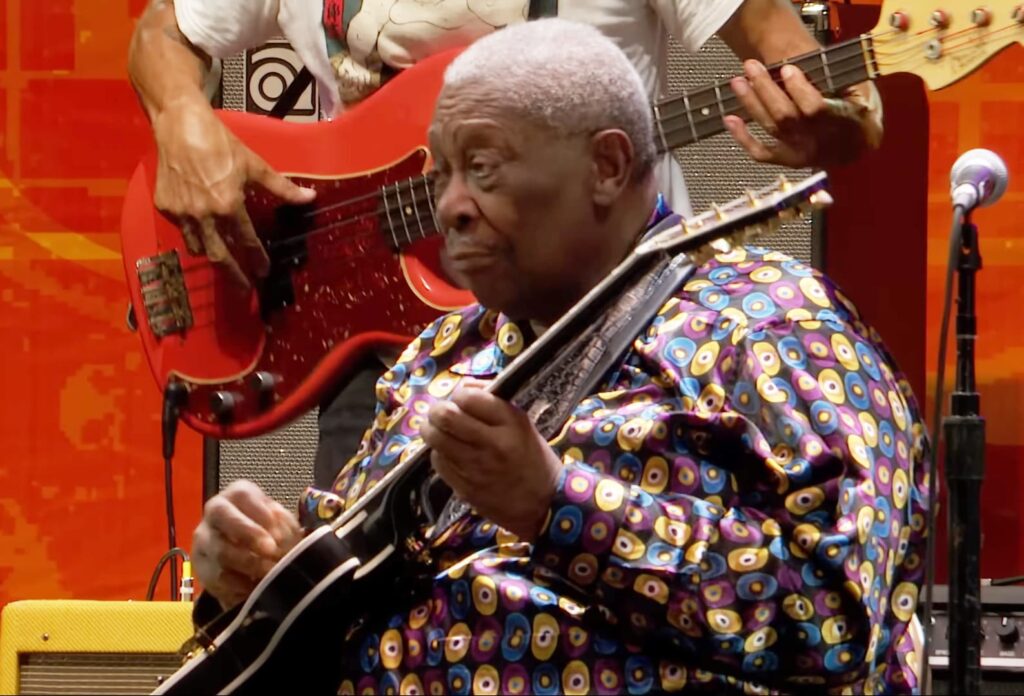
At the 2010 Crossroads Guitar Festival in Chicago, B.B. King took the stage to perform his signature song, “The Thrill Is Gone”, delivering a moment that felt both timeless and quietly final. Surrounded by younger musicians and a roaring crowd, the performance stood as a living bridge between generations of blues.
Originally released in 1969, “The Thrill Is Gone” had long been associated with B.B. King’s ability to turn heartbreak into something elegant, almost dignified. By 2010, however, the song had evolved alongside him. It was no longer just about lost love. It carried the weight of years, of stages played, of a life lived deeply inside the blues.
From the first line, his voice emerges not with force, but with authority. Time had softened its edges, but not its meaning. When he sings, “The thrill is gone,” it no longer feels like a complaint. It feels like acceptance. The phrasing is slower, more deliberate, allowing every word to settle into the silence between notes.
Beside him, his guitar, Lucille, speaks just as clearly. Each note bends and lingers, echoing emotions that words alone cannot hold. There is no need for excess. The simplicity becomes the power. The band follows with restraint, giving space for the conversation between voice and guitar to unfold naturally.
Midway through the performance, B.B. King pauses to acknowledge the musicians around him, his warmth and humility still intact. These small moments, filled with gratitude and quiet humor, remind the audience that beyond the legend stands a man who never lost his connection to the music or the people sharing it with him.
As the song moves toward its closing lines, the meaning shifts once more. “I’m free now, baby,” he sings, not with bitterness, but with a sense of release. It is the kind of freedom that comes not from escape, but from understanding.
Looking back, this performance at the Crossroads stage captures something rare. Not just technical mastery, but emotional clarity. B.B. King does not try to reclaim the past. He honors it, then lets it go.
And in that moment, the thrill may be gone—but the truth of the blues remains, steady and unshaken.