
A Song of Home and Loss, Two Voices Carrying the Memory of a Vanished Place
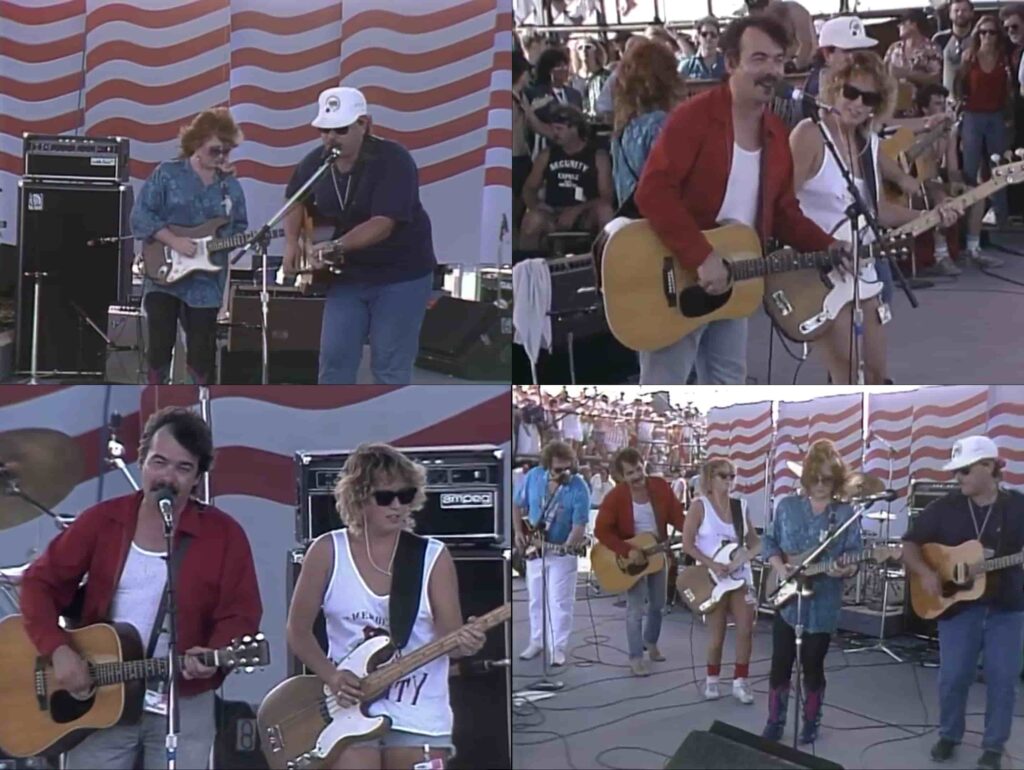
On July 4, 1986, at the Farm Aid in Austin, Texas, John Prine was joined by Bonnie Raitt to perform “Paradise”, a song that has long stood as one of the most poignant reflections on loss, memory, and the cost of progress in American songwriting.
Originally written by John Prine in the early 1970s, “Paradise” tells the story of a childhood landscape slowly erased by industrial change. The imagery of the Green River, the abandoned prison, and the towering presence of coal mining machinery forms a backdrop that feels both deeply personal and universally understood. It is not just a place being remembered. It is a way of life slipping away.
In this 1986 Farm Aid performance, the song takes on an added resonance. The concert itself was rooted in raising awareness for struggling farmers, making “Paradise” feel even more relevant. Themes of land, livelihood, and displacement echo through every line, connecting past and present in a quiet but powerful way.
John Prine’s voice carries the story with his signature plainspoken honesty. There is no embellishment, no attempt to dramatize what is already deeply felt. When he reaches the familiar refrain, “Daddy, won’t you take me back to Muhlenberg County,” it lands with a gentle ache, as if the question has been asked too many times to ever be answered.
Beside him, Bonnie Raitt adds a soulful warmth that deepens the performance. Her voice weaves around Prine’s, not overpowering but complementing, bringing a subtle emotional lift to the chorus. Together, they create a balance between storytelling and feeling, memory and presence.
What makes this rendition especially enduring is its sincerity. There is no distance between the performers and the material. Both artists understand the weight of what they are singing, and they allow that understanding to guide the performance.
Looking back, this moment at Farm Aid stands as more than just a live duet. It is a reminder of how songs like “Paradise” continue to speak across generations.
And as the final notes fade, what lingers is not just the memory of a place, but the quiet realization that once something is gone, it lives on only in the stories we continue to tell.