
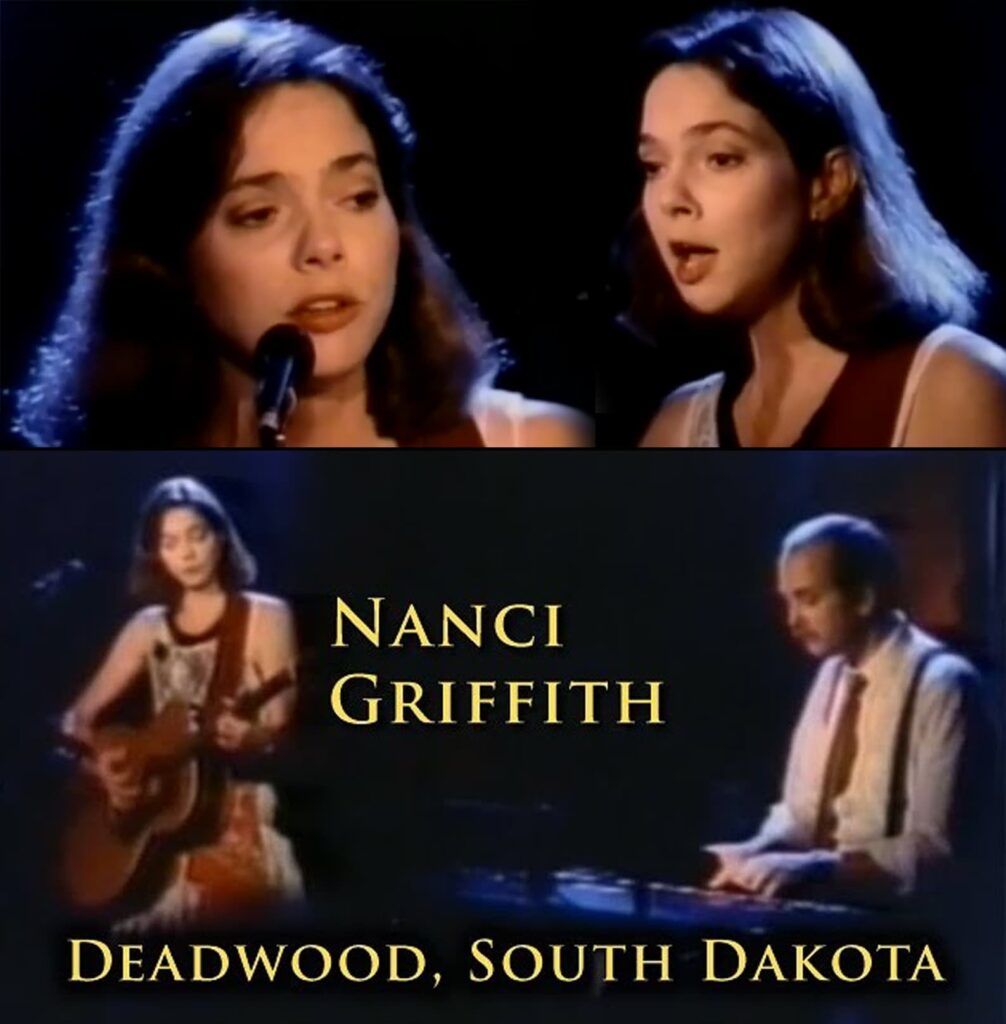
A Saloon Full of Stories, Where History and Memory Blur Into One Haunting Song
Recorded live in August 1988 at the Anderson Fair nightclub in Houston, Texas, “Deadwood, South Dakota” from the album One Fair Summer Evening captures Nanci Griffith at her most evocative. Though written by Eric Taylor, the song becomes something deeply personal in her voice. Not just a story told, but a world quietly unfolding.
From the opening lines, the listener is placed inside a dusty saloon. Young men laughing too loudly, older figures slumped by the door, trading stories that may or may not be true. Nanci Griffith does not rush this scene. She lets it settle, allowing each image to breathe. You can almost hear the floorboards, feel the late afternoon light slipping through.
But beneath that surface lies something more complex. The song moves through fragments of frontier mythology. Names like Mickey Free and California Joe drift in and out, half-legend, half-memory. Then comes the mention of Crazy Horse, delivered almost casually through a newspaper reading. A life reduced to a line of print, absorbed and then forgotten as the room returns to whiskey and conversation.
That contrast is where the song finds its weight. The repeated line about thanking the Lord “for the land that they live in” carries a quiet tension. It is not sung with anger, but with awareness. A recognition that the stories being told are incomplete, shaped by those who remained rather than those who were lost.
In this live performance, Nanci Griffith leans into restraint. Her voice is clear, almost fragile, yet steady. She does not dramatize the narrative. Instead, she trusts it. The simplicity of the arrangement allows the lyrics to carry everything, turning the performance into something closer to storytelling than singing.
The Anderson Fair setting adds to that intimacy. It feels less like a concert and more like a gathering, where history is passed along in voices rather than books. The audience listens closely, drawn into a story that feels both distant and uncomfortably close.
Looking back, “Deadwood, South Dakota” stands as one of those rare songs that does not offer conclusions. It presents moments, perspectives, and leaves the listener to sit with them.
And as the final lines fade, what remains is not just the image of a saloon in the past, but the uneasy understanding that history, once told, depends entirely on who is left to tell it.