
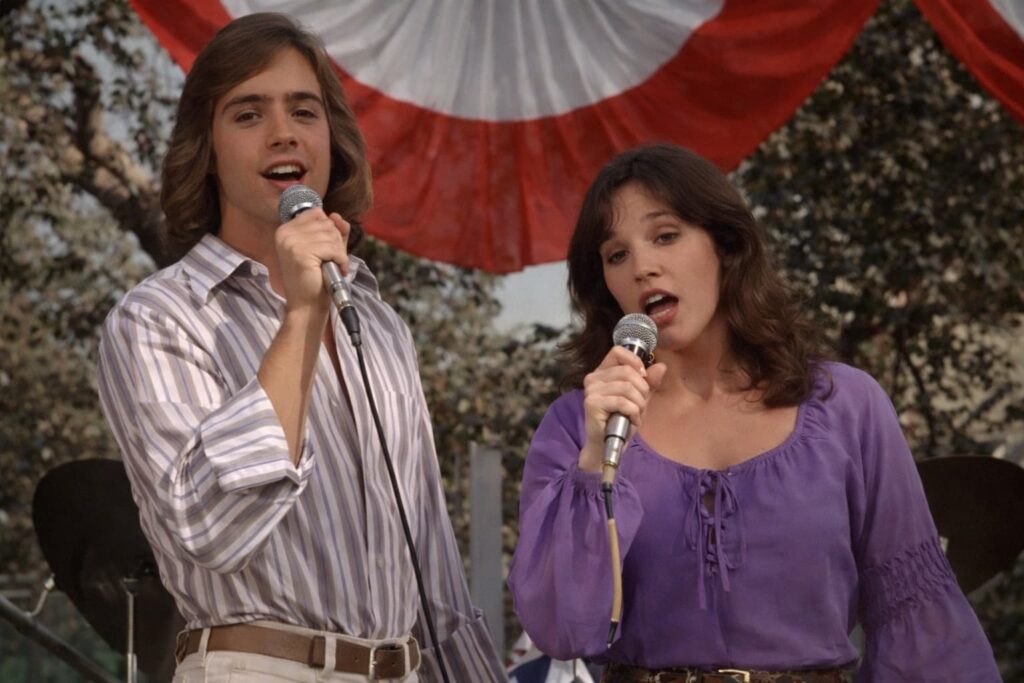
A tender television moment where youthful voices gave quiet depth to heartbreak and the courage to let go
There are certain musical moments that do not arrive through radio charts or gold records, but instead slip gently into memory through the glow of a television screen. One such moment belongs to “Walk Away”, performed by Shaun Cassidy as Joe Hardy alongside his co-star in the beloved series The Hardy Boys/Nancy Drew Mysteries (1977–1979). Though never released as a commercial single, and therefore absent from the Billboard Hot 100 or any official ranking, its emotional resonance has endured far beyond what chart numbers could ever measure.
At the height of his fame in the late 1970s, Shaun Cassidy was more than just a teen idol—he was a familiar face woven into weekly routines, a voice that carried both innocence and quiet longing. The series itself, built on the popular Hardy Boys novels, often blended mystery with moments of reflection, and it was in one such scene that “Walk Away” emerged. Sung as a duet between Joe Hardy and Harriet, the performance is disarmingly simple: no elaborate arrangement, no grand orchestration—just two young voices navigating the fragile terrain of parting and unspoken emotion.
What makes “Walk Away” so memorable is precisely its restraint. Unlike the polished studio recordings of Cassidy’s hit singles like “Da Doo Ron Ron” (which reached No. 1 on the Billboard Hot 100 in 1977) or “Hey Deanie”, this performance feels almost private, as if the audience has been allowed to witness something not meant for the spotlight. It captures that universal, aching moment when affection must yield to circumstance—when walking away becomes an act of quiet strength rather than defeat.
The story behind the performance is closely tied to the nature of television production at the time. Variety and drama shows of the 1970s often incorporated musical interludes, especially when a star possessed musical talent. Producers recognized Cassidy’s appeal not only as an actor but as a singer who could convey vulnerability with remarkable sincerity. Rather than staging a flashy number, they chose a subdued duet that would deepen the emotional texture of the episode. In doing so, they created a scene that felt authentic, almost fragile—something that could easily have been overlooked, yet instead lingered in the hearts of viewers.
Lyrically, “Walk Away” speaks to the bittersweet necessity of letting go. It is not a song of anger or regret, but of quiet acceptance. The characters do not argue; they do not plead. They simply acknowledge that some connections, however meaningful, are not meant to last. This theme, handled with such gentleness, resonates deeply because it mirrors real life far more closely than the dramatic fare often presented in popular music. It reminds us that not every farewell is marked by grand gestures—sometimes, the most profound goodbyes are the softest ones.
For those who experienced this moment during its original broadcast, the memory is inseparable from a particular time and place—a living room, a familiar evening routine, the comforting presence of a show that felt like a weekly companion. Revisiting “Walk Away” today is less about rediscovering a lost song and more about reconnecting with a feeling: the quiet pause between youth and maturity, between holding on and learning to release.
In the broader context of Shaun Cassidy’s career, this performance stands as a reminder that his artistry extended beyond chart success. While the industry often measured achievement in sales and rankings, moments like this reveal a different kind of legacy—one built on sincerity, subtlety, and emotional truth. “Walk Away” may never have climbed the charts, but it found its place somewhere far more enduring: in the quiet corners of memory, where music continues to speak long after the final note has faded.