
Smiling Through the Hurt: When “Everything’s Cool” Means the Opposite
When John Prine introduces “Everything Is Cool,” there’s already a quiet irony hanging in the air. The title sounds easy, reassuring almost throwaway. But with Prine, those simple phrases often carry the heaviest truths.
Written around the time of The Missing Years (1991), the song unfolds like a conversation with oneself after something has quietly fallen apart. A love gone just before Christmas. A man walking alone, staring at his shoes. And yet, the refrain insists: “Everything is cool, everything’s okay.”
That contradiction is the heart of the song.
Prine doesn’t dramatize the pain. He sidesteps it almost humorously. But then come the images: a hundred thousand blackbirds forming a teardrop in the sky, an angel appearing not to fix anything, but simply to ease the weight for a moment. These are not literal events. They feel like emotional reflexes—the mind trying to make sense of loss by turning it into something poetic, something survivable.
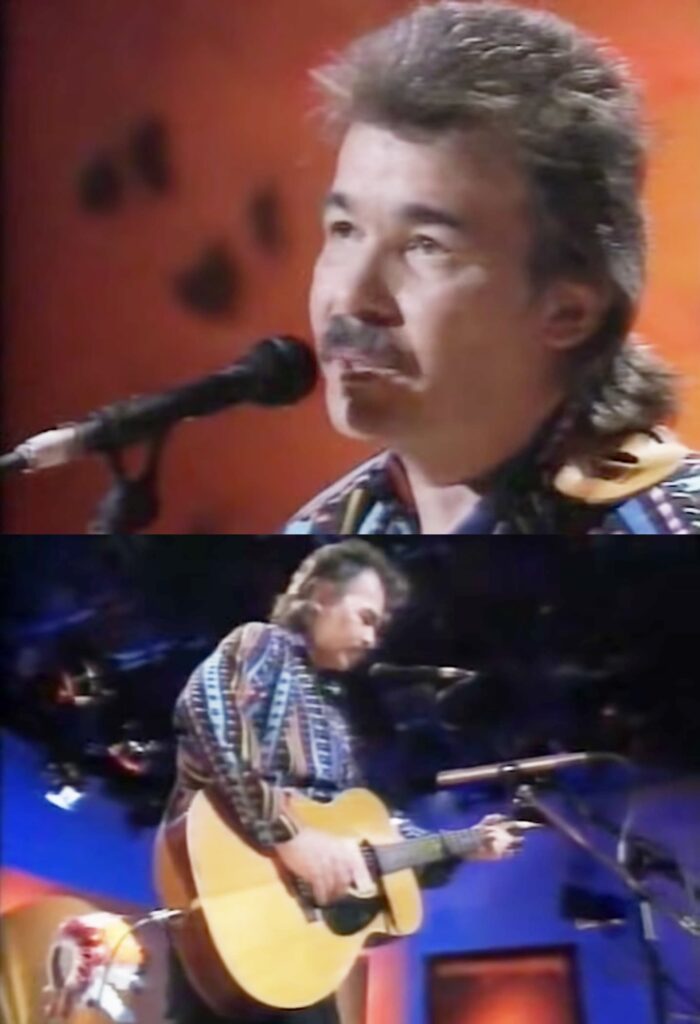
What makes this performance so effective is its restraint. John Prine sings with that familiar half-smile in his voice, as if he knows the audience understands the joke and the truth behind it. Because anyone who’s been through heartbreak recognizes that line. The one you say out loud, even when it isn’t true.
Everything’s cool.
In Prine’s hands, that phrase becomes less of a statement and more of a defense mechanism. A way to keep moving, to keep breathing, to keep the world from seeing the crack beneath the surface.
And maybe that’s why the song lingers.
Because sometimes, saying everything’s okay is the first step toward believing it might be someday.