
A Voice for the Forgotten Where Truth Cuts Through Comfort and No One Is Fully Innocent
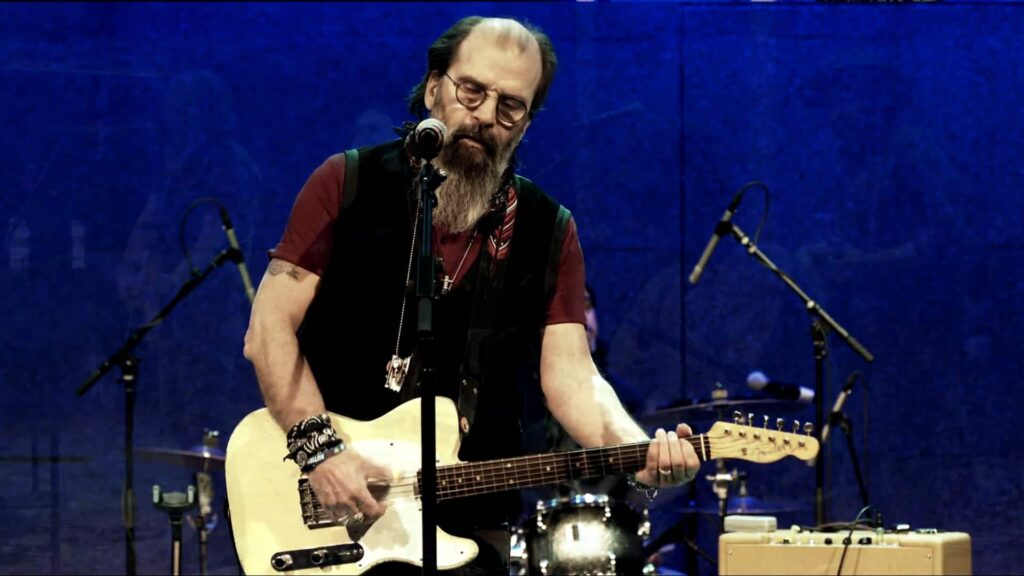
In a stark and gripping live performance, Steve Earle and The Dukes deliver “The Saint of Lost Causes” with the weight of lived reality pressing into every line. By the time this song emerged, Earle had long moved beyond traditional songwriting into something closer to social testimony. This is not merely music. It is observation, critique, and confession woven together.
Opening with the unsettling line “I’m a bad dream, not a nightmare,” Earle immediately establishes a narrator who exists in moral gray space. He is not an outsider looking in, but someone shaped by hardship, someone who understands danger because he has lived alongside it. The imagery of a “wounded hound backed into a chain-link fence” captures a life formed under pressure, where survival becomes instinct rather than choice.
As the performance unfolds, the song shifts from personal narrative to broader reflection. The contrast between sheep, shepherds, and wolves becomes a powerful metaphor. Earle challenges the listener’s assumptions, suggesting that those entrusted with protection can be just as destructive as those feared. The line questioning who has “killed the most sheep” lands with quiet force, turning a familiar moral structure upside down.
Musically, The Dukes provide a restrained yet steady foundation, allowing the lyrics to dominate. There is no attempt to soften the message with elaborate arrangement. Instead, the band holds a consistent, grounded sound that mirrors the seriousness of the themes being explored.
What makes this performance especially compelling is its refusal to offer easy answers. Earle does not divide the world into good and evil. He presents a landscape where survival, poverty, and circumstance blur those lines. When he warns that danger can exist even in the safest neighborhoods, it feels less like a threat and more like a reminder that reality is never as simple as it appears.
The closing plea to “pray to the saint of lost causes” carries a sense of quiet resignation. It acknowledges those who fall through the cracks, those whose stories rarely find resolution or redemption.
Looking back, “The Saint of Lost Causes” stands as one of Steve Earle’s most unflinching works. In this live setting, he does not seek to comfort the audience. He asks them to listen, to question, and perhaps to recognize parts of the world they would rather ignore.