
The Harmony That Shaped Generations Finds Its Place in History
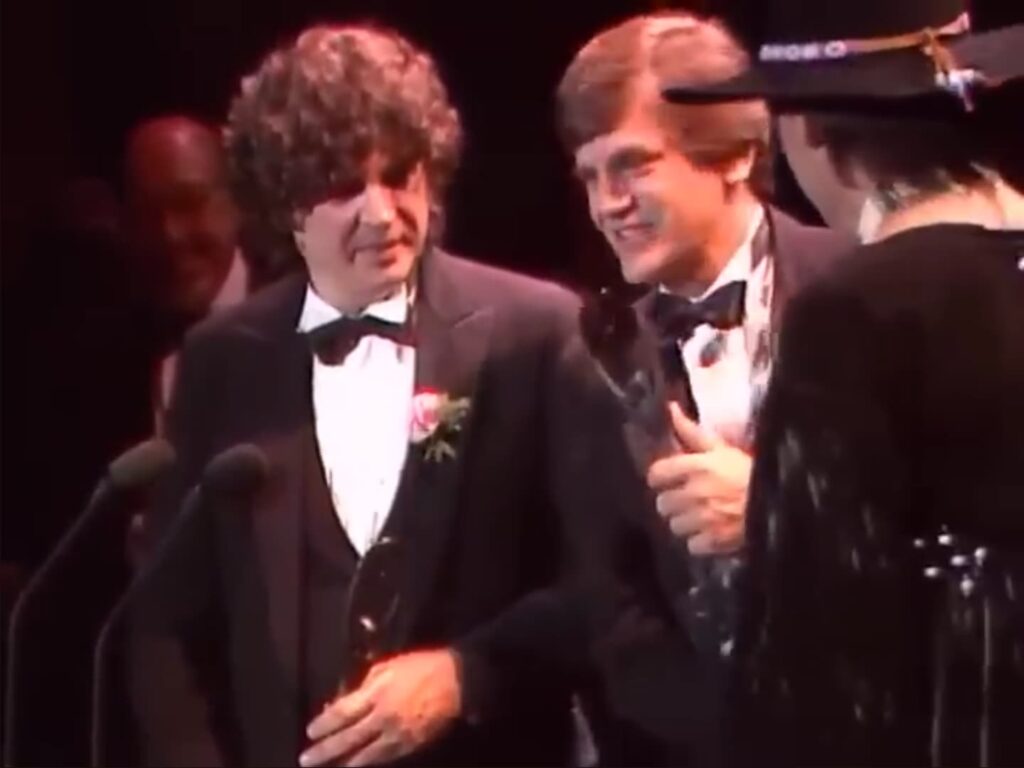
In 1986, at the very first Rock and Roll Hall of Fame induction ceremony, one of the most quietly influential acts in popular music finally received its long-awaited recognition. The legendary duo The Everly Brothers, composed of Phil Everly and Don Everly, were among the inaugural inductees, introduced that night by none other than Neil Young. It was a fitting tribute, not just from a fellow icon, but from an artist who openly acknowledged how deeply their sound had shaped his own musical beginnings.
By the time of this historic moment, the legacy of The Everly Brothers had already been etched into the foundation of rock and roll. Emerging in the late 1950s on Cadence Records, their close harmony style redefined what vocal duos could achieve. Songs like “Bye Bye Love”, “Wake Up Little Susie”, and “All I Have to Do Is Dream” did more than top charts. They introduced a kind of emotional symmetry, where two voices blended so seamlessly that they felt like a single expression of longing, youth, and innocence.
What makes Neil Young’s speech so memorable is its humility. He does not speak as a peer standing above, but as a young boy again, recalling nights spent in a garage with broken equipment, chasing a sound he could never quite replicate. That sound was the Everlys’ harmony. He describes the almost impossible task of singing together without falling apart, a struggle familiar to countless musicians who tried to imitate that delicate balance between precision and feeling. In many ways, his words speak for an entire generation of artists, from The Beatles to Simon & Garfunkel, all of whom carried echoes of the Everlys in their music.
When Phil and Don Everly take the stage, their response is characteristically understated. There is no grand speech, no attempt to claim their influence. Instead, there is gratitude and a quiet acknowledgment of being part of something larger. They speak of rock and roll not as a personal triumph, but as a cultural force that reshaped lives, from the way people dressed to the way they thought and connected with one another.
Looking back, that evening in 1986 feels less like an award ceremony and more like a moment of recognition long overdue. The Everlys did not just contribute to rock and roll. They helped define its emotional language. And in that hall, among the pioneers, their harmonies still linger, soft but unshakable, like a memory that never quite fades.