
Three Years Before His Death, Keith Whitley Was Still Smiling Through the Song That Changed Everything
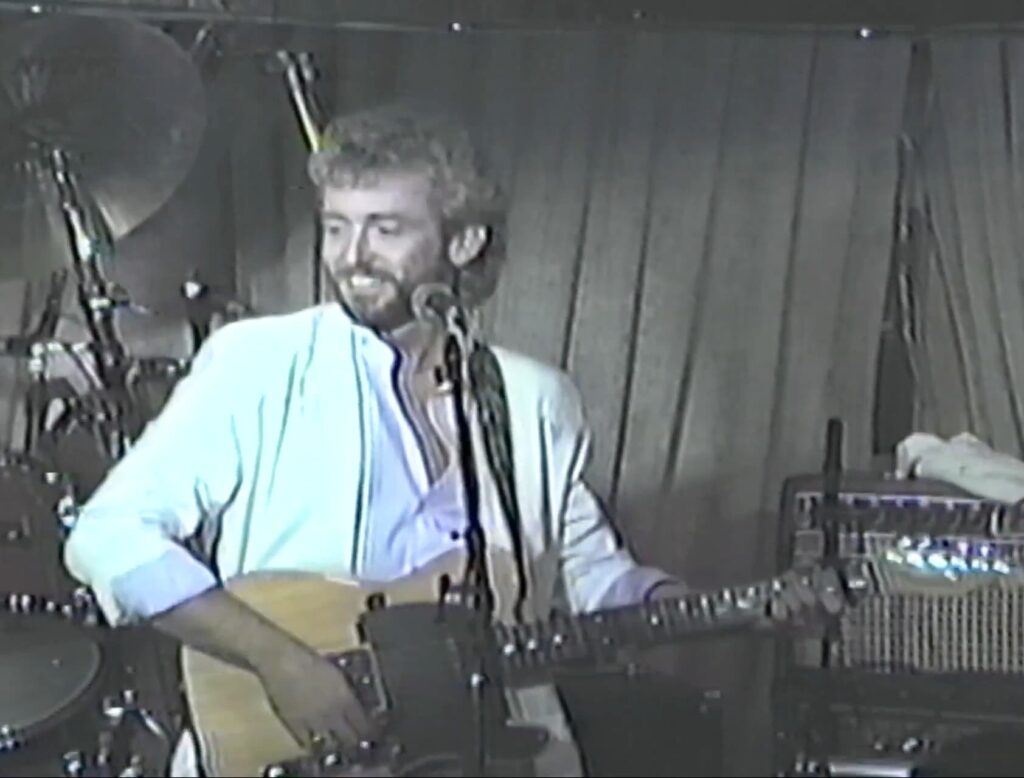
In 1986, Keith Whitley walked onto the stage at Mr. Lucky’s and delivered a lively performance of “Miami, My Amy.” To the audience gathered for the venue’s 20th Anniversary celebration, it was simply a rising country singer performing his newest hit. Looking back nearly four decades later, the footage has become something much more powerful. It captures a brief moment when Whitley’s future seemed limitless and his greatest successes still lay ahead.
Today, country music remembers Keith Whitley as one of the most influential voices the genre has ever produced. Songs like “Don’t Close Your Eyes” and “When You Say Nothing at All” helped secure his place among the giants of country music. His induction into the Country Music Hall of Fame decades after his death only reinforced that legacy. Yet none of that had happened when this performance was filmed.
At the time, “Miami, My Amy” was helping introduce Whitley to a national audience. The song became his first Top 20 country hit and marked a critical turning point in his career. Before its success, he was largely known as a gifted bluegrass vocalist respected by musicians and industry insiders. After it, Nashville began to recognize that something special was happening. The young singer from Kentucky was no longer just a promising talent. He was becoming a star.
That makes this performance particularly fascinating. The audience inside the club had no way of knowing they were watching someone who would eventually be regarded as one of country music’s defining voices. They were simply enjoying a night of live music, sharing drinks, talking with friends, and listening to a talented performer sing a catchy new song. History had not yet revealed what Keith Whitley would become.
The song itself carries an important place in that story. Written by Dean Dillon, Hank Cochran, and Royce Porter, “Miami, My Amy” brought a playful energy that stood apart from the heartbreak-heavy songs that would later define much of Whitley’s catalog. Inspired by a real-life story involving a young woman named Amy in Florida, the song offered a bright and memorable narrative that connected immediately with country radio audiences.
What makes the video even more enjoyable is seeing a side of Keith that is often overlooked.
Many people remember him through songs filled with longing, loneliness, and emotional vulnerability. His most celebrated recordings often explored heartbreak with remarkable honesty. In “Miami, My Amy,” however, viewers encounter a different Keith Whitley. He smiles. He jokes with the band. He appears relaxed and confident. The performance reveals a young artist genuinely enjoying the moment.
For longtime fans, these images have become increasingly precious over time.
Another reason the footage remains popular is that it showcases Whitley in a live setting before superstardom arrived. The polished arena tours and major awards were still in the future. He was still working the club circuit, traveling from city to city with his band, building an audience one performance at a time. The raw energy of the stage feels closer to his bluegrass roots than some of the more polished studio recordings from the era.
Many fans continue to debate whether Keith was actually better live than he was in the recording studio. Performances like this fuel that discussion. His voice sounds looser, more spontaneous, and deeply connected to the audience. The technical perfection of the studio is replaced by something equally valuable: authenticity.
Yet the strongest emotional layer of the video comes from what modern viewers know.
When this performance took place, Keith Whitley was only about 31 years old. His career was accelerating. The biggest hits of his life had not yet arrived. The awards, acclaim, and industry recognition were still ahead of him.
What nobody in that room could have imagined was that he had only three years left to live.
That knowledge changes the way the performance is experienced today. The smiles seem brighter. The optimism feels more fragile. Every lyric carries a weight it never had in 1986.
What began as a lively performance of a breakthrough hit has become something else entirely: a snapshot of a remarkable artist standing at the threshold of greatness, unaware that his time would be far shorter than anyone expected. Watching Keith Whitley sing “Miami, My Amy” now is not simply an exercise in nostalgia. It is a reminder of how brightly some stars shine, even when their journey is destined to be brief.
 Oldies Songs