
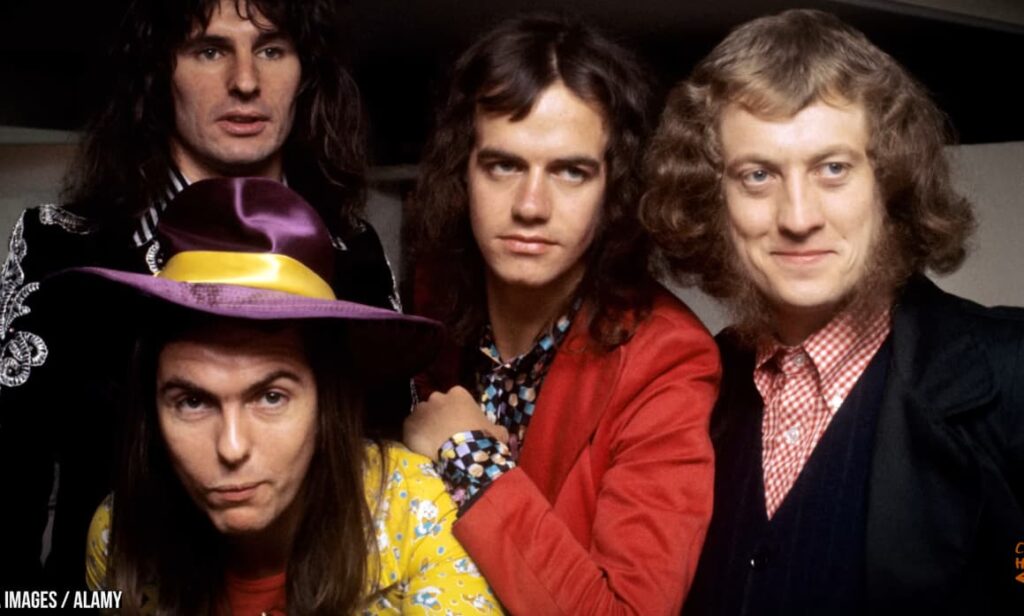
THE RISE, RESILIENCE, AND HEARTBREAK OF SLADE: THE BRITISH GIANTS WHO NEVER CONQUERED AMERICA
For much of the 1970s, few bands in Britain could match the popularity of the legendary rock group Slade. Celebrated for their infectious anthems, working class image, and energetic live performances, the band became one of the most successful acts of the decade in the United Kingdom. Yet despite their extraordinary achievements at home, they struggled to achieve the same level of success in the United States, creating one of the most intriguing stories in rock music history.
Formed from a group of musicians in Wolverhampton, Slade evolved through several identities before finding their breakthrough sound. Originally performing as The Inbetweens, the band experimented with rhythm and blues and pop before briefly adopting a skinhead image under the name Ambrose Slade. Under the guidance of manager Chas Chandler, the group eventually embraced glam rock, a transformation that would define their career.
Between 1971 and 1976, Slade achieved an astonishing seventeen consecutive Top 20 singles in the United Kingdom, including six number one hits. In 1973, they became the first act to debut three singles at number one on the UK charts within the same year. Songs such as “Cum On Feel the Noize,” “Gudbuy T’Jane,” and “Mama Weer All Crazee Now” helped establish them as one of Britain’s dominant musical forces.
Their remarkable rise, however, was interrupted by tragedy. On July 4, 1973, drummer Don Powell was involved in a devastating car accident that claimed the life of his girlfriend, Angela. Powell suffered severe injuries, including a fractured skull, and was given little chance of survival. Although he recovered, he was left with significant memory loss and had to relearn many aspects of daily life, including his ability to perform.
Rather than moving forward without him, Slade remained committed to their original lineup. Through patience, determination, and mutual support, the band helped Powell gradually return to the stage. Their loyalty during this difficult period became one of the defining chapters of the group’s history.
Later that same year, Slade released “Merry Xmas Everybody,” a song that quickly became one of Britain’s most beloved Christmas recordings. The single sold one million copies by Christmas and further cemented the band’s place in British culture.
Despite extensive touring in America alongside major acts including Aerosmith, Black Sabbath, and Santana, Slade never achieved comparable commercial success there. Financial limitations and their inability to spend extended periods building an American audience may have contributed to this outcome.
The band experienced a revival after a celebrated appearance at the 1980 Reading Festival and later benefited from the success of American group Quiet Riot, whose cover versions introduced Slade’s music to a new audience. However, further setbacks, including illness affecting bassist and songwriter Jim Lea, prevented the group from fully capitalizing on the opportunity.
Though Slade never became the American phenomenon many expected, their influence remains undeniable. Their music helped shape the sound and attitude of countless rock and heavy metal acts that followed. More than a story of chart success, Slade’s legacy is one of perseverance, friendship, and an enduring ability to overcome adversity while continuing to bring joy to audiences around the world.