
Late in His Career, Kenny Rogers Stopped Singing About Life’s Journeys and Began Singing About What Carries Us Through Them
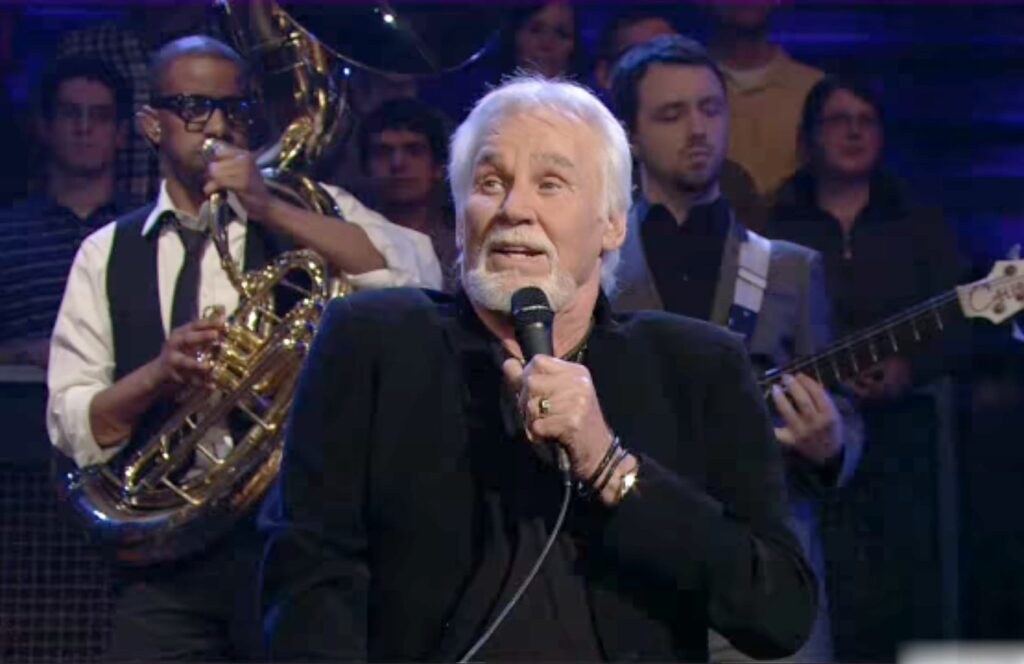
When Kenny Rogers performed “The Rock of Your Love” from his gospel album The Love of God, it did not feel like another attempt to produce a radio hit. Instead, it sounded like the reflections of a man who had spent a lifetime telling stories through music and had finally arrived at the values he believed mattered most. Calm, heartfelt, and deeply personal, the performance revealed a different side of one of country music’s most beloved voices.
The title itself invites curiosity. To many listeners, “the rock” may sound like a physical place, but within the traditions of gospel music and the Bible, the rock is a timeless symbol of strength, stability, and unwavering faith. It represents the foundation that remains when everything else changes. In “The Rock of Your Love,” Kenny Rogers is not singing about a destination. He is singing about the source of hope and security that allows people to endure life’s greatest challenges.
That message became especially meaningful because of when the song was recorded. The Love of God was released during the closing chapter of Kenny Rogers’ remarkable career. By then, he had already earned countless awards, sold millions of records, and become an international icon through classics such as “The Gambler,” “Lucille,” and “Lady.” There was nothing left for him to prove. Rather than chasing another commercial success, he chose to record songs centered on faith, gratitude, compassion, and hope. The album felt less like a business decision and more like a personal testimony.
One of the performance’s greatest strengths is its simplicity. Although the song belongs to the gospel tradition, Kenny Rogers never approaches it as a preacher. He remains the storyteller audiences had loved for decades. His warm, conversational delivery allows the lyrics to speak naturally, without dramatic gestures or unnecessary vocal displays. It is the same gentle voice that once told stories about gamblers, dreamers, lovers, and lonely souls, now quietly reflecting on the spiritual foundation beneath every human experience.
For longtime fans, the album also represented a return to Kenny’s earliest musical influences. Long before worldwide fame, he grew up surrounded by church music, where gospel songs helped shape both his musical instincts and his understanding of storytelling. Recording The Love of God late in life was not an unexpected change in direction. It was a return to where his musical journey had first begun, bringing his career full circle.
Age had naturally changed his voice by this stage. It no longer possessed the effortless power heard during his commercial peak, but the gentle roughness added something equally valuable. Every lyric carried the unmistakable weight of experience. When he sang about faith and enduring love, listeners believed him because those words came from someone who had lived through triumph, disappointment, personal loss, and decades of constant change.
Perhaps the most universal aspect of “The Rock of Your Love” is that its message extends far beyond religion. Even listeners without a particular faith can hear “the rock” as family, enduring love, personal integrity, or the principles that help people remain steady during life’s storms. That openness gives the song a broader emotional reach than many traditional gospel recordings.
Looking back after Kenny Rogers’ passing in 2020, the performance carries even deeper significance. It now feels like one of the final chapters in a musical autobiography. Throughout his career, he sang about difficult choices, broken hearts, unlikely heroes, and the unpredictable turns of life. With “The Rock of Your Love,” he turned his attention to what remains after all those stories have been lived.
In the end, this quiet performance reminds us that a legendary artist’s greatest legacy is not always found in the biggest hits or the loudest applause. Sometimes it is found in a peaceful song that gently encourages us to hold fast to the people, the faith, and the values that give life its deepest meaning.