
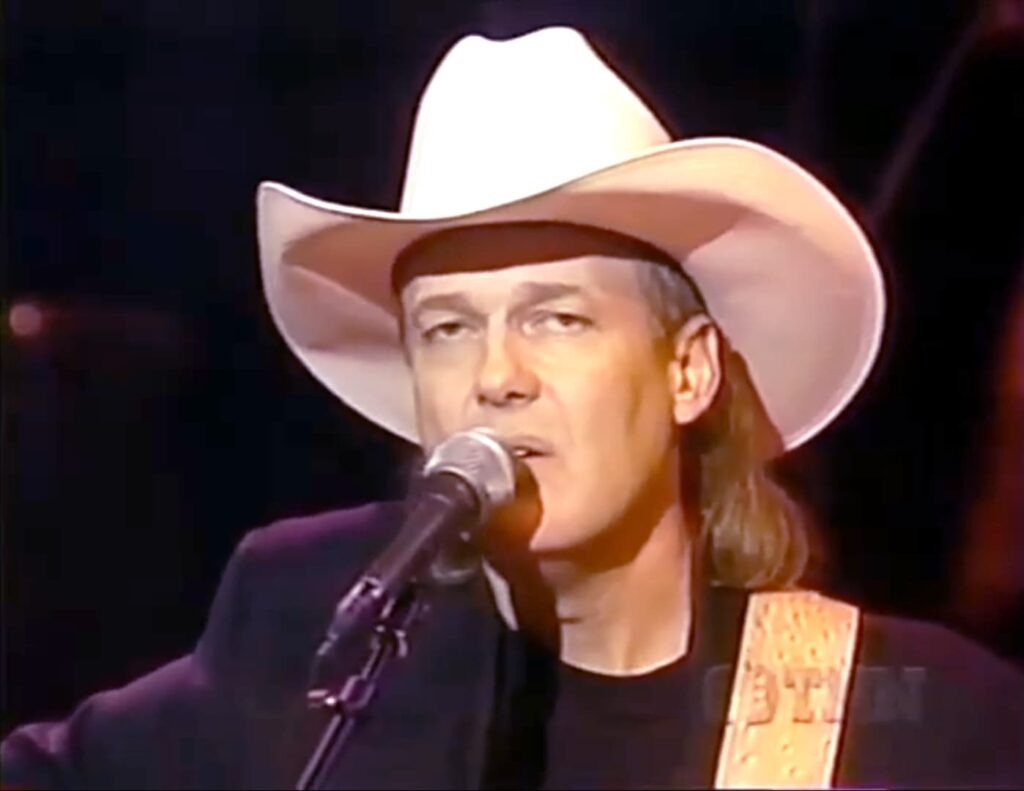
When Ricky Van Shelton Sang “Tears in Heaven,” He Chose Quiet Compassion Over Vocal Power
Some songs ask for technical perfection. Others ask for honesty. When Ricky Van Shelton performed “Tears in Heaven,” he understood that this was never a song meant to be overwhelmed by dramatic vocal flourishes. Instead, he approached Eric Clapton’s timeless ballad with humility, allowing its message of love, grief, and hope to remain at the center of every note.
Originally written by Eric Clapton and Will Jennings, “Tears in Heaven” was inspired by the devastating loss of Clapton’s four-year-old son, Conor Clapton, who died in a tragic accident in 1991. Released in 1992, the song became one of the most deeply personal recordings in popular music, earning multiple Grammy Awards while offering comfort to countless listeners who had experienced loss of their own. Rather than speaking only about death, it asks gentle questions about reunion, memory, and whether love can endure beyond this life.
For any artist, performing “Tears in Heaven” presents a unique challenge. The song carries such profound emotional history that it leaves little room for unnecessary interpretation. Ricky Van Shelton avoids that trap by resisting the temptation to imitate Clapton’s original performance. Instead, he brings the warmth and sincerity that defined his own career, delivering the lyrics with the calm, reassuring voice that made him one of country music’s most beloved traditionalists.
That understated approach becomes the performance’s greatest strength. Shelton never tries to make the audience admire his vocal ability. He simply tells the story. His gentle phrasing allows listeners to reflect on their own memories, making the song feel deeply personal regardless of the circumstances that first brought them to it. The result is less like a concert performance and more like a quiet conversation shared among friends.
The country influence also adds a subtle new dimension. Throughout his career, Ricky Van Shelton became known for songs rooted in family, faith, heartbreak, and everyday life. Those same qualities naturally complement “Tears in Heaven.” Without changing the song’s meaning, Shelton’s interpretation emphasizes resilience as much as sorrow, suggesting that healing does not erase grief but teaches us how to carry it with grace.
Looking back today, performances like this remind audiences why Ricky Van Shelton earned such lasting admiration. At the height of his success, he built his reputation not through elaborate stage productions but through authenticity. Whether singing classic country hits or deeply emotional ballads, he consistently placed the song above himself. That quiet respect is evident throughout this rendition.
The lyrics themselves continue to resonate because they avoid easy answers. Questions such as “Would you know my name if I saw you in heaven?” remain powerful precisely because they reflect emotions shared by so many people facing loss. Rather than offering certainty, the song creates space for remembrance, hope, and love that survives even after separation.
Years after its release, “Tears in Heaven” remains one of the most universally cherished songs ever written about grief. In Ricky Van Shelton’s hands, it becomes a heartfelt tribute not only to Eric Clapton’s extraordinary songwriting but also to everyone who has loved someone they can no longer hold.
Sometimes the most unforgettable performances are not the loudest or the most dramatic. Sometimes they are the quiet moments when an experienced storyteller stands before an audience, sings with complete sincerity, and gently reminds us that while tears may never fully disappear, neither does the love that gave them meaning.