
The Boxer — a weathered hymn of endurance, carried by three voices who understand its scars
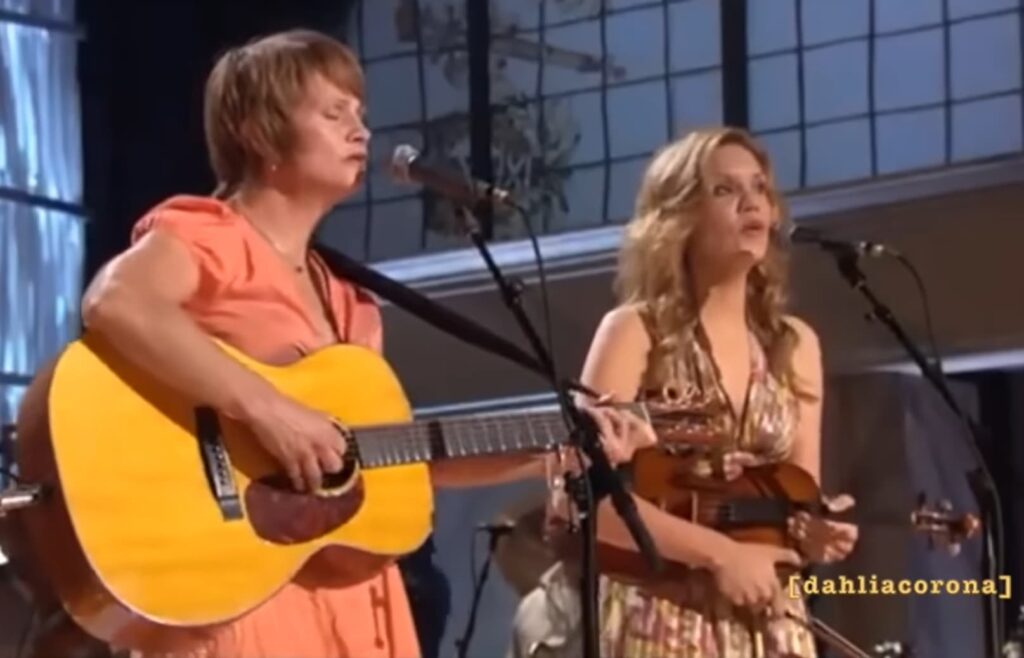
When Alison Krauss, Shawn Colvin, and Jerry Douglas come together to perform “The Boxer,” the song is no longer merely a folk classic — it becomes a meditation on survival. Originally written by Simon & Garfunkel in the late 1960s, The Boxer has been covered many times, yet this particular rendition stands apart for its restraint, humility, and emotional gravity. Released as a collaborative recording in 2009, it did not chase chart success, nor did it appear as a commercial single on major pop rankings. Its power lies elsewhere — in tone, in texture, and in the lived experience each artist brings to the song.
Right from the opening lines, this version feels quieter than most. There is no attempt to recreate the defiance of youth that marked the original era. Instead, the song unfolds slowly, like a memory revisited after many years. Alison Krauss leads with a voice that has always known how to whisper rather than shout — clear, fragile, and impossibly steady. Shawn Colvin enters not as a contrast, but as a companion, her phrasing shaped by decades of storytelling and introspection. And beneath it all, Jerry Douglas’s dobro does not decorate the song — it breathes with it, bending notes as if they themselves have been bruised by time.
Importantly, this collaboration was never positioned as a reinvention. It was an act of respect. All three musicians are deeply rooted in American acoustic traditions — bluegrass, folk, and roots music — and each has spent a career honoring songs rather than dominating them. That philosophy defines this recording. There is space between the notes. Silence matters. Every word lands because it is allowed to linger.
The meaning of The Boxer has always been layered. On the surface, it tells the story of a struggling outsider, battered by circumstance yet refusing to surrender. But with age, the song reveals something deeper: endurance without triumph, faith without reward, persistence without applause. Lines about “a poor boy” searching for work, dignity, and belonging feel different when sung by artists who have already traveled long roads of their own — roads marked by success, loss, and the quiet cost of staying true to oneself.
In this version, the famous refrain — “lie-la-lie” — is no longer a chant of youthful resilience. It sounds more like a sigh. Not of defeat, but of acceptance. The boxer still stands, but he understands now that survival itself is the victory. That subtle shift is what makes this interpretation so resonant for listeners who have lived through decades, not just moments.
Jerry Douglas deserves special mention here. His dobro lines replace the dramatic percussion of earlier versions with something more intimate. Each slide feels like a scar being traced rather than hidden. It grounds the song in Appalachian soil, pulling it away from the streets of New York and placing it in a wider American emotional landscape — one shaped by labor, patience, and quiet resolve.
For those who first encountered The Boxer in their youth, this version feels like meeting the song again later in life. The words are the same, but the meaning has deepened. The bravado has softened. What remains is truth.
This recording never needed chart positions to justify its existence. It exists for listeners who understand that some songs age with us — and when revisited by the right voices, they return not as echoes of the past, but as companions for the present.
In the hands of Alison Krauss, Shawn Colvin, and Jerry Douglas, The Boxer is no longer about fighting the world. It is about enduring it with grace — standing still, wounded perhaps, but unbroken.
 Oldies Songs