
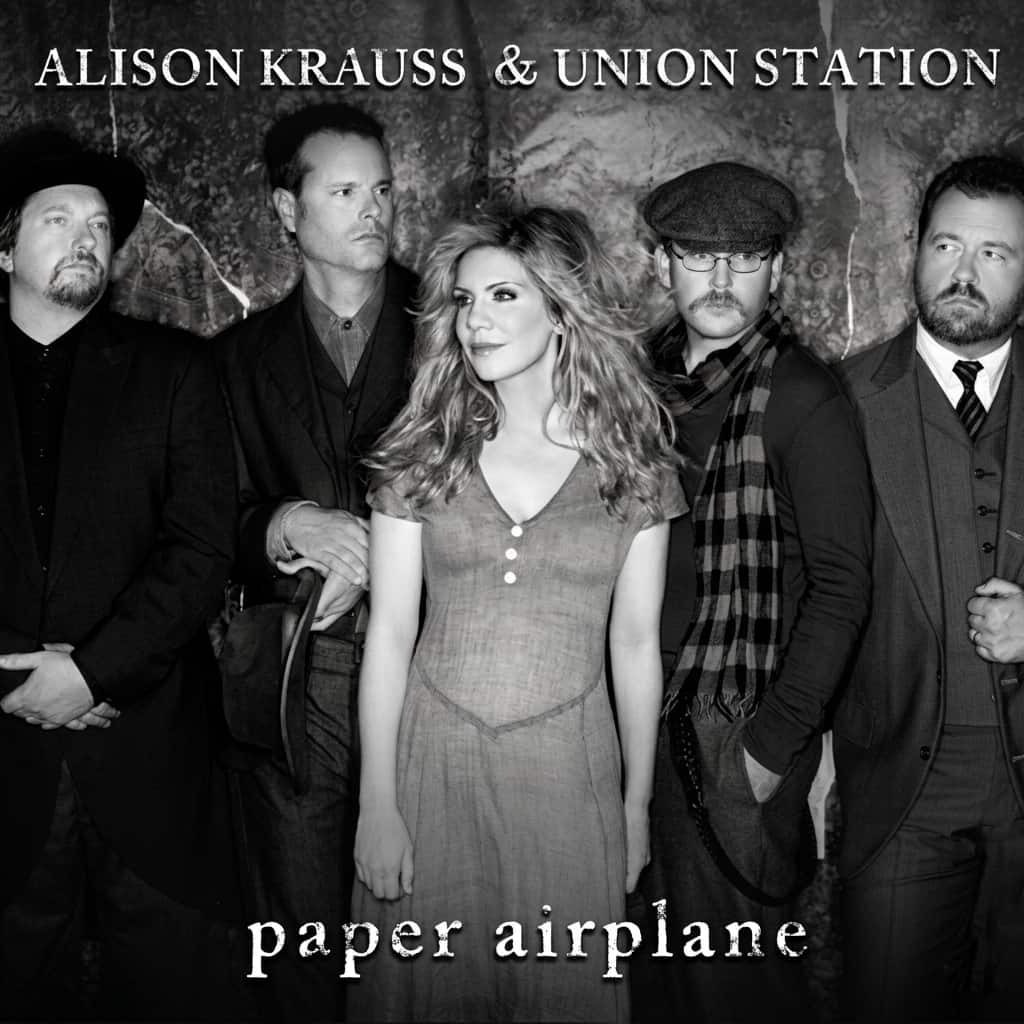
A fragile confession carried on quiet wings, where love drifts away like a paper airplane that never quite returns
In 2011, Alison Krauss & Union Station released “Paper Airplane”, the title track of their first studio album together in nearly seven years, also named “Paper Airplane.” The song quickly stood out as a centerpiece of the record, reflecting the group’s return with a sound that felt both unchanged and deeply matured. Written by Robert Lee Castleman, the piece found its fullest emotional expression in Krauss’s unmistakable voice, accompanied by the restrained brilliance of the band.
The live performance of “Paper Airplane” reveals something even more intimate than the studio version. There is no need for grandeur. The arrangement moves gently, led by soft acoustic textures and the mournful cry of the fiddle, allowing every lyric to settle with quiet weight. Krauss sings not as a performer reaching outward, but as someone turning inward, almost as if recalling a memory too delicate to disturb.
The song itself is a meditation on distance and emotional retreat. Love is not shattered here. Instead, it slips away slowly, like something folded carefully and released into the air. The imagery of a paper airplane becomes a quiet metaphor for words left unsaid and feelings carried off without resolution. In performance, this meaning deepens. Each pause, each breath between lines, feels intentional, as though time itself has slowed to honor what is being lost.
What makes Alison Krauss & Union Station so enduring is their ability to trust silence as much as sound. In this performance, the band resists embellishment, allowing space to become part of the storytelling. The dobro and mandolin do not compete. They respond, echoing the emotional current beneath the melody. It is a conversation, not a display.
More than a decade after its release, “Paper Airplane” remains a quiet landmark in contemporary bluegrass and acoustic music. It speaks to the kind of heartbreak that does not demand attention, yet lingers far longer than louder farewells. Listening now, one does not simply hear a song, but revisits a feeling that may have never fully left.