
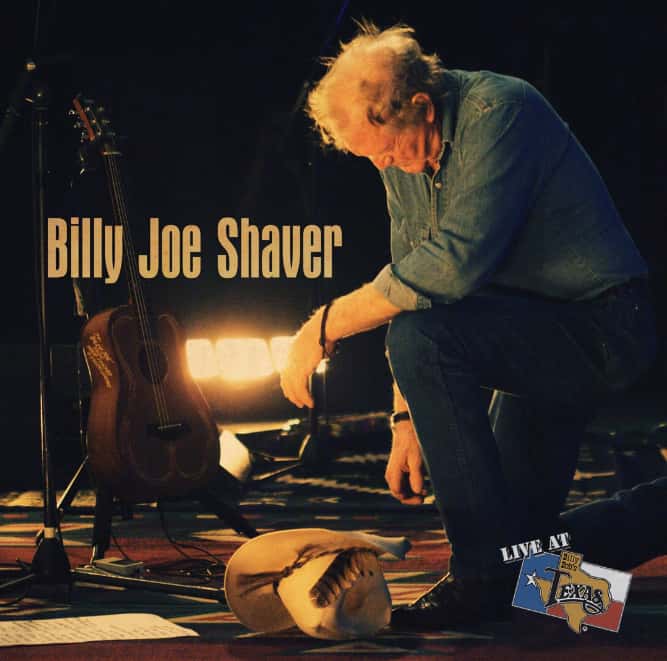
A quiet, tender request for mercy from a drifter’s heart, carried on the dust roads of American country music.
When Ride Me Down Easy first entered the world, it did so not as a chart-chasing hit but as a songwriter’s confession. Written by Billy Joe Shaver, one of the most evocative poets of the country outlaws, the song soon found life in multiple voices. The version that reached the airwaves most visibly belonged to Bobby Bare, whose 1973 recording rose to number 20 on the Billboard Hot Country Singles chart. Yet its spiritual home has always remained with Shaver himself, who recorded it that same year on his landmark album Old Five and Dimers Like Me, and whose words carried the bruised honesty of a man who had lived every syllable.
The story behind the song is inseparable from Shaver’s own early struggles. Before he became a pillar of the outlaw movement, he was a Texas laborer, drifting between odd jobs, carrying notebooks full of lyrics that few in Nashville wanted to hear. His fortunes changed only when Waylon Jennings heard his songs and recorded an entire album of them, the now-classic Honky Tonk Heroes in 1973. Though Ride Me Down Easy did not appear on that record, it grew from the same well of experience: nights on the road, cheap motels, busted knuckles, and the persistent hope that someone, somewhere, might treat a weary soul kindly.
At its core, Ride Me Down Easy is a plea. Not for love, nor for redemption, but simply for gentleness. The narrator asks to be “ridden down easy, Lord,” a line that lands with the emotional weight of a man who has been pushed hard by life and wants, just once, to reach the end of a journey without breaking. It is the voice of someone who has made mistakes, seen too many dusty horizons, and learned that survival sometimes depends on the mercy of others.
There is a unique quietness to the song. Unlike many country laments, it does not raise its voice. It does not lash out at fate. Instead, it moves with the soft resignation of a man who understands that life’s harshness is not personal; it is simply the cost of being alive. That resignation does not drain the song of hope. Rather, it infuses it with a fragile dignity. The road may be long, but the traveler still asks politely for a kinder landing.
This restrained emotion is what has made the song a favorite among musicians and long-time listeners alike. Shaver wrote with a plainspoken honesty that reached people who had known the weight of hard days. His words were never dressed up. They were carved from memory, shaped by bruises, brightened occasionally by fleeting kindness. Ride Me Down Easy remains one of his clearest expressions of that sensibility, a reminder that even the toughest lives have soft, quiet corners.
For many, hearing this song again summons the feel of old highways and long-ago evenings on the porch. It recalls moments of tiredness, regret, and the deep human wish for a gentler tomorrow. That is why the song endures. It does not promise miracles. It simply acknowledges the truth: everyone, sooner or later, hopes to be carried the rest of the way with a little grace.