
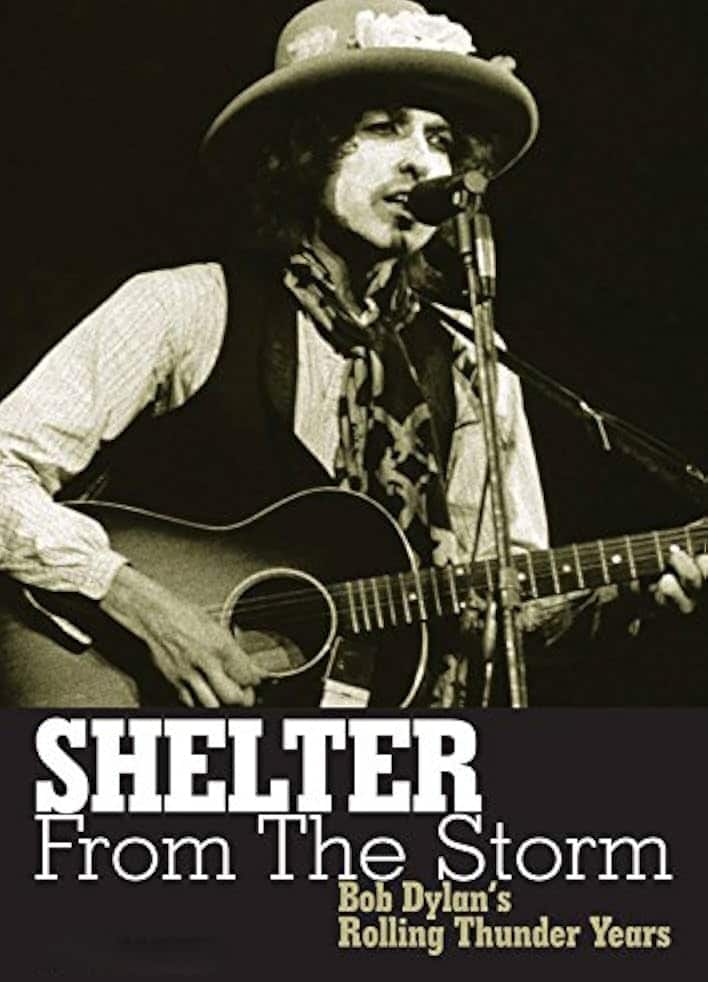
A SONG ABOUT MERCY, REFUGE, AND THE QUIET HOPE OF BEING SAVED WHEN THE WORLD TURNS COLD
When “Shelter from the Storm” appeared in early 1975 on Bob Dylan’s fifteenth studio album Blood on the Tracks, it did not arrive as a hit single climbing the charts. It arrived instead as a confession. The album itself debuted at No. 1 on the Billboard 200, marking one of the most commercially successful moments of Dylan’s career, but “Shelter from the Storm” was never released as a standalone single in the United States and therefore did not receive an individual chart position at the time. Its power came not from radio rotation, but from repetition, from listeners returning to it late at night, discovering that its words seemed to understand things they had never said out loud.
Recorded on September 17, 1974, during the New York sessions for Blood on the Tracks, the song emerged at a deeply transitional moment in Dylan’s life. By the mid-1970s, Dylan was no longer the youthful prophet of the 1960s, nor was he interested in wearing that mantle again. His marriage was unraveling, his sense of belonging felt fractured, and the world he once tried to interpret through protest songs now seemed harsher, more morally ambiguous. Blood on the Tracks reflects this inner weather. It is not a diary in the literal sense, but it is emotionally precise. “Shelter from the Storm” stands near the album’s emotional center, offering not resolution, but temporary refuge.
Musically, the song is built on restraint. A steady, folk-based rhythm supports a vocal performance that feels worn rather than dramatic. Dylan sings not to persuade, but to testify. The imagery is biblical, mythic, and deeply human all at once. Lines like “It was in another lifetime, one of toil and blood” immediately place the listener in a landscape shaped by suffering and endurance. This is not a single story, but a series of remembered states of being. The repeated invitation, “Come in, I’ll give you shelter from the storm,” functions as both promise and refrain, a phrase that grows heavier with meaning each time it returns.
The woman in the song has often been debated. She is not a fully defined character, and that is deliberate. She represents compassion, sanctuary, love, and perhaps illusion. She offers safety, but safety that may not last. As the verses unfold, the relationship deteriorates. A wall appears. Signals are crossed. Gratitude turns into regret. Dylan never assigns blame outright. Instead, he lets the listener sit with the consequences of misunderstanding and emotional exhaustion. The shelter existed, but it was fragile. That fragility is what gives the song its lasting weight.
What makes “Shelter from the Storm” particularly resonant for older listeners is its understanding of time. The song moves backward and forward without warning, much like memory itself. There is the exhaustion of experience, the recognition of loss, and the quiet acknowledgment that some moments cannot be reclaimed. Yet Dylan does not end in bitterness. Even in the final verse, when the narrator speaks of living in a foreign country and walking a razor’s edge, there is still longing rather than despair. Beauty remains possible, even if it is distant.
Over the decades, “Shelter from the Storm” has grown in stature. It was later included on The Essential Bob Dylan in 2000, reaffirming its place within his vast catalog. Dylan himself has returned to the song many times in concert, often reshaping it, slowing it down, or delivering it with a gravity that reflects age and experience. Each performance suggests that the song continues to evolve, just as its listeners do.
In the end, “Shelter from the Storm” is not about rescue in the heroic sense. It is about the small, temporary mercies that allow people to survive difficult seasons. It speaks to those who have known love as both salvation and loss, who understand that warmth is precious precisely because it does not last forever. For many, that recognition is not painful. It is honest. And honesty, in Dylan’s world, has always been its own form of shelter.
 Oldies Songs