
A Tender Farewell Wrapped in a Melody of Youthful Devotion
When “Angelo” by Brotherhood of Man was released in 1977, it quietly carved its place in pop history by reaching No. 1 on the UK Singles Chart in May of that year. At a time when disco was beginning to pulse through dance floors and punk was sharpening its edges in London clubs, this gentle, melodic ballad stood apart—romantic, sentimental, and unabashedly tender. It also climbed into the Top 10 in several European countries, reinforcing the remarkable post-Eurovision momentum the group had built.
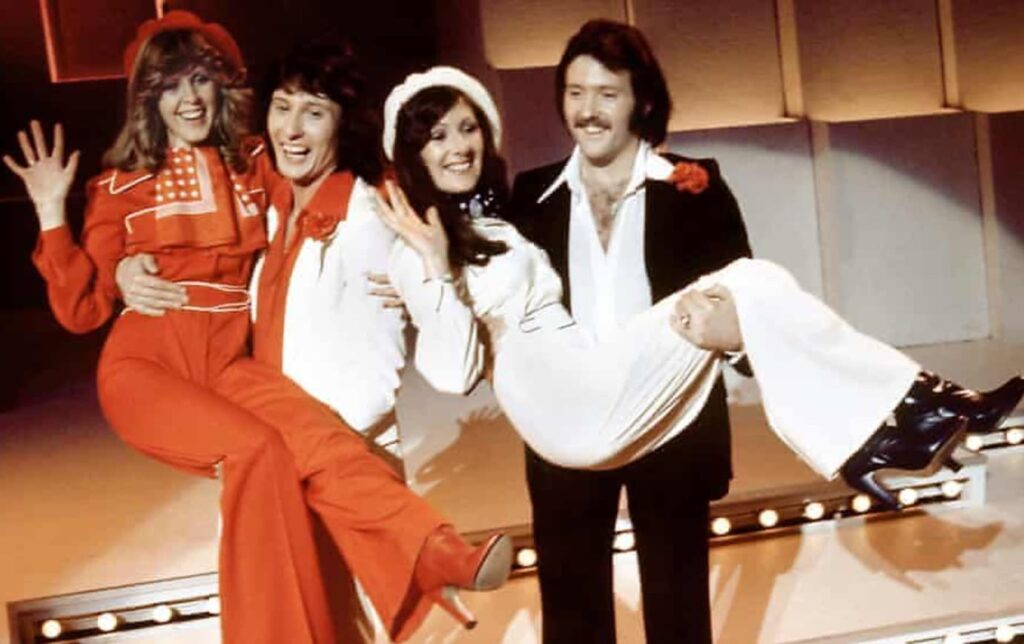
By 1977, Brotherhood of Man were no strangers to chart glory. Having won the Eurovision Song Contest 1976 with “Save Your Kisses for Me”, they had reintroduced a kind of clean-cut, harmony-driven pop to an audience that was increasingly fragmented by shifting musical fashions. The group—Martin Lee, Lee Sheriden, Sandra Stevens, and Nicky Stevens—brought a warmth and accessibility that felt reassuring in uncertain times. “Angelo”, written by Lee Sheriden, continued that formula but with a more reflective, narrative tone.
At its heart, “Angelo” tells the story of a young dreamer leaving home, filled with hope yet shadowed by longing. The lyrics sketch a familiar scene: a farewell, a promise to return, and the ache of separation. But what elevates the song is not just its storyline—it is the sincerity in the delivery. The harmonies are carefully layered, almost pastoral in their softness, evoking a sense of innocence that was already beginning to feel nostalgic even in the late 1970s. The arrangement avoids grand orchestration; instead, it leans on melody and vocal blend, allowing the emotional core to shine through without distraction.
Commercially, the single’s success reaffirmed that Brotherhood of Man were more than a one-hit Eurovision phenomenon. Following the massive triumph of “Save Your Kisses for Me”, there was understandable skepticism about whether they could sustain their appeal. Yet “Angelo” silenced doubters. Its No. 1 position in the UK was not merely a commercial achievement—it was proof that audiences still longed for songs that spoke plainly about love, departure, and devotion without irony.
The story behind the song reflects the songwriting partnership within the group. Lee Sheriden, who was central to shaping their signature sound, understood how to craft melodies that lingered long after the final note faded. He drew upon universal themes—leaving home, chasing dreams, promising fidelity—that resonated deeply with listeners who had themselves experienced similar crossroads. In many ways, “Angelo” feels less like a fictional tale and more like a memory set to music.
There is something distinctly evocative about the way the chorus unfolds. It rises gently, almost like a sigh carried on a warm breeze, before settling back into a reflective calm. The emotional arc mirrors the human experience of parting: a surge of hope, followed by the quiet ache of absence. That balance between optimism and melancholy is what gives the song its enduring charm.
Listening to “Angelo” today is like opening an old photograph album. The sound is unmistakably of its era—clean production, earnest vocals, and a melody that refuses to be hurried. Yet its themes are timeless. It speaks of courage in leaving, faith in love, and the belief that distance cannot extinguish connection. In a musical landscape often dominated by spectacle, this song’s power lies in its restraint.
Over the decades, Brotherhood of Man may be most frequently remembered for their Eurovision triumph, but “Angelo” deserves equal recognition. It captures a fleeting moment in pop history when simplicity still reigned, when harmony mattered, and when a song could top the charts simply by telling a heartfelt story well.
And perhaps that is why it still resonates. Beneath its gentle melody lies a universal truth: every farewell carries both sorrow and hope. In that delicate balance, “Angelo” continues to find its voice—soft, sincere, and unforgettable.