
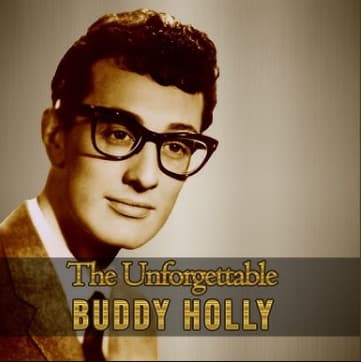
A Farewell Wrapped in Melody: When a Young Voice Sang Beyond Its Time
On January 5, 1959, Coral Records released a single that would quietly take on a weight far greater than anyone could have anticipated. The song was “It Doesn’t Matter Anymore”, performed by Buddy Holly, a young artist whose influence had already reshaped popular music, yet whose life was heartbreakingly close to its end. At the time of its release, the record was simply another carefully chosen song for a rising star. Within weeks, it became something else entirely. It became a farewell.
“It Doesn’t Matter Anymore” holds a unique place in Buddy Holly’s catalog because it was one of the very few songs he recorded that he did not write himself. The song was penned by Paul Anka, who was still in his teens but already proving himself a gifted songwriter with a keen understanding of emotional clarity and melodic restraint. Anka reportedly sold the song for a modest sum, unaware that it would soon be forever tied to one of the most tragic chapters in music history.
Musically, the recording marked a subtle shift for Buddy Holly. Known for his bright, rhythmic energy and youthful optimism, here his voice carried a quieter resignation. The arrangement is gentle, understated, and deliberately restrained. There is no dramatic flourish, no attempt to overwhelm the listener. Instead, the song leans into emotional simplicity. The lyrics speak of heartbreak, acceptance, and the difficult act of letting go, not with bitterness, but with weary grace. In hindsight, that emotional tone feels almost prophetic.
Less than a month after the single’s release, on February 3, 1959, Buddy Holly was killed in a plane crash alongside Ritchie Valens and The Big Bopper. The shock rippled through the music world. Radio stations began playing “It Doesn’t Matter Anymore” relentlessly, and the song took on a new, unintended meaning. Lines that once sounded like a man closing the door on a failed romance now felt like a young artist making peace with the world itself.
Two months after Holly’s death, the song peaked at No. 13 on the Billboard Hot 100, becoming his final charting single during his lifetime. It was not a chart-topping smash, but its impact was far deeper than numbers could capture. For many listeners, it was the last time they heard Buddy Holly’s voice arrive as something new rather than something remembered.
The significance of “It Doesn’t Matter Anymore” lies not only in its timing but in its emotional honesty. Unlike many breakup songs of the era that leaned toward melodrama, this one embraced restraint. The narrator does not rage against loss. He acknowledges it, absorbs it, and moves forward quietly. That emotional maturity was unusual for its time and remains striking decades later.
For Paul Anka, the song became an early testament to his songwriting instincts. For Buddy Holly, it became an unintended epitaph. It captured him not as the energetic innovator seen in earlier hits like “That’ll Be the Day” or “Peggy Sue”, but as a reflective young man standing still long enough to look inward. There is something deeply human in that pause.
Over the years, the song has been covered by numerous artists, each bringing their own shade of sorrow and acceptance. Yet the original recording remains definitive. There is a fragile sincerity in Holly’s voice, as if he were already aware that time was limited, even if reason says he could not have known.
Today, “It Doesn’t Matter Anymore” endures as more than a final single. It stands as a reminder of how quickly promise can turn into legacy, and how music can preserve a voice long after silence has taken its place. In just over two minutes, Buddy Holly left behind a song that continues to speak softly, steadily, and honestly to anyone who has ever learned that letting go does not always come with closure, only acceptance.