
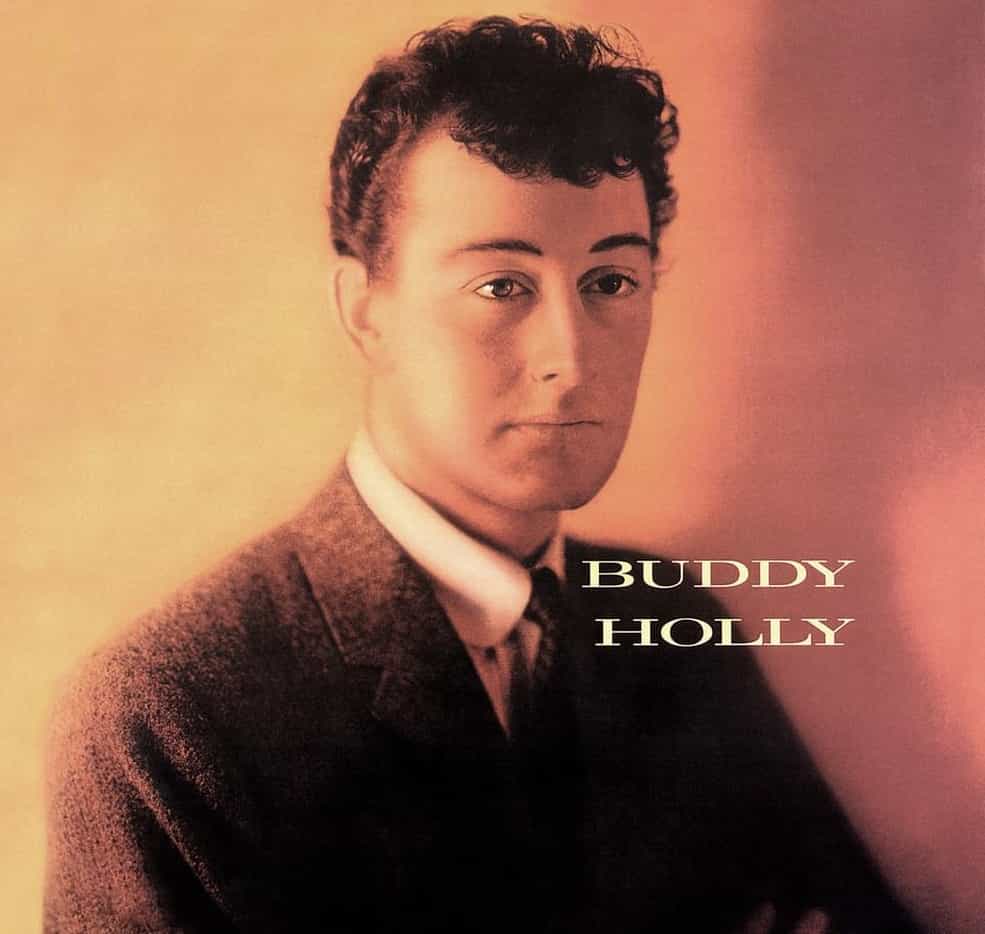
A Quiet Confession of Vulnerability Hidden Behind a Rock and Roll Legend
When Buddy Holly released Look at Me in 1958, the song arrived as a surprise, both musically and emotionally. Best known for his bright, driving rock and roll sound, Holly briefly stepped away from youthful exuberance to reveal something far more fragile. Upon its release in the United Kingdom, Look at Me reached No. 16 on the UK Singles Chart, a respectable showing that reflected how audiences were beginning to recognize Buddy Holly not only as a pioneer of rock but also as a deeply expressive songwriter. Though it did not make a significant impact on the American charts, its legacy has quietly endured, growing in stature with time rather than initial commercial force.
Recorded in June 1958 at Bell Sound Studios in New York, Look at Me was notable for its lush orchestral arrangement, crafted by Dick Jacobs, a respected arranger who helped frame Holly’s voice with strings rather than electric guitars. This production choice placed the song far outside the sound that had defined hits like That’ll Be the Day or Peggy Sue. Instead of swagger, there is hesitation. Instead of confidence, there is yearning. The song later appeared on the UK album That’ll Be the Day and was included on the posthumous compilation The Buddy Holly Story released in 1959, which further cemented its place in his recorded legacy.
What makes Look at Me so affecting is its emotional nakedness. The lyrics are simple, almost painfully so, but they carry the weight of a man asking to be truly seen. Holly sings not with bravado, but with uncertainty, as if unsure whether his feelings will be returned. This sense of vulnerability was rare in popular music at the time, especially from a male rock and roll star who was expected to project confidence and charm. Here, Buddy Holly sounds alone, reflective, and quietly hopeful.
The context of Holly’s life in 1958 adds depth to the song’s meaning. Earlier that year, he had married Maria Elena Santiago, a relationship that brought him happiness but also distance, as relentless touring kept them apart. At the same time, Holly was beginning to assert greater artistic independence, experimenting with arrangements and stepping beyond the strict boundaries of early rock and roll. Look at Me can be heard as part of that transition, a moment when the public performer briefly gives way to the private man.
Musically, the song leans toward a pop ballad tradition rather than rock. The strings rise and fall gently, never overwhelming the vocal, but constantly reminding the listener of emotional tension beneath the surface. Holly’s voice, clear and slightly trembling, carries an intimacy that feels almost confessional. It is not a performance meant to impress, but one meant to connect. That quality is precisely why the song continues to resonate, particularly with listeners who have lived long enough to recognize the quiet ache of unspoken feelings.
In retrospect, Look at Me stands as one of the most revealing recordings in Buddy Holly’s catalog. It shows an artist willing to risk softness in a world that rewarded noise. It also hints at directions Holly might have explored had his life not been cut short in 1959. For those who return to this song years or decades later, it often feels less like a relic of the 1950s and more like a timeless moment of human honesty.
There is no grand declaration in Look at Me, no promise of forever. There is only a simple request to be understood. In that restraint lies its power. It remains a quiet reminder that behind every legend is a human voice, asking, gently, to be seen and remembered.