
A Song of Sudden Departure and Youthful Freedom — “Yellow River” and the Sound of 1970’s Changing World
Few songs capture the bittersweet mixture of relief, longing, and quiet reflection quite like “Yellow River” by Christie. Released in 1970, the song quickly became one of the most recognizable pop singles of its era, carried by its bright melody and deceptively simple lyrics. Beneath its cheerful rhythm lies a deeper emotional current—a story about leaving behind conflict and returning to a place that symbolizes peace, memory, and the hope of beginning again.
When “Yellow River” was released in June 1970, it climbed rapidly up the charts, reaching No. 1 on the UK Singles Chart and holding that position for three weeks. The song also became an international hit, reaching No. 23 on the U.S. Billboard Hot 100 and topping charts across Europe, including Germany and Spain. For a brief but memorable moment, the song seemed to echo from radios everywhere, its catchy chorus instantly recognizable after just one listen.
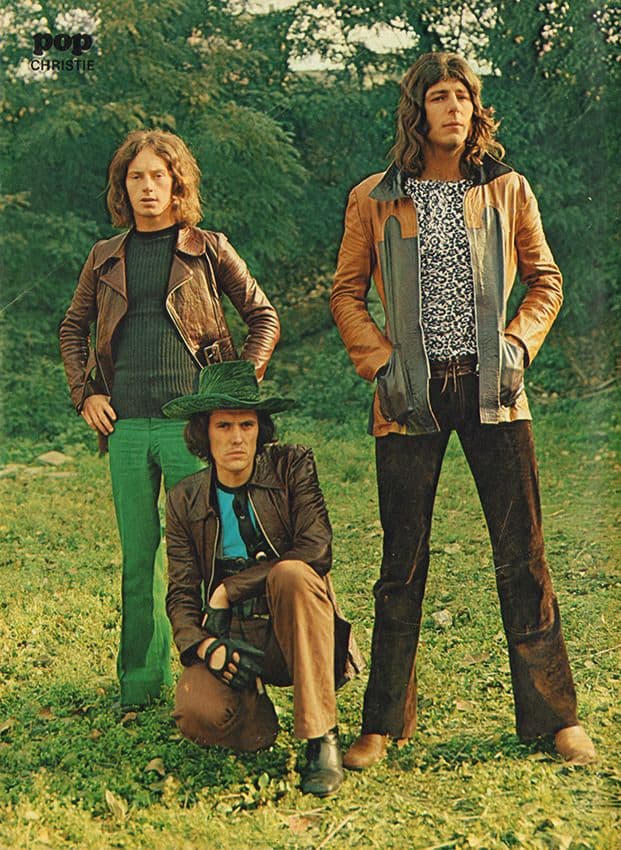
The story behind “Yellow River” is nearly as fascinating as the song itself. It was written by the British songwriter and producer Jeff Christie, who would soon form the band Christie to record and perform it. Interestingly, the song was originally recorded as a demo for the British group The Tremeloes, who were considering it as a follow-up to their previous hits. In fact, the backing track that eventually became the released version was recorded with The Tremeloes’ musicians playing the instruments.
However, The Tremeloes ultimately decided not to release the song, feeling it might sound too reminiscent of their earlier material. Rather than letting the recording fade into obscurity, Jeff Christie replaced the vocals with his own and formed the group Christie to release the track. What might have been just another discarded demo suddenly became one of the defining pop hits of 1970.
At first listen, “Yellow River” sounds light and carefree. Its upbeat rhythm, jangling guitars, and sing-along chorus evoke images of open roads and bright summer skies. Yet the lyrics hint at something deeper. The narrator speaks about returning home after a long absence—possibly after war—dreaming of the familiar landscape and the peaceful banks of the Yellow River.
Lines like “So long boy you can take my place / got my papers I’ve got my pay” suggest the voice of a soldier discharged from duty, finally free to leave behind a difficult chapter of life. In the early 1970s, when memories of the Vietnam War and earlier conflicts still weighed heavily on public consciousness, many listeners quietly recognized this theme of returning home and rebuilding one’s life.
What makes the song especially powerful is that the “Yellow River” itself is not necessarily a specific geographical place. Rather, it feels symbolic—a place of calm, memory, and belonging. It might represent childhood, home, or simply the peace that waits beyond hardship. That ambiguity allowed listeners from many countries to connect with the song in their own personal way.
Musically, Christie blended elements of British pop, folk-rock, and the polished studio production style of the late 1960s. The bright acoustic guitars, steady rhythm section, and layered harmonies created a sound that felt both fresh and familiar. In some ways, the arrangement echoed the melodic sensibility of bands like The Beatles, yet it retained its own straightforward charm.
Following the success of “Yellow River,” Christie released their self-titled debut album “Christie” (1970), which included the hit single as its centerpiece. While the band would enjoy another notable success with “San Bernadino” later that same year, it is “Yellow River” that remains their most enduring musical legacy.
More than fifty years later, the song continues to carry a quiet emotional power. For many listeners, hearing those opening chords instantly recalls an era when pop music still thrived on melody, sincerity, and simple storytelling. It reminds us of long summer afternoons, radios playing in the background, and the feeling that somewhere beyond the horizon there was always a road leading home.
In the end, “Yellow River” is not just a catchy pop tune from 1970. It is a small musical postcard from another time—a reminder that even the lightest songs can hold deep memories. And like the river it celebrates, its melody continues to flow gently through the decades, carrying with it echoes of freedom, reflection, and the enduring hope of returning to where the heart truly belongs.