
“Love Lives a Separate Life” – A Tender Confession of Distance, Regret, and the Quiet Loneliness of Fame
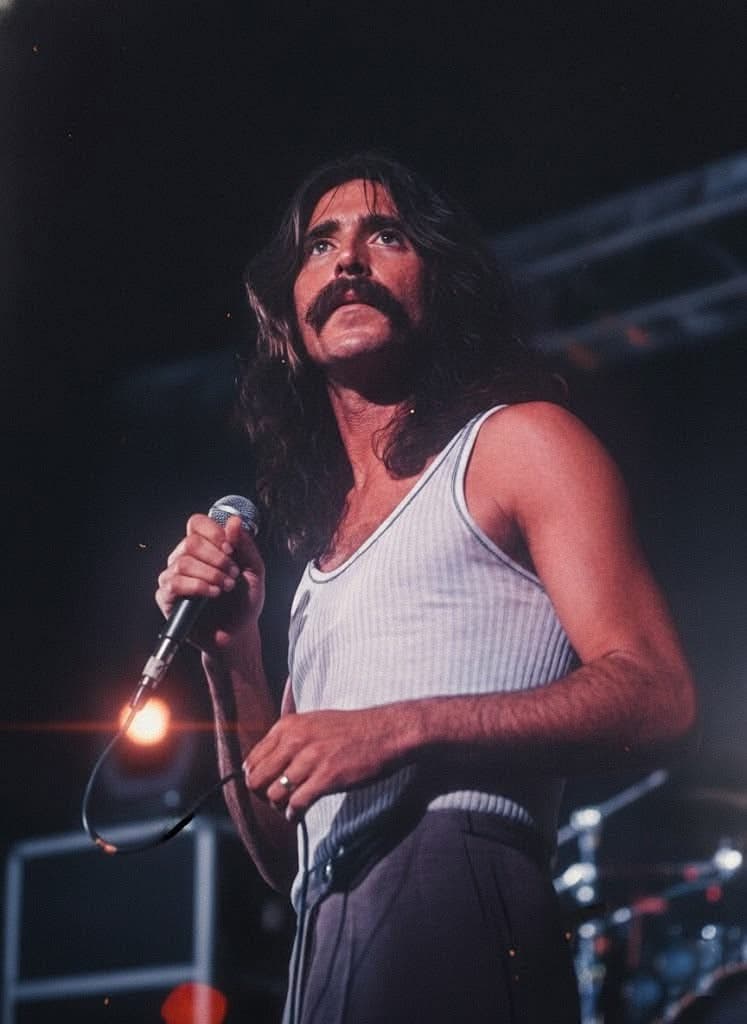
Few voices from the golden age of American pop-rock carry the emotional resonance of Chuck Negron, the unmistakable tenor of Three Dog Night. When he released “Love Lives a Separate Life” in 1979, it was more than just a solo single—it was a fragile, reflective statement from an artist stepping out of the towering shadow of his former band. The song appeared on his debut solo album Am I Still in Your Heart (1979) and marked a deeply personal chapter in his career.
Commercially, the single did not replicate the blockbuster chart success that Three Dog Night had enjoyed throughout the early 1970s. Unlike the band’s string of Top 10 hits such as “Joy to the World” or “Black and White,” “Love Lives a Separate Life” did not break into the upper reaches of the Billboard Hot 100. However, it did receive attention on Adult Contemporary formats, where its introspective tone found a more receptive audience. In many ways, its modest chart performance mirrored its theme—quiet, dignified, and somewhat removed from the noise of mainstream pop.
But to measure this song purely by chart numbers would be to misunderstand its purpose.
By 1979, Chuck Negron had already lived several musical lifetimes. As one of the three lead vocalists in Three Dog Night, he had been part of one of the most commercially successful American bands of the late 1960s and early 1970s. The group scored 21 consecutive Top 40 hits between 1969 and 1975—an extraordinary achievement. Yet behind the bright harmonies and driving rhythms lay personal turmoil, creative exhaustion, and the growing fractures that would ultimately dissolve the band’s classic lineup.
It was in this atmosphere of aftermath that “Love Lives a Separate Life” was born.
The song itself is built on a restrained arrangement—gentle piano lines, soft orchestration, and a vocal performance that feels almost confessional. Negron’s delivery is notably different from the soaring, full-throated style that once dominated arenas. Here, his voice carries vulnerability rather than bravado. The lyrics explore a painful but mature realization: that love, once fractured, can continue to exist independently of the people who once shared it.
“Love lives a separate life…”—the phrase itself is poetic and sobering. It suggests that affection does not simply disappear when relationships end. Instead, it lingers somewhere beyond reach, evolving into memory, regret, or quiet acceptance. The song captures that peculiar emotional space where two people move on, yet something invisible remains—untouched, unresolved, but alive.
For listeners who experienced the upheavals of the 1970s—the shifting cultural tides, changing relationships, and the fading of youthful certainty—the song carries particular resonance. It speaks not of fiery heartbreak, but of something more complex: emotional distance that grows slowly, almost imperceptibly, until love becomes an independent entity rather than a shared experience.
There is also an autobiographical undercurrent that cannot be ignored. At the time of this release, Negron was navigating not only professional separation from Three Dog Night, but also personal struggles that would later become widely known. Though the song does not explicitly detail those hardships, its tone suggests introspection and reckoning. It feels like a man taking stock of what remains after the spotlight dims.
Musically, the late 1970s were dominated by disco, arena rock, and emerging new wave. Against this backdrop, “Love Lives a Separate Life” feels almost deliberately understated. It aligns more closely with the Adult Contemporary ballad tradition—intimate, melodic, and emotionally direct. In that sense, it may not have been fashionable, but it was sincere.
And sincerity, especially in retrospect, often ages better than trend.
Today, revisiting “Love Lives a Separate Life” offers a glimpse into a transitional moment in American pop history—when a major voice from one of the most successful hit-making machines of the early ’70s stepped forward alone, without the safety net of three-part harmonies. It reminds us that artists, like all of us, eventually face the quiet spaces where applause fades and reflection begins.
There is something profoundly moving about that.
The song may not dominate classic rock playlists, but it remains a testament to Chuck Negron’s ability to convey emotional truth. It stands as a reminder that love, once kindled, does not simply vanish. Sometimes it retreats into memory. Sometimes it becomes a lesson. And sometimes, as the song gently insists, it lives a separate life of its own—beyond time, beyond circumstance, and beyond the charts.