
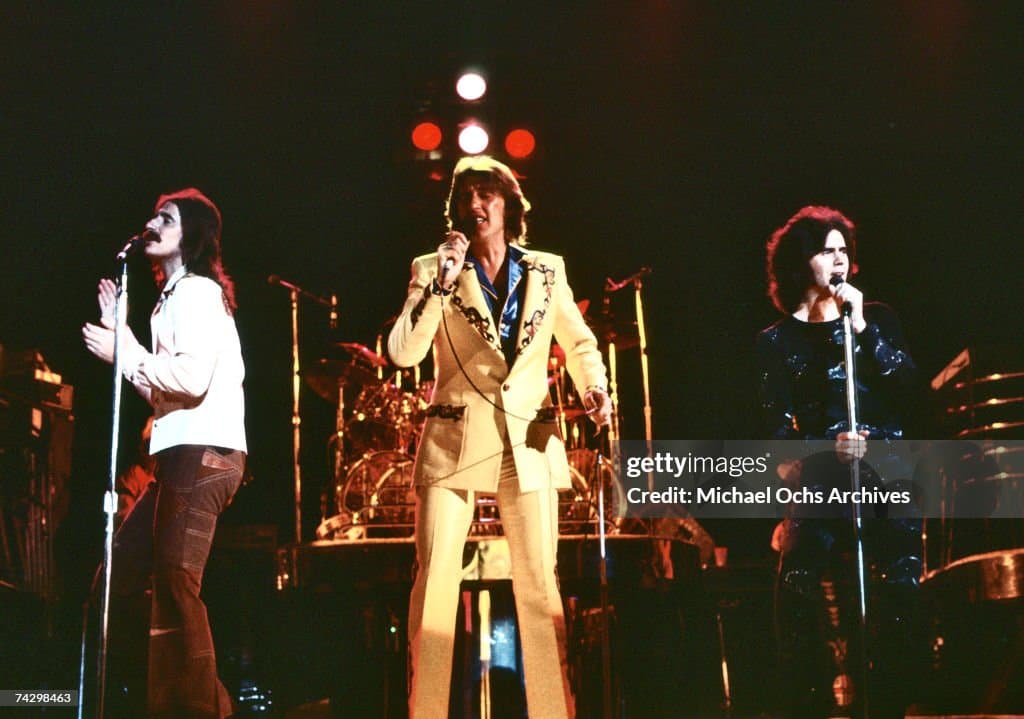
Three Voices, Countless Hits, and the Price of Fame: The Untold Story Behind Three Dog Night’s Breakup
From the late 1960s through the early 1970s, Three Dog Night stood as one of the most dominant bands on American radio. What began as a group of talented young musicians chasing a dream quickly grew into a musical powerhouse that defined an era. With three distinctive lead vocalists, Chuck Negron, Cory Wells, and Danny Hutton, the band developed a unique sound built on powerful harmonies, emotional delivery, and an exceptional ability to transform songs written by other composers into unforgettable hits.
Their success was nothing short of extraordinary. In just a few short years, Three Dog Night placed an impressive string of songs on the charts, including classics like “One,” “Joy to the World,” “Mama Told Me (Not to Come),” “Shambala,” and “Black and White.” Many of their singles climbed into the Top 10 of the Billboard charts, while their albums sold millions of copies worldwide. Concert venues filled quickly wherever they performed, and their music dominated radio playlists across the United States. At the height of their popularity, Three Dog Night had become one of the most successful rock bands of their generation.
But behind the bright lights of the stage and the excitement of sold-out shows, a far more complicated reality was taking shape.
The relentless pressure of constant touring, sudden fame, and the demands of the music industry began to strain the band from within. Creative disagreements started to surface as members developed different ideas about the band’s direction. Personal tensions slowly grew stronger, and the unity that once fueled their success began to weaken.
Like many artists living in the fast-paced world of rock and roll during that era, the band also faced the darker side of fame. Endless parties, exhaustion from touring, and the temptations that surrounded the music scene brought serious challenges. Chuck Negron later revealed that he struggled deeply with drug addiction during this period, particularly with heroin. His personal battle was only one part of a larger set of pressures affecting the group.
As the years passed, these problems intensified. Creative conflicts, emotional fatigue, and the growing weight of personal struggles made it increasingly difficult for the band members to maintain the harmony that had once defined them. By the mid-1970s, the tension had reached a breaking point.
In 1976, Three Dog Night officially disbanded, bringing an end to one of the most remarkable runs in American rock history.
Years later, Chuck Negron would openly reflect on those turbulent times. Through interviews and his personal memoirs, he shared stories of the band’s incredible rise as well as the mistakes and hardships that contributed to its collapse. His recollections paint a vivid picture of life inside a band that had everything the music industry could offer, yet struggled to survive the pressures that came with it.
Despite the breakup, the legacy of Three Dog Night remains powerful. Their songs continue to play on classic rock stations, and new generations of listeners still discover the energy and emotion behind their music. More than half a century later, their hits remain a reminder of a golden era in American rock and of a band whose voices once filled the airwaves around the world.
 Oldies Songs