
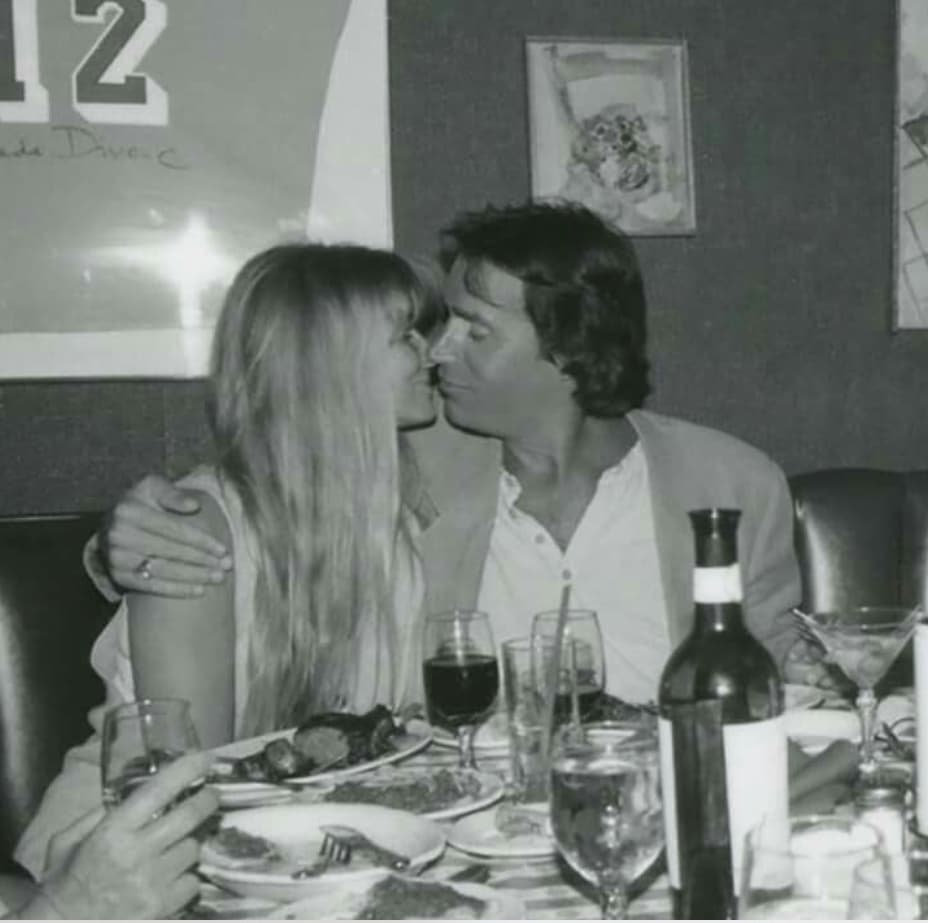
The Language of Love — a quiet meditation on intimacy, communication, and the fragile art of understanding one another
When Dan Fogelberg released “The Language of Love” in 1984, it arrived not as a grand declaration, but as a thoughtful conversation set to music — gentle, observant, and deeply human. The song appears on his album Windows and Walls, a record that marked a subtle yet important shift in Fogelberg’s artistic journey. While it did not become one of his biggest chart successes, “The Language of Love” reached the Billboard Hot 100, peaking modestly in the lower half of the chart, and found a warmer reception on adult contemporary radio, where its reflective tone felt most at home.
By the early 1980s, Fogelberg was no longer simply the poet of youthful longing. He had already given the world enduring classics — songs that captured the innocence of first love, the ache of distance, and the pull of nostalgia. With Windows and Walls, he turned inward. The album itself suggests separation and transparency at once — what divides us, and what allows us to see through to one another. “The Language of Love” sits squarely at the center of that idea.
Rather than celebrating romance as passion or destiny, the song treats love as a skill — something learned slowly, imperfectly, over time. Fogelberg sings of words unspoken, gestures misunderstood, and the quiet distance that can grow even between people who care deeply. Love, here, is not a rush of emotion; it is a language, complete with dialects, pauses, and mispronunciations. And like any language, it requires patience, listening, and humility.
This perspective felt especially resonant in the mid-1980s, a period when popular music often leaned toward spectacle and excess. Fogelberg chose restraint instead. His arrangement is understated — soft keyboards, gentle percussion, and a vocal performance that feels conversational rather than performative. He sings as though he is thinking aloud, allowing space for the listener’s own memories to fill the silence between lines.
There is a quiet wisdom in the way he frames love not as something we fall into, but something we must learn to speak. Miscommunication becomes inevitable, forgiveness essential. The song does not offer easy answers; instead, it acknowledges the effort required to truly understand another person. That honesty gives the song its lasting emotional weight.
For listeners who had followed Fogelberg from the beginning — from the pastoral reflections of the 1970s to this more introspective phase — “The Language of Love” felt like a natural evolution. His voice, always warm and intimate, carries a deeper gravity here. There is less yearning, more awareness. Less idealism, more acceptance. It is the sound of someone who has loved, stumbled, and learned that closeness is built not on perfection, but on persistence.
What makes the song endure is its recognition of time. Love, Fogelberg suggests, changes as we do. It matures. It becomes quieter. And sometimes, it becomes harder to articulate. Yet within that difficulty lies its true beauty. To keep trying to speak that language — even when words fail — is itself an act of devotion.
In retrospect, “The Language of Love” feels like a companion piece to the lives of its listeners. It does not demand attention; it waits patiently. It understands that some songs are not meant to be discovered all at once, but returned to over the years, revealing new meanings as our own stories deepen.
Listening now, decades later, the song feels less like a product of its time and more like a timeless reflection. A reminder that love is not only something we feel, but something we practice — quietly, imperfectly, and with hope.