
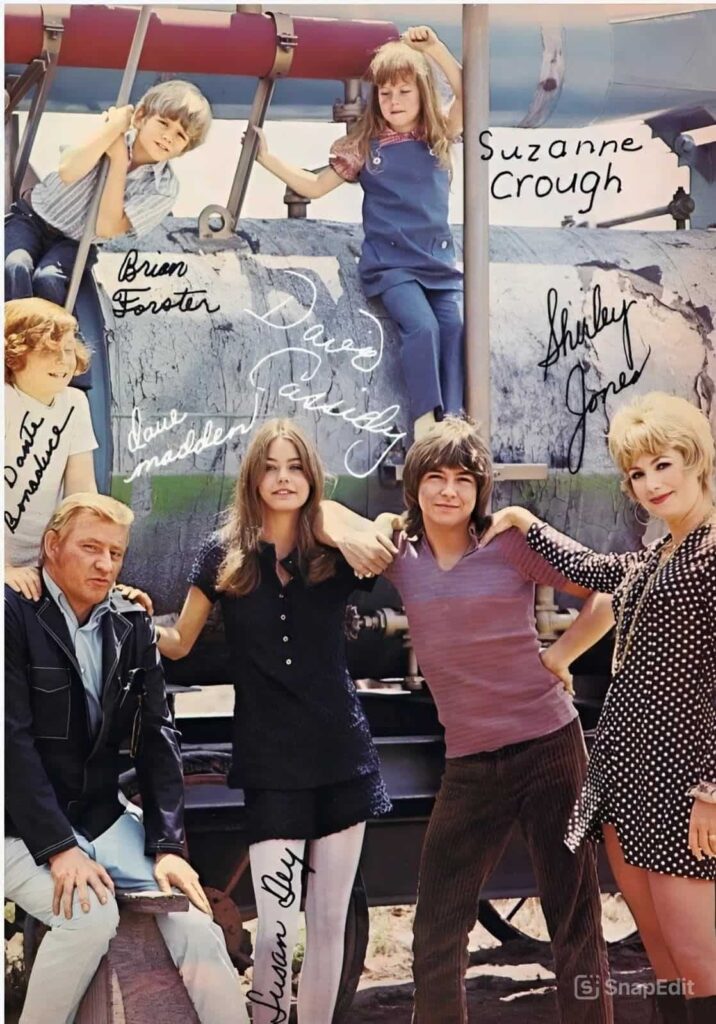
A Gentle Promise of Togetherness in a World That Was Quietly Changing
When “Being Together” by David Cassidy was released in 1972, it arrived at a moment when popular music was slowly turning inward—away from the grand anthems of the late 1960s and toward something softer, more reflective, and deeply personal. The song, featured on the album Cherish (1972), did not storm the charts in the way some of Cassidy’s earlier hits did, but it held its own modest presence, reaching the lower regions of the Billboard Hot 100, while finding warmer reception among his devoted fan base and on adult contemporary radio. Its chart performance, though not spectacular, hardly defines its lasting emotional resonance.
To understand “Being Together,” one must first understand David Cassidy himself—not merely the teen idol adored by millions through The Partridge Family, but a young man striving to be taken seriously as an artist. By 1972, Cassidy was already feeling the weight of fame. The screaming crowds, the relentless touring, and the expectations placed upon him had begun to clash with his desire for authenticity. It is within this quiet tension that “Being Together” finds its voice.
The song was written by Tony Romeo, a songwriter closely associated with Cassidy’s early career, known for crafting gentle, melodic pieces that highlighted Cassidy’s warm, approachable vocal tone. Unlike the more upbeat hits such as “I Think I Love You” or the shimmering optimism of “Cherish,” “Being Together” leans into a slower, almost contemplative arrangement. There is a softness in the instrumentation—subtle strings, restrained percussion—that allows Cassidy’s voice to carry the emotional weight.
Lyrically, “Being Together” is deceptively simple. It speaks of companionship, of the quiet comfort found in simply sharing space with another person. There are no grand declarations, no dramatic crescendos. Instead, the song unfolds like a conversation whispered late at night—intimate, unguarded, sincere. In an era marked by social upheaval and uncertainty, this kind of emotional refuge held a particular significance. It reminded listeners that amidst all the noise, there was still value in closeness, in understanding, in the small, enduring bonds between people.
What makes the song particularly poignant is how it mirrors Cassidy’s own inner landscape at the time. Behind the polished image of a pop sensation was someone searching for grounding, for something real. “Being Together” can be heard as both a message to others and a quiet reassurance to himself—that beyond the spotlight, beyond the expectations, there existed a simpler truth worth holding onto.
Musically, the track reflects the early 1970s shift toward softer pop and the emerging adult contemporary sound. It shares a certain kinship with the works of artists like Carpenters and Bread, where melody and mood take precedence over spectacle. Yet Cassidy’s interpretation carries a unique vulnerability. His voice, often associated with youthful exuberance, here reveals a more subdued, reflective quality—one that hints at the artist he was becoming.
Over time, “Being Together” has remained a lesser-discussed piece within Cassidy’s catalog, overshadowed by his bigger hits. But for those who return to it, the song offers something deeper than chart success can measure. It captures a fleeting moment—both in music history and in Cassidy’s personal journey—when everything slowed down just enough to allow for honesty.
Listening to it now, decades later, one cannot help but feel a gentle ache. It is the kind of song that doesn’t demand attention, but quietly earns it. It speaks not to the excitement of youth, but to the enduring need for connection—a theme that never fades, no matter how much time passes.
In the end, “Being Together” stands as a quiet testament to David Cassidy’s artistic sensitivity. It may not have been his most celebrated recording, but it remains one of his most sincere—a soft echo from a time when even the brightest stars were searching for something steady to hold onto.