
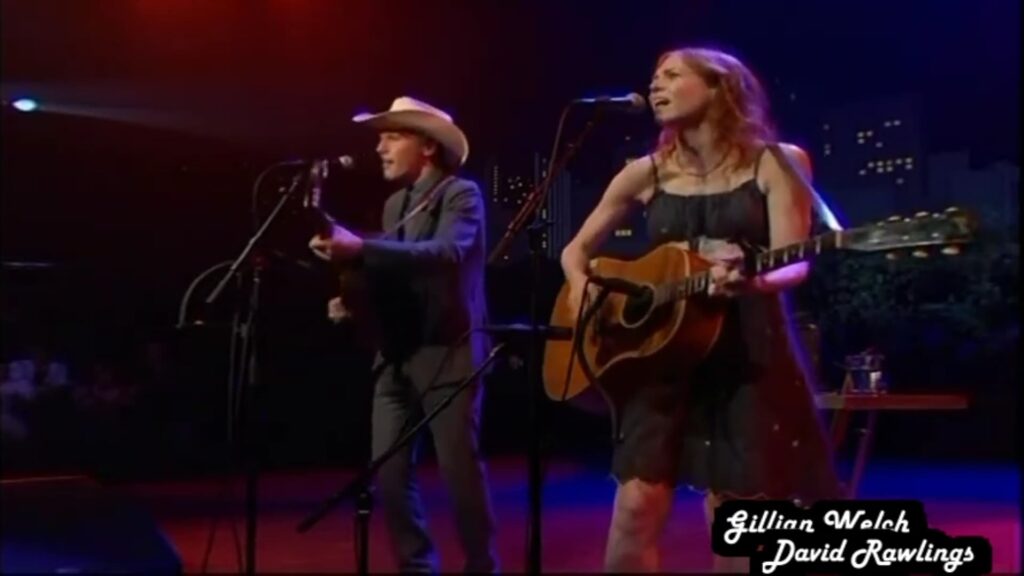
A Quiet Promise of Freedom in “I’ll Fly Away” by Gillian Welch & David Rawlings
In a simple acoustic performance captured on stage, Gillian Welch and David Rawlings breathe new life into the timeless gospel hymn “I’ll Fly Away.” The song, written in 1929 by Albert E. Brumley, has traveled through nearly a century of American music, but in their hands it feels both ancient and alive. Performed with only two voices and a pair of well worn guitars, the moment becomes less a concert and more a quiet gathering around a song that has comforted generations.
The performance featured in the recording shows the signature musical partnership of Gillian Welch and David Rawlings, artists widely respected for preserving the spirit of old American folk and country traditions. Standing close together, their harmonies rise and fall with a natural ease that feels almost conversational. Rawlings’ gentle guitar lines weave around Welch’s clear, steady voice, allowing the words of “I’ll Fly Away” to settle softly into the room.
The hymn itself carries a message that has resonated for nearly a hundred years. “I’ll Fly Away” speaks of release from hardship and the hope of a peaceful home beyond life’s burdens. Through the decades it has been sung in churches, on front porches, and at gatherings where music becomes a shared memory rather than mere entertainment. Welch and Rawlings approach the song with deep respect for that tradition.
During the performance, there is no rush and no spectacle. The arrangement remains beautifully spare. Each lyric is allowed to breathe. The audience listens in near silence, as if recognizing that they are witnessing something rooted deeply in the American musical past. The song’s familiar refrain feels like a bridge between eras, connecting early gospel traditions with the modern folk revival.
For listeners who have followed the careers of Gillian Welch and David Rawlings, the performance reflects the qualities that have defined their music for decades: patience, authenticity, and a devotion to storytelling through song. Their voices carry the warmth of old recordings while remaining unmistakably their own.
By the time the final notes fade, “I’ll Fly Away” feels less like a performance and more like a memory gently revisited. It is a reminder that some songs do not age. They simply wait for the right voices to carry them forward again.
 Oldies Songs