
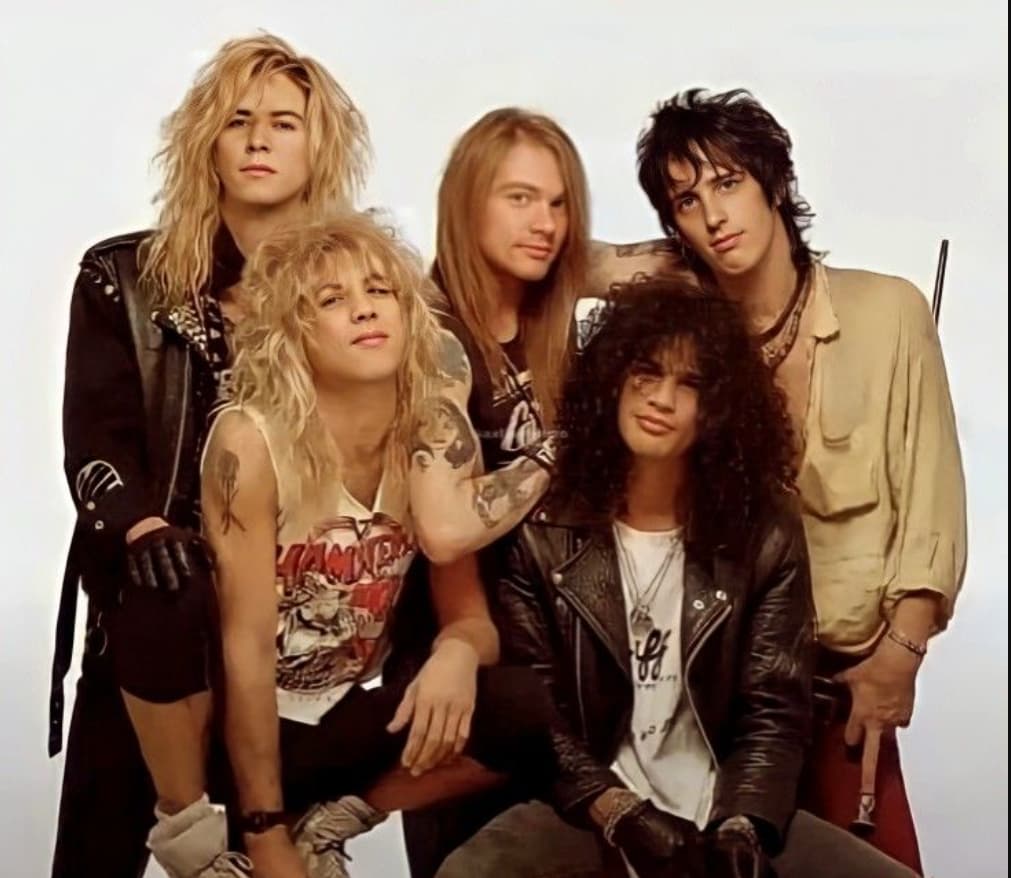
You Could Be Mine — a thunderous, unrestrained cry of heartbreak, fury, and the wild pulse of rock ’n’ roll
When “You Could Be Mine” by Guns N’ Roses crashed onto the airwaves in the summer of 1991, it felt less like a single release and more like a declaration — sharp-edged, rebellious, and driven by a fire that only this band could ignite. It became the lead single from the album Use Your Illusion II, and upon release it thundered into the charts, reaching No. 29 on the US Billboard Hot 100 and soaring to No. 3 on the UK Singles Chart. In several countries, including Spain and Finland, it hit No. 1.
But numbers only tell a fraction of the story. Emotion tells the rest.
From its opening seconds — the machine-gun drum pattern, Slash’s snarling guitar riff, the unmistakable grit in Axl Rose’s voice — the song tears open a world of anger and bitter truth. This isn’t the wounded vulnerability of a ballad, nor the sentimental longing of softer rock. It is confrontation. A love story turned toxic, a final boundary drawn in the dust.
Axl’s delivery is seething, unfiltered, almost venomous. The lyrics cut, not with self-pity, but with hard-earned recognition:
the kind you arrive at only after the fights, the sleepless nights, the doors slammed shut.
“You could be mine / But you’re way out of line…”
These lines tell you everything — this is the moment when affection collapses, and clarity takes its place.
What many listeners don’t realize is that the core idea of the song dates back to the band’s earliest days. The riff and skeleton of “You Could Be Mine” were already floating around during the Appetite for Destruction sessions in the mid-1980s. It simmered through the years, gathering weight, sharpening its teeth, until it finally burst forward on the Use Your Illusion albums. And by then, Guns N’ Roses had lived enough chaos, fame, and heartbreak to give the track its full emotional bite.
Its cultural explosion grew even larger when the song became a defining musical presence in Terminator 2: Judgment Day. It didn’t simply appear in the film — it fit its world. The relentless rhythm, the sense of running from something bigger than yourself, the battle between freedom and fate. Suddenly, the song had an identity beyond the band: it became part of a generation’s soundtrack.
But beneath the noise and adrenaline, there is a very human story.
A story of loving someone who burns too brightly, pushes too far, tests every limit — and finally realizing that no matter how deep the history is, no matter how strong the pull once was, the cost has become too high.
That is why “You Could Be Mine” resonates so deeply with listeners who carry their own scars. The song doesn’t whisper comfort. It shouts the truth we sometimes avoid: that some relationships can’t be saved, no matter how electrifying they once were. And yet, in shouting it, the song feels strangely liberating.
Decades later, when the opening riff hits, memories rush in. Long hair, leather jackets, nights lit by neon, radios turned up too loud, the world moving fast and full of promise. The song carries the spirit of an age — reckless, passionate, unapologetically alive.
In the long and turbulent story of Guns N’ Roses, You Could Be Mine stands like a bolt of lightning: brief, blinding, impossible to forget.
A reminder that love can wound, endings can liberate, and sometimes the fiercest truths are the ones screamed over roaring guitars.