
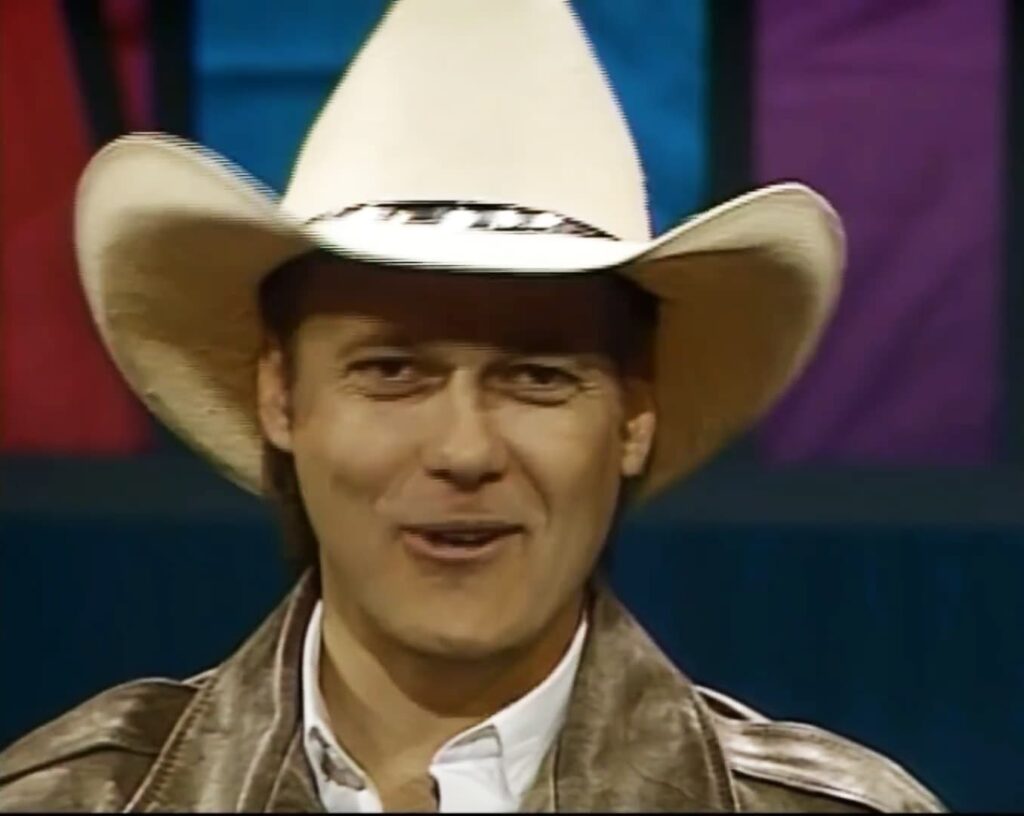
A Rare Conversation Preserved: Ricky Van Shelton Reflects on Roots, Fame, and the True Measure of Country Music
In a recently surfaced archival gem from the Australian television series Down Home Down Under, country star Ricky Van Shelton offers a candid, deeply human portrait of his early career and artistic philosophy. The interview, hosted by the LeGarde Twins and long kept in private collection, stands as one of fourteen rare recordings never broadcast until now. Filmed at the height of Shelton’s rise, shortly after his “Loving Proof” album achieved gold status, the conversation captures an artist grounded in humility despite industry acclaim, including Male Vocalist of the Year honors.
What emerges most strikingly is Shelton’s unwavering belief that success is not measured by trophies, but by connection. Awards, he admits, are fleeting. The real currency lies in the audience, in ticket sales, in whether the songs still resonate when the stage lights dim. It is a perspective shaped not by sudden fame, but by years of persistence.
Shelton recounts his journey from rural Virginia to Nashville with vivid simplicity. A teenage fan of rock and soul, influenced by artists like The Beatles and Otis Redding, he found his path redirected through informal gatherings with his brother, where bluegrass and traditional country were played around kitchen tables. That transformation was not immediate, but once it took hold, it became permanent. The sound he once resisted became the language he would carry to the world.
Equally compelling is his description of Nashville in those early days. Without industry connections, Shelton relied on sheer visibility. Night after night, he moved from club to club, handing out rough demo tapes, introducing himself to musicians, writers, anyone who might open a door. It was not competition that drove him, but a singular vision: to hear his voice on the radio and to belong to the music he loved.
The interview also reveals the often overlooked foundation behind his success. His wife, Betty, emerges as a quiet architect of his career, providing financial stability and emotional encouragement while Shelton immersed himself fully in the pursuit of music. Their partnership underscores a truth rarely acknowledged in headlines: behind every ascent, there are unseen sacrifices.
Listening now, decades later, the interview carries a different weight. Shelton speaks not as a distant star, but as a working musician who understands he is both artist and product, navigating the delicate balance between authenticity and industry reality. Yet through it all, his priorities remain disarmingly simple: quality songs, loyal listeners, and a life that still feels honest.
In an era when country music often wrestles with its identity, this rare conversation feels like a quiet reminder of what once defined it and, perhaps, what still should.