
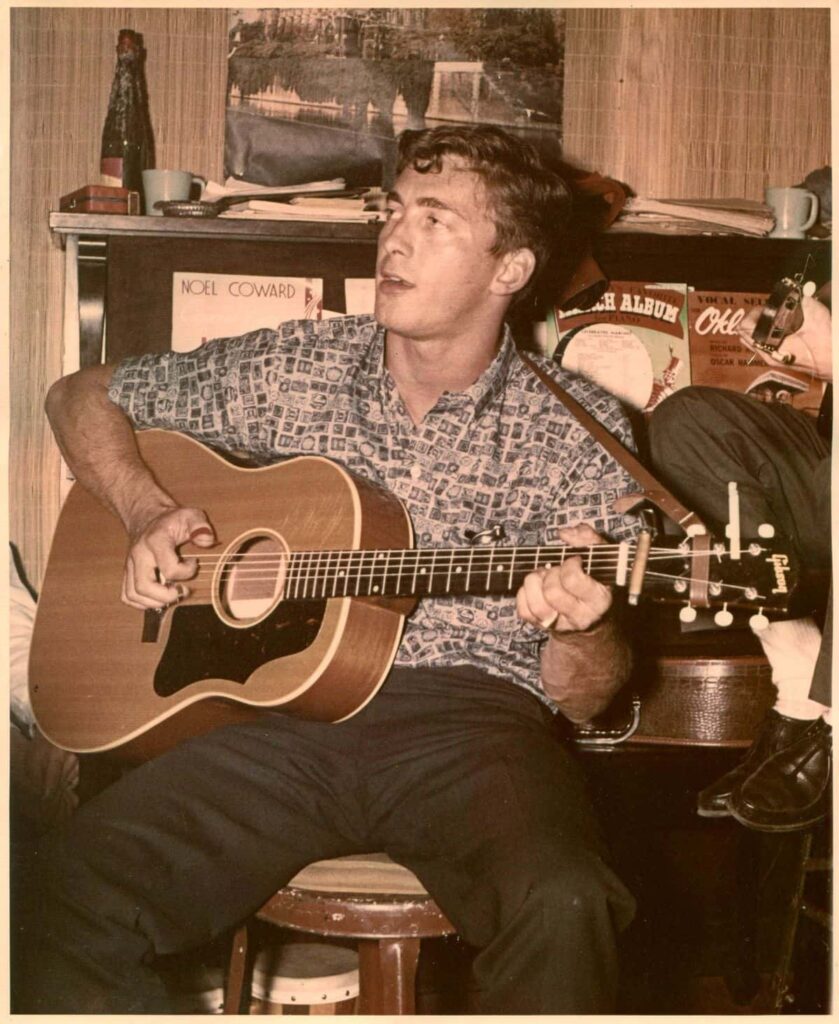
A Farewell to a Vanishing Frontier: The Quiet Strength of a Cowboy’s Last Ride
When “The Old Double Diamond” by Ian Tyson first reached listeners in 1983 as part of the album “Old Corrals and Sagebrush”, it did not storm the commercial charts in the manner of mainstream pop or rock hits of the era. There were no high Billboard rankings, no radio saturation across urban stations. And yet, to measure this song by chart positions alone would be to misunderstand its true weight. Within the world of Western folk and cowboy music, it quietly established itself as one of the most poignant and authentic farewell ballads ever written—a song that would endure not through numbers, but through memory, identity, and lived experience.
“The Old Double Diamond” tells the story of a rancher being forced to leave behind the land he has known all his life—the titular ranch, now sold or lost to the inevitable march of modernization. Tyson, himself deeply rooted in ranching culture, did not write from imagination alone; he wrote from observation, from proximity, and from a deep empathy for a way of life that was steadily disappearing. By the early 1980s, the economic realities of ranching in Western Canada and the American West were shifting dramatically. Corporate ownership, rising costs, and changing land use were pushing out the independent cowboy—the very figure Tyson had long celebrated.
The song unfolds with a restrained dignity. There is no dramatic outburst, no overt protest. Instead, Tyson adopts the voice of a man who has already accepted his fate, even as the weight of it settles in his chest. The imagery is spare but deeply evocative: saddles being packed, familiar trails left behind, the silence of a land that will no longer echo with the rhythms of daily work. One can almost hear the wind moving through open plains, carrying with it the residue of countless untold stories.
What makes “The Old Double Diamond” particularly powerful is its refusal to romanticize loss. There is nostalgia, certainly—but it is tempered by realism. The rancher does not cling to illusions; he recognizes that the world is changing, and that his place within it is no longer secure. This quiet resignation gives the song a depth that many more overtly sentimental pieces lack. It speaks not just of one man’s departure, but of an entire cultural transition.
Musically, Tyson’s delivery is understated, almost conversational. His voice—weathered, unpolished, and deeply sincere—carries the narrative with an authenticity that no studio perfection could replicate. The arrangement is minimal, allowing the story to take precedence. Acoustic guitar lines drift gently beneath the vocals, evoking the openness of the landscape itself. There is space in the music, and that space is essential—it allows the listener to reflect, to remember, to project their own experiences onto the story being told.
Behind the song lies a broader commentary on the erosion of tradition. The “Double Diamond” is more than just a ranch; it is a symbol of continuity, of identity tied to land and labor. Its loss represents not merely economic hardship, but a severing of roots. For those who have witnessed similar changes—whether in rural communities, family trades, or even personal chapters of life—the song resonates on a deeply personal level.
In the years since its release, “The Old Double Diamond” has become something of a standard within cowboy and Western music circles. It is frequently performed, covered, and referenced as a benchmark of storytelling excellence. While it may never have occupied the upper tiers of commercial charts, its legacy is arguably more profound. It lives on in campfire renditions, in quiet moments of reflection, and in the collective memory of those who understand what it means to leave something behind that can never truly be replaced.
Listening to Ian Tyson sing this song today, one cannot help but feel that it captures a moment suspended in time—a farewell that continues to echo long after the final note fades. It is not simply a song about a ranch; it is a meditation on change, on acceptance, and on the enduring human need to remember where we come from, even as we are forced to move on.