
A Wry, Hard Earned Reflection on Independence and the Illusion of Wealth in a Changing America
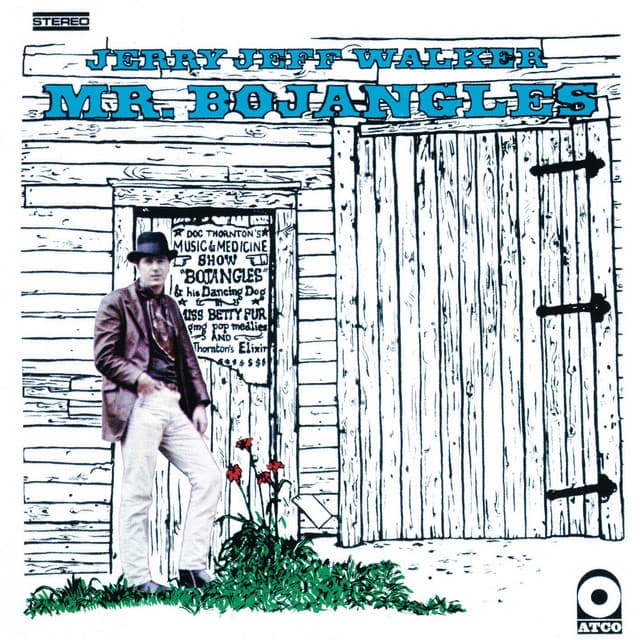
When Jerry Jeff Walker released I Makes Money (Money Don’t Make Me) in 1968 on his debut album Mr. Bojangles, the song arrived quietly, without fanfare or chart dominance, yet it carried a depth of lived experience that has allowed it to age with uncommon grace. At the time of its release, the song did not enter the major U.S. singles charts, and neither did the album make an immediate commercial impact. Still, its significance lies not in numbers but in the clarity of its voice, a voice that spoke directly to a generation standing at the crossroads of tradition and disillusionment.
Released by Atco Records in 1968, Mr. Bojangles was Jerry Jeff Walker’s first full length statement as a recording artist. The album is now remembered primarily for its title song, later immortalized by the Nitty Gritty Dirt Band, but I Makes Money (Money Don’t Make Me) deserves equal attention for its philosophy and candor. In a decade marked by protest, cultural upheaval, and a deep questioning of American values, Walker chose not to shout. Instead, he spoke plainly, almost conversationally, offering a song that sounds less like a sermon and more like a late night confession.
The story behind I Makes Money (Money Don’t Make Me) is inseparable from Walker’s own life. Before recognition found him, he lived as a drifter, songwriter, and working musician, moving through coffeehouses, bars, and borrowed rooms. Money, when it came, was something earned through effort rather than status. This reality shaped the song’s central idea. The narrator does not reject money outright. He acknowledges its necessity. But he draws a firm line between earning a living and being defined by wealth. The phrase money don’t make me is not rebellious for the sake of rebellion. It is a declaration of selfhood.
Musically, the song sits comfortably within the folk and country tradition of the late 1960s, but it carries a looseness that hints at the outlaw movement that would soon follow. The melody is straightforward, almost understated. This simplicity allows the lyrics to breathe. Walker’s vocal delivery is relaxed, slightly weathered, and deeply human. He does not perform the song as a character. He inhabits it. That authenticity is what gives the track its lasting emotional weight.
Lyrically, I Makes Money (Money Don’t Make Me) explores dignity through labor rather than accumulation. The narrator takes pride in work, not in possessions. There is no bitterness here, only perspective. In an era when the American Dream was increasingly tied to material success, Walker offered a quieter alternative. His message suggested that fulfillment comes from autonomy, from knowing who you are when everything else is stripped away. This idea resonated strongly with listeners who had lived through economic uncertainty, postwar adjustment, and the slow realization that prosperity does not guarantee peace.
Within the context of Mr. Bojangles, the song serves as a philosophical counterweight to the album’s more narrative driven moments. While the title track tells a story of beauty found in unlikely places, I Makes Money (Money Don’t Make Me) turns inward. It is reflective, grounded, and subtly defiant. Together, these songs established Jerry Jeff Walker as a songwriter who valued truth over polish.
Looking back, the absence of chart success feels almost appropriate. The song was never meant to chase trends or radio formulas. Its power lies in recognition rather than revelation. For listeners who have spent a lifetime working, striving, and reassessing what truly matters, I Makes Money (Money Don’t Make Me) feels less like a song from the past and more like a companion. It reminds us that while money can be made and lost, character is earned slowly, through years of living, choosing, and standing by one’s own measure of worth.