
A Song About a Wandering Dancer and the Quiet Humanity Found in Unexpected Places
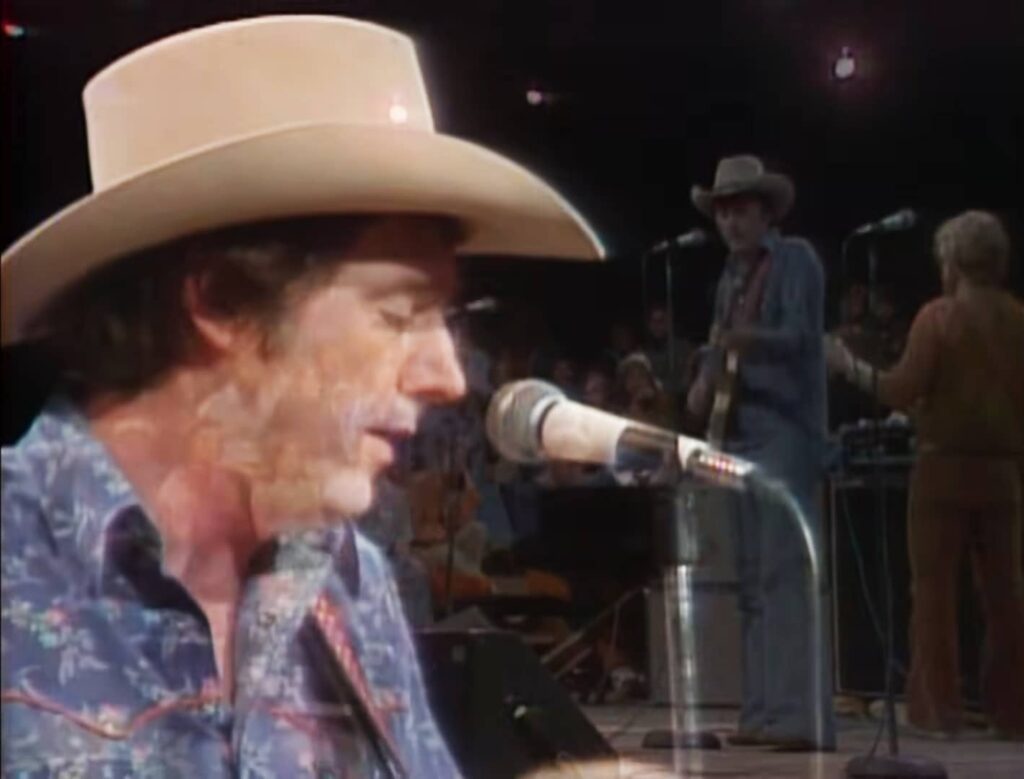
In 1976, Jerry Jeff Walker stepped onto the stage of Austin City Limits and delivered one of the most heartfelt performances ever captured on the program. Sitting with a guitar and a storyteller’s calm presence, he sang “Mr. Bojangles”, the song that had already become the defining piece of his career. The moment was simple and unpolished, yet deeply moving. For many listeners, that performance remains one of the most intimate musical memories preserved by the legendary television series.
Originally written by Jerry Jeff Walker in 1968, “Mr. Bojangles” was inspired by a real encounter Walker had while spending a night in a New Orleans jail. There he met an older street performer who introduced himself as Mr. Bojangles and spoke about his life as a traveling dancer. The man’s stories were filled with humor and sadness, including the memory of a beloved dog he had lost years earlier. Walker was struck by the quiet dignity of the stranger and later transformed that meeting into a song that captured loneliness, resilience, and the fragile poetry of ordinary lives.
By the time Walker performed the song on Austin City Limits in 1976, “Mr. Bojangles” had already traveled far beyond its folk roots. It had been famously recorded by The Nitty Gritty Dirt Band, whose 1970 version reached No. 9 on the Billboard Hot 100 and introduced the song to a much wider audience. Over the years the ballad was embraced by countless performers including Sammy Davis Jr., whose dramatic stage interpretation turned it into a showpiece. Yet Walker’s own performances always carried something uniquely personal, as if he were still remembering that quiet conversation in a dim jail cell.
The 1976 Austin City Limits appearance captured Walker at the height of his connection to the Texas songwriting movement. During that era he had already become a central figure in the progressive country scene that was flourishing around Austin, Texas. His 1972 album Viva Terlingua! had turned him into a cult hero among songwriters and fans of outlaw country. On stage he never presented himself as a polished star. Instead he sang like a traveler sharing stories gathered along the road.
When Walker began “Mr. Bojangles” during that broadcast, the atmosphere shifted instantly. The opening guitar chords were gentle and familiar. His voice carried a weathered warmth, the sound of someone who had lived with the song for years. Each line unfolded slowly, allowing the story of the wandering dancer to breathe. When he reached the verse about the old man’s dog, the room seemed to grow quieter, as though everyone understood the quiet heartbreak within the lyrics.
Part of the magic of “Mr. Bojangles” lies in its storytelling. The song does not rely on dramatic melodies or complex arrangements. Instead it moves like a conversation remembered long after the moment has passed. The dancer laughs, tells jokes, remembers his dog, and finally dances again for a small group of strangers. In those few verses, Walker created a portrait of a life both ordinary and unforgettable.
The Austin City Limits performance preserved that portrait beautifully. The television cameras captured the sincerity of Walker’s delivery and the respectful silence of the audience. It felt less like a concert and more like a shared memory unfolding in real time.
Decades later, that 1976 rendition of “Mr. Bojangles” remains one of the most cherished moments in the history of Austin City Limits. It stands as a reminder that sometimes the most powerful songs are not the loudest ones. They are the quiet stories about people who briefly cross our path, leaving behind a melody that stays with us for the rest of our lives.