
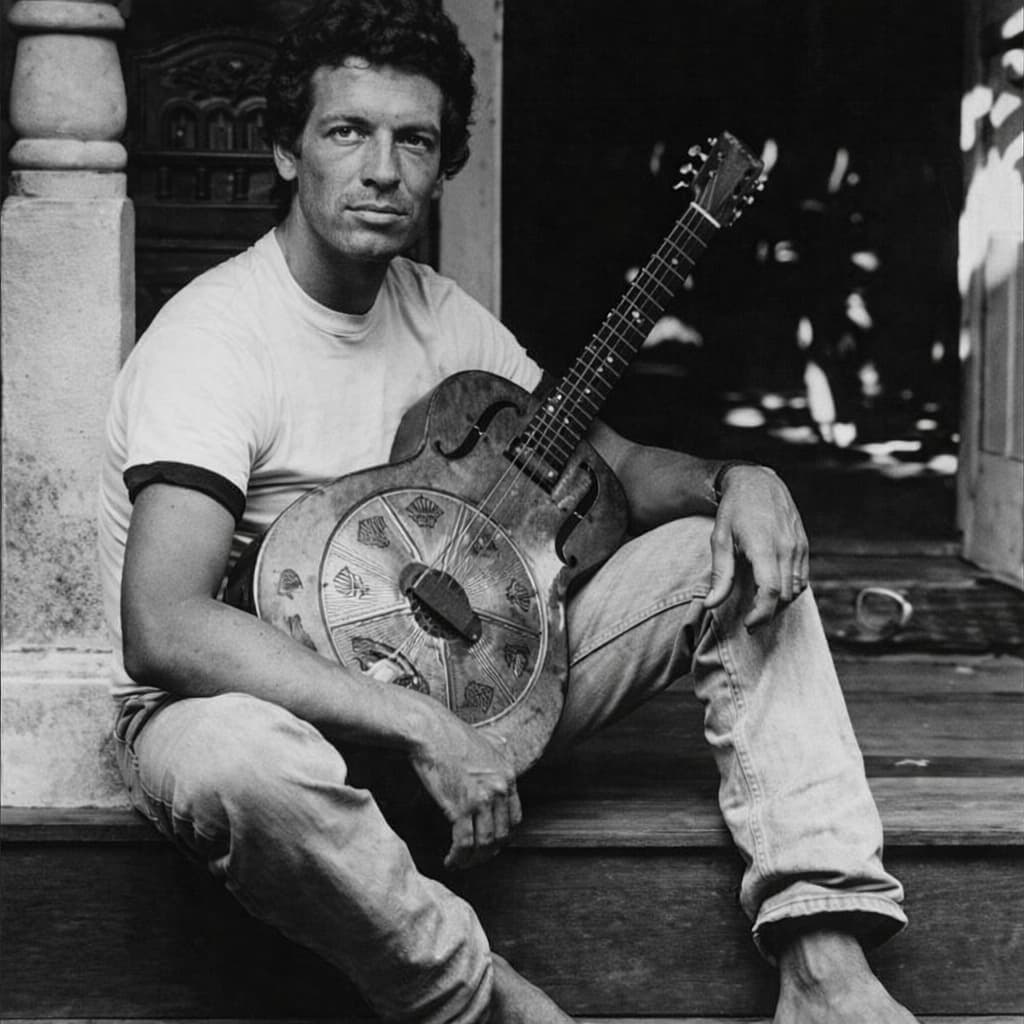
A slow-burning blues warning about temptation, truth, and the restless human soul
When “Evil Is Going On” first appeared in 1966 on the debut album John Hammond by John Hammond, it did not storm the pop charts. In fact, it never entered the Billboard Hot 100—and that, in many ways, tells you everything about its place in music history. This was not a song crafted for radio gloss or teenage dance floors. It belonged instead to dimly lit rooms, to the low hum of an amplifier, to listeners who leaned in close and heard something older than rock & roll itself. Released by Vanguard Records in 1966, the album did not produce charting singles, but it quietly cemented Hammond’s reputation as one of the most authentic blues interpreters of the 1960s folk-blues revival.
The song itself was written by the legendary Chicago bluesman Willie Dixon, one of the principal architects of the electric blues sound that defined Muddy Waters and the Chess Records era. Originally recorded by Muddy Waters in 1954, “Evil Is Going On” carried Dixon’s unmistakable lyrical signature: plainspoken, direct, and laced with moral gravity. When Hammond chose to record it over a decade later, he was not merely covering a song—he was paying tribute to a lineage.
The mid-1960s were a fascinating moment. Young American musicians were rediscovering the blues even as British bands like The Rolling Stones and The Yardbirds were re-exporting that very sound back to the United States. Hammond stood slightly apart from both camps. He did not treat the blues as rebellion or fashion. He approached it as inheritance. On “Evil Is Going On,” his guitar tone is lean, unsentimental, almost conversational. There is no theatrical excess—just steady rhythm, subtle tension, and a vocal delivery that sounds lived-in rather than performed.
Lyrically, the song is built around a warning: something is wrong in a relationship. “You better watch your step,” the narrator cautions, sensing betrayal, dishonesty, moral drift. In Dixon’s writing, “evil” is not supernatural—it is human weakness. It is temptation, deception, pride. Hammond understands this perfectly. His version does not rage; it observes. There is a quiet resignation in his voice, as if he has seen these patterns before and knows how they end.
What makes Hammond’s interpretation so compelling is restraint. Where some artists might dramatize the accusation, he underplays it. The groove moves steadily, almost patiently. The guitar riffs circle back again and again, like persistent thoughts one cannot quite silence. The blues, at its best, does not shout—it reveals. And in this recording, Hammond allows space for reflection. That space is where the song breathes.
The album John Hammond (1966) marked a pivotal step in his career. Though he would later gain broader recognition with albums like Southern Fried (1969) and his collaboration on The Last Waltz alongside The Band, this debut established his artistic identity: faithful to the source, yet undeniably personal. He was part of the same broader American roots revival that included artists like Bob Dylan, but his path was narrower, more singular. He committed to the blues not as a stepping stone, but as a lifelong calling.
There is something deeply affecting about revisiting “Evil Is Going On” decades later. It carries the texture of analog tape, the warmth of tube amplifiers, the unvarnished honesty of musicians playing in the same room. It reminds us of a time when songs did not need elaborate production to feel profound. They needed conviction.
The meaning of the song endures because it speaks to universal experiences: suspicion, disappointment, the slow recognition that trust may be eroding. Yet it never sinks into bitterness. Instead, it offers clarity. It suggests that awareness—however painful—is better than illusion.
In a musical landscape that often chased novelty, John Hammond’s “Evil Is Going On” stood firm in tradition. It may not have climbed the charts, but it climbed into something deeper: the long memory of the blues. And for those who understand that memory, the song remains as steady and relevant as ever—a quiet, unwavering reminder that the blues does not age. It simply waits for us to listen again.