
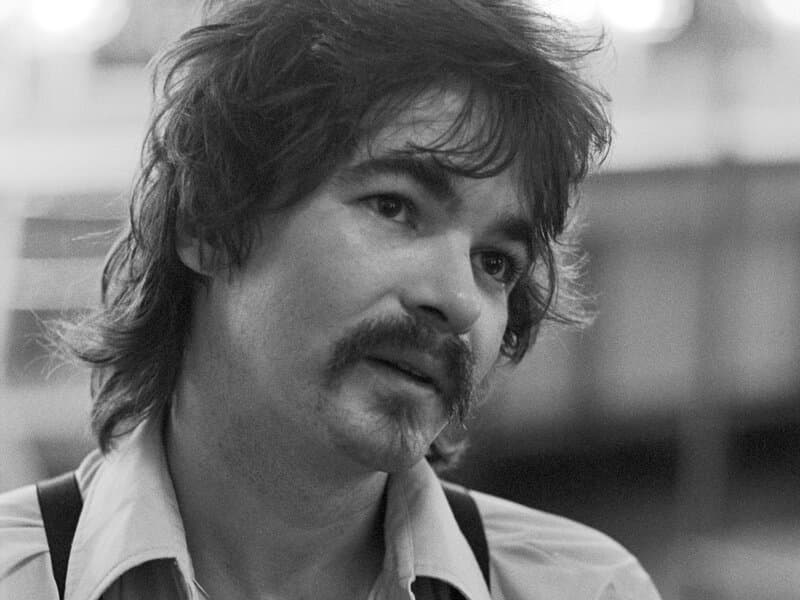
A Quiet Monday That Echoes for a Lifetime — Long Monday by John Prine
When you listen to Long Monday, you sense immediately that this is more than a song about a day of the week it’s a song about longing, memory, and the slow ache of solitude that lingers when love slips away.
Key Facts First: Long Monday appears on John Prine’s 2005 album Fair & Square, his 15th studio album, released April 26, 2005 on his own label Oh Boy Records. While the album itself reached #55 on the Billboard 200, it soared to #2 on the Billboard Top Independent Albums chart in the United States. Though Long Monday didn’t become a mainstream radio hit or a chart-topping single, it nonetheless carved out a revered place in the hearts of listeners and fans of heartfelt songwriting.
The Story Behind the Song
At the time of Fair & Square, John Prine was returning in full sincerity after having survived serious illness, he re-entered the studio with a quieter, more reflective voice. Long Monday, co-written with Keith Sykes, emerges from that tender, contemplative space.
In the lyrics we find a kind of bittersweet nostalgia: the warmth of love remembered, the comfort of weekend afternoons, and then the looming horizon of Monday a Monday not just of calendar but of emotional desolation. Lines like
“Gonna be a long Monday / Sittin’ all alone on a mountain / By a river that has no end”
capture a loneliness so deep it feels timeless.
Prine paints with simple, sincere strokes there is no grand drama, no overwrought tragedy, only the quiet pain of missing someone, the plaintive strum of acoustic guitar, and the ache of soli especially those who know what it means to hold a love in memory and then watch it fade Long Monday resonates as a universal portrait of longing. The fact that Prine chose to embrace subtlety rather than spectacle makes the song all the more powerful. As one write-up of the album notes, his voice on Fair & Square is “full of nostalgia and melancholy,” and Long Monday shines as one of its “gorgeous ballads.”
In that simplicity lies beauty: the gentle guitar, the warm, weathered timbre of his voice, the spare instrumentation that never distracts from the words. The song doesn’t demand, it whispers invites you to remember, to feel, to perhaps revisit your own memories of love lost, of weekends that once held magic, of Mondays that felt unbearably long.
Legacy & Reverence
Though Long Monday wasn’t a big hit in terms of charts, over the years it has become one of those hidden gems in John Prine’s catalog cherished by fans who appreciate the quiet strength of his songwriting. Some younger artists have picked it up: for example, John Oates released a cover of Long Monday in 2024 on his album Reunion, bringing a fresh voice to Prine’s tender lament, yet preserving the dignity and softness of the original.
After Prine passed away in 2020, the song took on new shades of meaning for many: a remembrance, a tribute, a way to mourn the absence of a gentle, wise storyteller. Notably, Eric Church performed an acoustic tribute version of Long Monday soon after Prine’s death a simple homage that underscored how deeply the song (and Prine himself) had touched lives.
Why It Speaks to the Older Soul
For those of us who have lived through years of love, loss, waiting, separation and memory Long Monday feels like a friend turning up the lights in an old, quiet room full of dust and memories. It doesn’t shout; it doesn’t dramatize. It doesn’t need to. It only needs a guitar, a voice, and the truth of experience.
In hearing it, we might recall a love from decades past, a lost connection, the bittersweet mix of warmth and regret. Or we might simply reflect on how time stretches when someone you care about is gone, or far away. In that gentle ache, there is a comfort because we are not alone in our longing.
In Conclusion
Long Monday may not be the most famous song by John Prine, but in its delicacy and honesty lies its power. It stands as a quiet testament to love, memory, longing and to the artistry of a man who could make heartbreak feel like a whispered prayer in a lonely room. Whenever I press play, I close my eyes and I remember. And somehow, in that remembering, I feel less alone.
If you’d like I’d be honored to write a similar introduction for another song from the past: maybe a classic from the 60s or 70s. Just name it, and I’ll dive in.
 Oldies Songs