
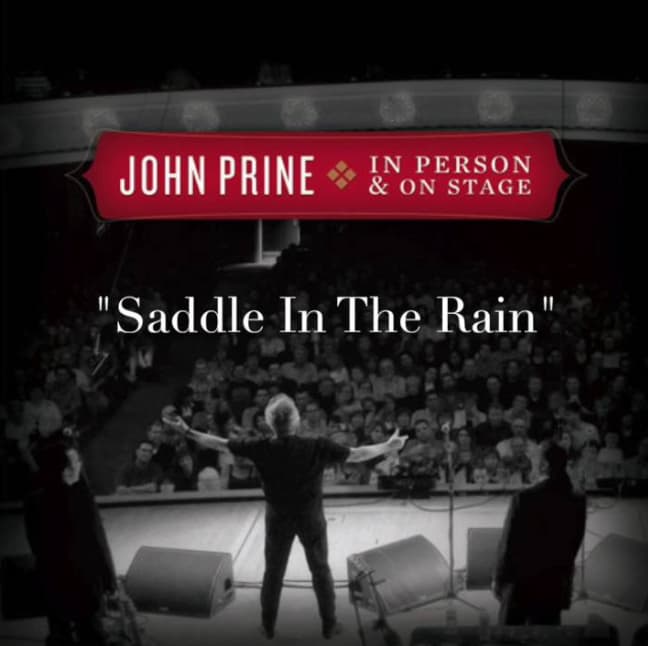
A Song About Carrying On When the Weather Turns Against You, and Doing It Quietly, With Dignity
When John Prine released “Saddle in the Rain” on his 1975 album Common Sense, it did not arrive as a hit single climbing the charts or blasting from car radios. Instead, it entered the world the same way many of Prine’s most meaningful songs did, quietly, thoughtfully, and with the confidence that time would do the heavy lifting. Common Sense, produced by Steve Cropper, reached the lower tier of the Billboard 200, peaking at No. 62, a modest commercial showing that never reflected the album’s artistic weight. In the United Kingdom, however, the record found a deeper audience, climbing into the Top 10 and signaling that Prine’s plainspoken wisdom traveled well beyond American borders.
“Saddle in the Rain” was never released as a single, and it never chased chart positions. That fact matters. This is not a song built for instant impact. It is built for recognition. The kind that comes when a listener hears their own life quietly mirrored back to them.
By the time Common Sense was recorded, John Prine was already known as a songwriter’s songwriter. His early work had introduced characters who felt borrowed from real kitchens, real highways, real waiting rooms. With “Saddle in the Rain,” Prine turned inward, offering a song that feels less like a story and more like a conversation with oneself during a difficult stretch of road. The title alone carries weight. To saddle up in the rain suggests obligation over comfort, responsibility over retreat. You do not wait for better weather. You go anyway.
Musically, the song is restrained. The arrangement leaves space. There is no dramatic crescendo, no lyrical flourish meant to impress. This is deliberate. Prine understood that songs about endurance should not sound heroic. They should sound familiar. The melody moves with the steady rhythm of someone who knows the journey is long and accepts it without complaint.
Lyrically, “Saddle in the Rain” speaks to perseverance without romance. There is no promise that things will improve quickly. There is no speech about victory. Instead, Prine offers something far more honest. Life demands that you keep moving even when conditions are poor, even when the sky gives no encouragement. The song does not ask for sympathy. It asks for resolve.
What makes this track particularly powerful is its emotional maturity. Prine does not write from the perspective of youth pushing forward on optimism alone. This is the voice of someone who understands disappointment, who has learned that resilience is often quiet and uncelebrated. The rain in this song is not a metaphor for tragedy. It is a metaphor for inevitability. Rain comes. You deal with it.
On Common Sense, an album that marked a sonic shift for Prine toward a smoother, Memphis-influenced sound under Steve Cropper’s guidance, “Saddle in the Rain” stands as a philosophical anchor. While other tracks explore love, irony, and social observation, this song settles into something deeper. It reflects the acceptance that comes with experience, the understanding that not every chapter of life needs explanation or resolution.
Over the years, listeners have returned to “Saddle in the Rain” not because it reminds them of a particular moment, but because it accompanies them through many. It is the kind of song that grows more meaningful as the listener grows older. Each passing year adds another layer of understanding. Another reason to nod quietly in agreement.
In the vast catalog of John Prine, this song may never be the most famous. It was never meant to be. Its value lies in its steadiness. Like a well-worn coat or a trusted road map, “Saddle in the Rain” earns its place by being there when needed. No drama. No illusions. Just the calm reassurance that moving forward, even under gray skies, is sometimes the bravest act of all.