
A rolling hymn to memory, movement, and the quiet brotherhood found along the rails of American folk music
Few songs in the American folk canon feel as lived in, as gently weathered by time, as City of New Orleans. Written by Steve Goodman in 1971, the song is not merely about a train ride. It is about the passage of eras, the subtle ache of change, and the shared human experience of watching the world drift past a window while knowing it will never look quite the same again. From its very first lines, the song announces itself as a meditation on movement and memory, and its place in music history was sealed almost immediately.
The most commercially successful early version of City of New Orleans was recorded by Arlo Guthrie and released in 1972 on the album Hobo’s Lullaby. That recording reached No. 18 on the Billboard Hot 100, an impressive achievement for a folk song so quiet in spirit and so reflective in tone. Years later, in 1984, Willie Nelson would take the song to No. 1 on the Billboard Hot Country Singles chart, confirming that Goodman’s composition had crossed genres without losing its soul. Yet long before chart positions and awards entered the story, the song lived most fully in the hands and voices of Steve Goodman and John Prine.
Goodman wrote City of New Orleans after taking an overnight train journey from Chicago to New Orleans with his wife. At the time, American passenger rail travel was in decline, and the song carries a clear awareness of that fading world. The train becomes a symbol of something larger than transportation. It stands for continuity, for shared public spaces, for the slow, communal rhythm of travel that once defined American life. The lyrics observe farmers, children, conductors, and aging travelers with a reporter’s eye and a poet’s restraint. There is no sentimentality forced upon the listener. The nostalgia arrives naturally, almost quietly.
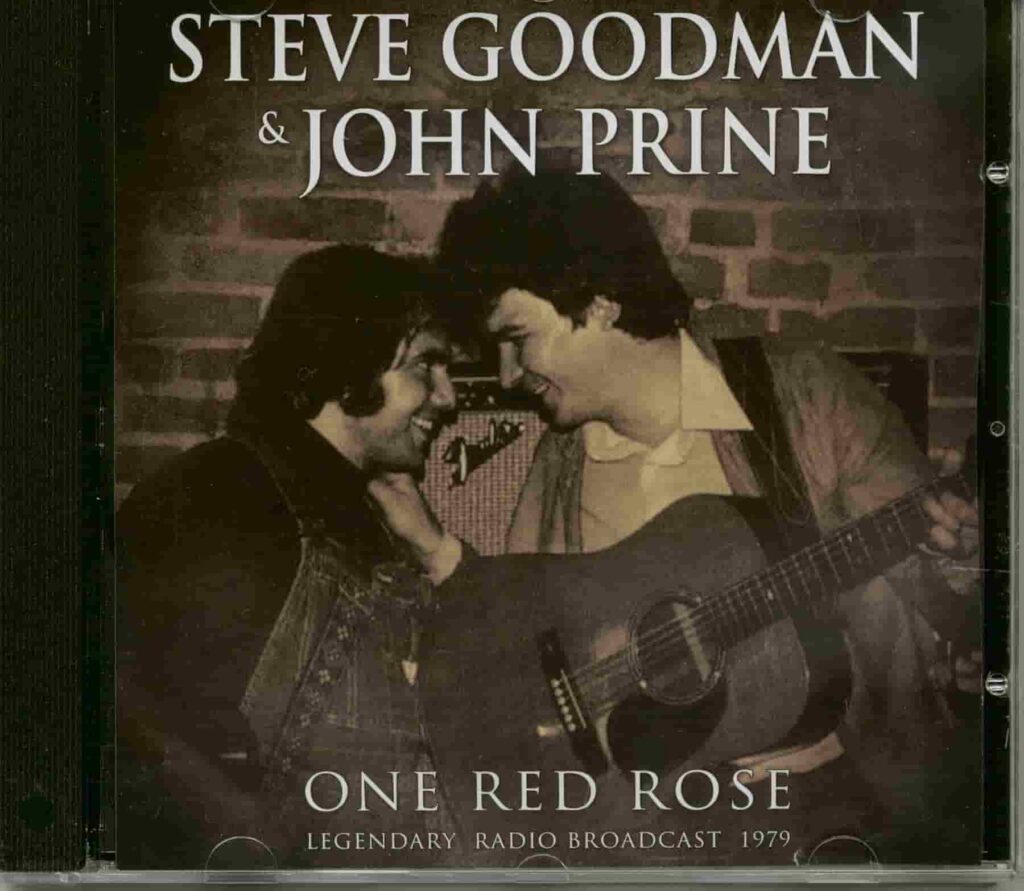
John Prine recognized the song’s depth immediately. Prine and Goodman were lifelong friends, bonded by Chicago’s folk scene and a shared belief that humor, sadness, and truth could exist comfortably within the same verse. Prine championed City of New Orleans early on, performing it live and speaking openly about its importance. While Goodman was its author, Prine was one of its great believers. In their joint performances, the song became something intimate and communal, less a showcase and more a conversation set to melody.
Those live performances remain legendary among listeners who value authenticity over polish. When John Prine and Steve Goodman sang the song together, there was often laughter between verses, small improvised moments, and an ease that cannot be rehearsed. The music breathed. The audience felt invited into a shared space, where the rails outside the window mirrored the long roads of friendship, creativity, and time itself. In those moments, City of New Orleans stopped being a song about a train and became a living memory unfolding in real time.
The meaning of City of New Orleans deepens with age. What once sounded like a snapshot of American travel now feels like a farewell letter to a slower, more connected way of moving through the world. The refrain about “good morning America, how are you” carries a gentle irony, neither bitter nor naïve. It asks a question rather than delivering a verdict. That openness is why the song endures. It trusts the listener to bring their own memories to the journey.
For Steve Goodman, the song became both a signature and a legacy, especially poignant given his early death in 1984. For John Prine, it remained a song he carried with affection and respect, a reminder of friendship and shared beginnings. Together, their association with City of New Orleans represents one of folk music’s quiet triumphs. A simple observation, honestly rendered, can outlast trends, charts, and decades.
In the end, City of New Orleans continues to roll forward, much like the train it honors. Not fast. Not loud. But steady, familiar, and deeply human.
 Oldies Songs