
A Single Rose as a Lifetime Gesture: Love, Friendship, and Quiet Truth in One Red Rose
When John Prine released Bruised Orange in 1978, the album arrived without spectacle but with immense emotional weight. It did not shout for attention. Instead, it spoke softly, the way meaningful conversations often do late at night. Among its most understated and enduring songs is One Red Rose, a composition co-written and performed with Steve Goodman, Prine’s closest musical companion. The song was never issued as a commercial single and did not enter the Billboard charts at the time of its release. Yet its absence from the rankings has done nothing to diminish its reputation. If anything, that quiet entry has become part of its lasting power.
Placed early in the Bruised Orange track list, One Red Rose establishes the album’s emotional vocabulary immediately. This is a record concerned with small truths, moral fatigue, and the dignity of ordinary feeling. The song’s opening image is deceptively modest: a single red rose, purchased with care and limitation, offered as a symbol of love that has been worn thin by time, distance, or circumstance. In Prine’s world, love is rarely grand. It is negotiated. It survives on gestures rather than promises.
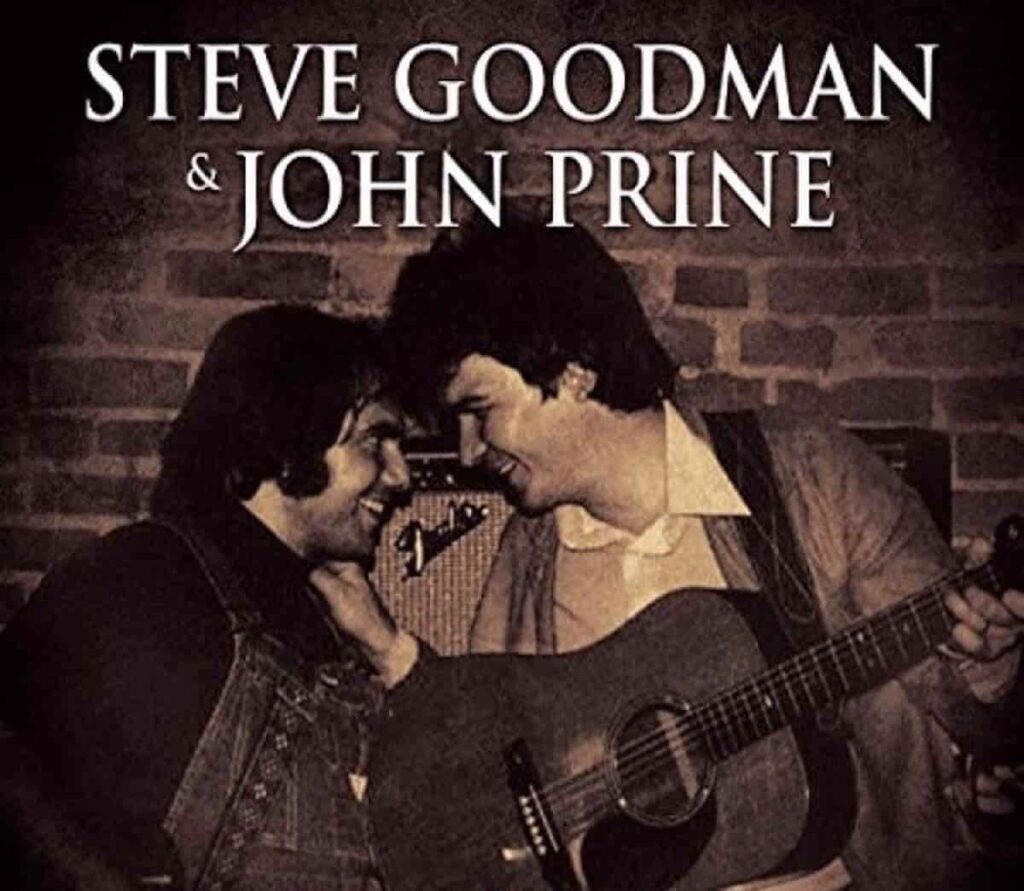
Musically, the arrangement is spare and unadorned. Acoustic guitars, gentle phrasing, and an unhurried tempo allow the words to breathe. When Steve Goodman joins John Prine in harmony, the song transforms from a solitary reflection into a shared confession. Goodman does not decorate the melody. He stands beside it. The blending of their voices reflects years of friendship formed in Chicago clubs, coffeehouses, and long drives between modest gigs. By 1978, both men had lived enough life to understand that restraint can speak louder than flourish.
The story behind One Red Rose is inseparable from the bond between its writers. John Prine and Steve Goodman were not merely collaborators. They were brothers in craft, shaped by humor, hardship, and a mutual respect for plainspoken truth. Goodman was already battling leukemia when Bruised Orange was released, a fact that adds an unspoken gravity to their performances together. There is no overt sadness in the song, yet mortality and fragility seem to hover just beneath the surface. Every line feels aware of time passing.
Lyrically, One Red Rose tells of love reduced to its essentials. A cheap hotel room. A hesitant reunion. The recognition that affection can remain sincere even when circumstances have stripped it of romance. The rose becomes both an offering and an apology. It acknowledges limitation while refusing to surrender tenderness. This is not a song about winning love. It is about honoring it, even when the outcome is uncertain.
What gives One Red Rose its enduring resonance is its honesty. There is no attempt to impress. No ambition for radio dominance. In an era increasingly defined by polish and commercial momentum, John Prine chose humility. He trusted listeners to lean in rather than be pulled. That trust has been rewarded across decades of rediscovery.
Today, One Red Rose stands as a quiet testament to a particular kind of songwriting, one rooted in empathy, friendship, and emotional precision. It reminds us that the most meaningful songs often arrive without ceremony, carrying their truths in simple images and familiar voices. Long after chart positions fade and trends dissolve, a single red rose still says exactly what it needs to say.