
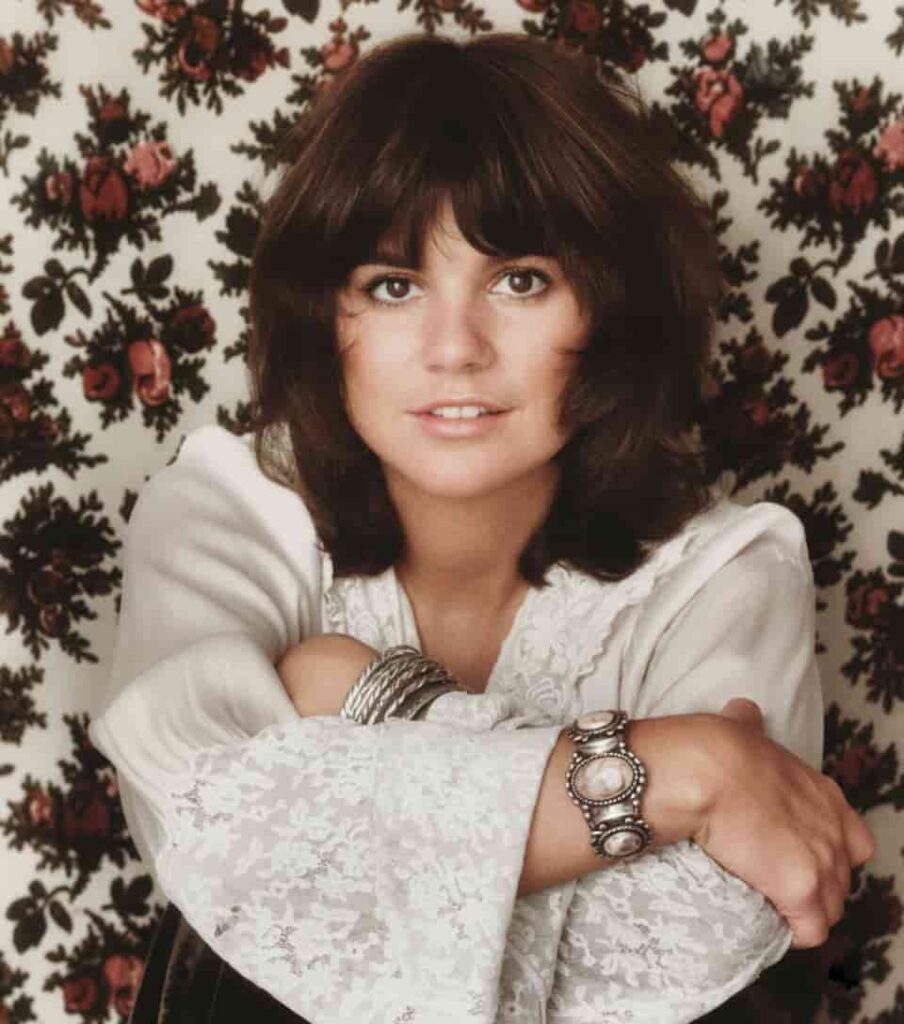
“Love Has No Pride” stands as a quiet confession about surrender, dignity, and the human cost of loving too deeply
When Linda Ronstadt released Don’t Cry Now in late 1973, the album did not arrive with the weight of commercial expectation that would later follow her. It was a transitional record, issued on Capitol Records, and it peaked modestly within the Top 50 of the Billboard 200 rather than dominating the charts. No singles from the album became major radio hits. Yet buried within its track list was a performance that would quietly alter the way listeners understood Ronstadt’s artistry. That song was “Love Has No Pride.” It was never released as a commercial single, never designed to climb a chart, and never meant to impress. And precisely because of that, it endured.
Originally written by Eric Kaz and Libby Titus, “Love Has No Pride” existed on paper as a restrained, almost conversational lament. It carried no dramatic twists, no clever hooks, and no obvious moment built for applause. What it offered instead was emotional honesty. When Ronstadt chose to record it, she did not reshape the song to fit a pop framework. She leaned into its fragility. That decision marked one of the earliest moments when her interpretive depth became impossible to ignore.
From the opening lines, Ronstadt sings not as a performer but as someone admitting a truth she wishes were not her own. Her voice enters quietly, low and exposed, with none of the power she was already capable of delivering. This restraint is the point. The song is about returning to a love that has already wounded you, knowing the cost, knowing the loss of self-respect involved, and choosing it anyway. In that space, love is not romanticized. It is portrayed as humbling, humiliating, and yet inescapably human.
The arrangement mirrors this emotional economy. A gentle piano carries the harmonic structure. The steel guitar lingers like a memory that refuses to leave. Nothing intrudes. Nothing competes. The song unfolds at the pace of thought, not performance. Ronstadt allows silence to do as much work as sound, and that silence feels heavy with things left unsaid. By the time she reaches the final lines, there is no catharsis, only acceptance.
Critics at the time noticed. While Don’t Cry Now did not immediately redefine Ronstadt’s career, “Love Has No Pride” became a critical touchstone. It revealed a depth of emotional control that would later define her most celebrated recordings. In live performances throughout the 1970s and beyond, the song remained a fixture, often drawing some of the most hushed and attentive moments of her concerts. Audiences did not applaud out of excitement. They responded out of recognition.
The significance of “Love Has No Pride” lies in its refusal to flatter the listener. It does not offer wisdom, closure, or redemption. It simply states a truth many already know but rarely articulate: that love can strip away dignity, and that the act of returning can feel both shameful and necessary. Ronstadt does not judge the narrator. She inhabits her. That empathy is what gives the song its lasting power.
In retrospect, this recording feels like a quiet prologue to everything that followed. Before the chart-topping singles, before the arena tours, before the era-defining albums, there was this moment of restraint. Linda Ronstadt, still early in her solo career, trusted that emotional truth alone was enough. History proved her right. More than five decades later, “Love Has No Pride” remains one of the clearest expressions of her artistry, a reminder that sometimes the most enduring music is the music that never raises its voice.
 Oldies Songs