
“Tumbling Dice” — a restless gamble of heart and fate, re-imagined by Linda Ronstadt
When Linda Ronstadt lent her voice to Tumbling Dice in 1977-78, she transformed a swaggering rocker from The Rolling Stones into a rock-infused confession that resonated differently a bold statement about risk, vulnerability, and a woman confronting the odds.
Chart success and release context
Originally released by The Rolling Stones in 1972 on their album Exile on Main St., “Tumbling Dice” was the lead single and quickly climbed the charts peaking at #7 on the U.S. Billboard Hot 100, and #5 in the U.K. charts.
Five years later, Linda Ronstadt included her cover of the song on her 1977 album Simple Dreams. When released as a single in spring 1978, her version reached #32 on the Billboard Hot 100, and also charted on Adult Contemporary charts in both the U.S. and Canada.
Thus, her interpretation continued the song’s commercial life giving it a new air for late-1970s audiences, especially those drawn to her warm but versatile voice.
The story behind the cover
What makes Ronstadt’s rendition of “Tumbling Dice” particularly touching is the back-story: her band had long played the Stones’ version during sound checks but none really knew the lyrics.
At one of her shows, she encountered Stones frontman Mick Jagger backstage, who challenged her “You do too many ballads … you should do more rock ’n’ roll.” Taking the challenge in stride, she asked him to write down the lyrics so she could learn them and thus began her journey with “Tumbling Dice.”
Recording the track for Simple Dreams must have felt like a quiet rebellion. The album known for blending rock, country, folk already showcased her chameleonic range. In that moment, she embraced a grittier, edgier side: not just the soft melodies or introspective ballads that older listeners knew her for but a rawer, more daring energy.
Meaning and emotional resonance
The original version of “Tumbling Dice” by the Stones speaks of a restless gambler a man drifting from lover to lover, unable to stay. The dice become a metaphor for chance, risk, and the uncertain morality of love.
Ronstadt’s version however comes from a different perspective. She doesn’t merely echo the swagger: she infuses vulnerability and defiance. The opening line of her cover “People try to rape me / Always think I’m crazy” immediately flips the narrative, underscoring pain, violation, but also a raw refusal to be silenced.
Through her voice, the song becomes less about a man’s libertine gamble, and more about a woman’s struggle to own her story, to assert agency in a world that often reduces her to a “bet.” For an older listener one who remembers the social shifts of the 60s and 70s that shift may echo broader truths: about freedom, about contention, about claiming one’s right to speak, to rebel, to heal.
Moreover, placing “Tumbling Dice” in the context of Simple Dreams an album interwoven with longing, nostalgia, and reinvention gives it extra weight. Listening to it now, decades later, we don’t just hear a cover: we hear a statement. A woman unafraid to reinterpret, to challenge, to transform.
Legacy and why it matters still
Critics and fans alike often say that Ronstadt’s take is so powerful, so distinct, that she “practically owned” the song.
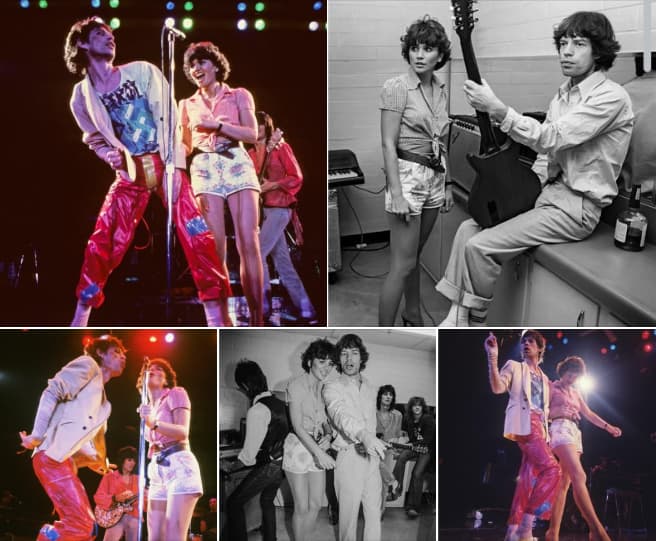
In 1978 she even joined the Rolling Stones on stage in Tucson, Arizona singing “Tumbling Dice” with them live. Imagine the hush then turning into applause, as old-school rock met a new, fearless voice.
For many of us now especially those who lived through that era her version carries bittersweet nostalgia. It reminds us of smoky bars and vinyl spinning, of late-night drives and introspective reflection. It’s not just a cover: it’s a conversation across time between artists, eras, and emotions.
Tumbling Dice in Linda Ronstadt’s hands becomes a song about risk not just in love, but in identity. About standing vulnerable, yet unbroken. About rolling the dice on one’s own terms.
 Oldies Songs