
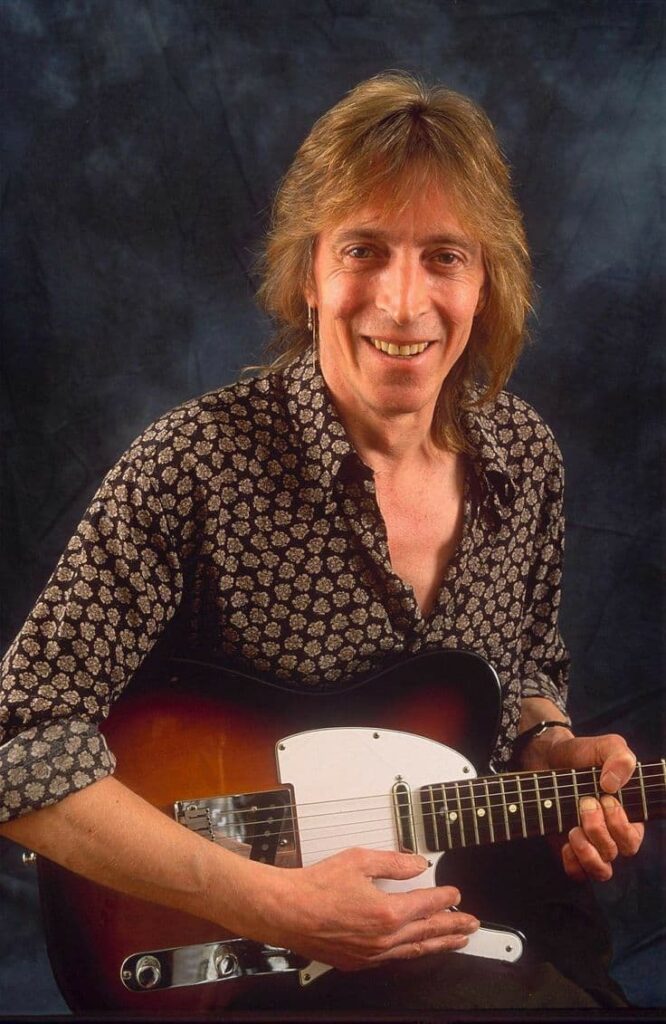
Only After Dark — a pulse of mystery, desire, and the untamed imagination of rock’s golden years
There’s a certain electricity that courses through “Only After Dark”, the kind of charge that instantly pulls you back into the wild, glitter-dusted nights of early 1970s rock. Sung and shaped by the incomparable Mick Ronson, the track first appeared on his 1974 solo album Slaughter on 10th Avenue — a record that marked his step from guitar legend to front-and-center visionary. Though the song did not chart on major international rankings, it gained a lasting cult reverence among fans of glam rock, Bowie’s orbit, and the experimental brilliance of the era.
From the first notes, you can feel Ronson’s hand — both as a guitarist and an arranger — pushing boundaries with the same boldness that made him essential to the sound of Bowie’s Ziggy years. But here, in “Only After Dark,” he stands alone, revealing the artist behind the myth. The track isn’t simply a showcase of his technical skill; it is a glimpse into how Ronson heard the world: moody, cinematic, drenched in tension and possibility.
The story behind the song reaches into Ronson’s creative partnership with songwriter Scott Richardson (credited as Scott Richard). The two crafted something that feels half-dream, half-confession — a piece that invites the listener into a world where desire and fantasy are allowed to breathe. “Only After Dark” carries that velvet-shaded atmosphere so many listeners recall from nights of their youth: when the world felt louder, colors were brighter, and emotions seemed to echo a little longer in the air.
From its hypnotic rhythms to its smoldering guitar lines, the song plays like a slow descent into a secret life — one lived not under the sun, but under neon lights and rising moon shadows. Ronson sings with a blend of restraint and quiet seduction, as though letting us in on something forbidden but irresistible. It’s the kind of performance that reminds you how much of the 70s lived in the space between what was shown and what was felt.
For listeners who lived through that decade — or simply loved its music deeply — “Only After Dark” carries a sense of nostalgia unlike most of Ronson’s catalog. It captures the allure of those nights when music wasn’t just entertainment; it was liberation. You can almost picture dance floors lit in shimmering gold, clothes that glowed under club lights, the laughter and movement of people who felt time stretching open before them.
And yet, beneath all the glitter and edge, there’s a subtle melancholy in the song — the kind that comes from knowing that night will always slip into dawn. Ronson understood this duality well. His guitar playing has always held both fire and fragility, and in this song, that balance becomes its emotional anchor. It’s not just a glam rock anthem; it’s a memory captured in sound, an echo of a world where art and rebellion intertwined.
What makes “Only After Dark” endure isn’t fame or chart numbers, but the emotional truth sewn into its atmosphere. It reminds us of the version of ourselves that only appears when the world grows quiet — the one who dances a little freer, dreams a little wilder, and feels the pull of music deep in the bones.
For anyone who listens today, especially those who remember the era firsthand, the song feels like opening an old photograph: colors slightly faded, emotions still vivid. A reminder of nights that came alive only after dark — and of artists like Mick Ronson who gave those nights a soundtrack that still glows, decades later.