
When the Song Returns to Its Roots, Two Voices Carry the Weight of Memory and Truth
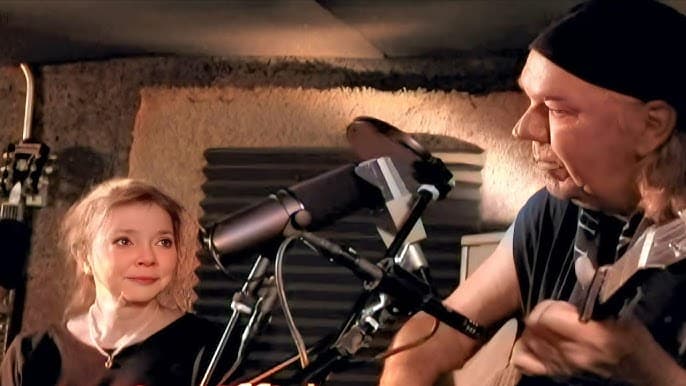
In 2011, Nanci Griffith reunited on stage with Eric Taylor to perform “Deadwood, South Dakota”, the very song he had written decades earlier and she had immortalized on her 1988 live album One Fair Summer Evening. What unfolded was not merely a performance. It felt like a quiet circle closing, where the storyteller and the voice that carried his story finally stood side by side.
From the first lines, the atmosphere is unmistakably intimate. The imagery of a Deadwood saloon returns, filled with laughter, aging men, and stories that blur fact and fiction. Yet this time, something is different. With Eric Taylor present, the song no longer feels like a retelling. It feels like a memory being revisited by the one who first lived inside it.
Nanci Griffith’s voice, gentle and weathered by time, moves with even greater restraint. She does not try to recreate the clarity of her earlier years. Instead, she leans into the fragility of the moment. Each lyric lands softer, but deeper. When she sings about gold lying cold in pockets or the sun setting on the trees, the images feel less like poetry and more like truths that have settled over years of reflection.
Beside her, Eric Taylor brings a grounded presence. His delivery is plainspoken, almost understated, but it anchors the performance in authenticity. There is no need for embellishment. The song already carries enough weight. Together, their voices do not compete. They coexist, like two perspectives of the same long journey.
The most striking element of this 2011 performance is its quiet honesty. The controversial refrain about a land where “the white man does as he pleases” is not softened or reinterpreted. It is allowed to stand as written, a reminder of the complicated history embedded within the song. In this setting, it feels even more reflective, less like a statement and more like a question left unanswered.
Over time, “Deadwood, South Dakota” has always been a song about storytelling and memory. But in this reunion, it becomes something more. It becomes about time itself. About how songs change as the people who carry them change. And in that moment, as the final notes fade, what remains is not just the story of Deadwood, but the quiet understanding that some songs are never truly finished.