
A Quiet Road of Memory and Longing: The Enduring Soul of “Gulf Coast Highway”
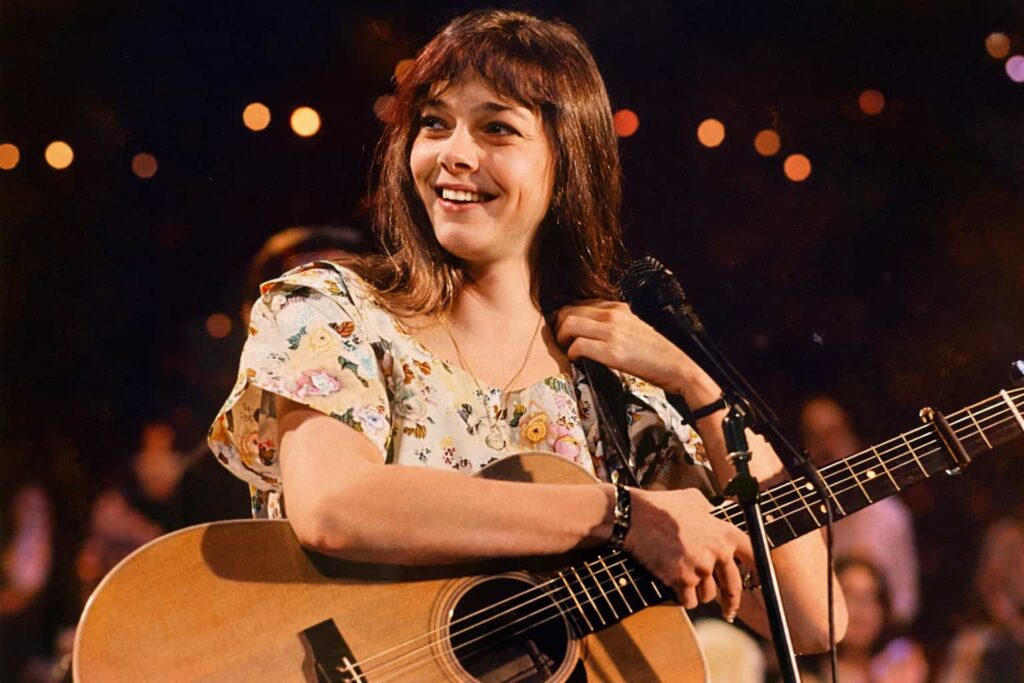
Few songs capture the gentle ache of time passing quite like Gulf Coast Highway, performed so tenderly by Nanci Griffith with pianist and co-writer James Hooker. In live performances, the song feels less like a concert piece and more like a shared memory—one that drifts slowly across the warm air of the American South, carrying with it reflections about love, family, and the quiet dignity of ordinary lives.
The song first appeared on Griffith’s 1988 album Little Love Affairs. Unlike many commercial country releases of the late 1980s, “Gulf Coast Highway” was never designed as a chart-chasing single. It did not climb the Billboard Hot Country Songs rankings nor chase the bright spotlight of radio dominance. Yet over time, the song achieved something far more meaningful: it became one of Griffith’s most cherished compositions, embraced deeply by listeners who found their own stories hidden in its quiet lines.
A Song Born from Real Soil and Salt Air
The origins of “Gulf Coast Highway” are rooted in the landscape of Texas and the American Gulf Coast, where Griffith spent much of her youth. She co-wrote the song with Danny Flowers and James Hooker, drawing from vivid images of coastal life: shrimp boats rocking in the tide, oil fields stretching toward the horizon, and the endless road that threads through small towns where generations grow up and grow old together.
The Gulf Coast Highway itself is not merely a place in the song—it is a symbol. For many Americans living along that stretch from Texas through Louisiana and beyond, the highway represents both livelihood and memory. Fishermen, oil workers, farmers, and families all share that landscape. Griffith captured that collective experience with remarkable restraint, choosing storytelling over drama, reflection over spectacle.
The Story Within the Lyrics
“Gulf Coast Highway” unfolds as a series of vignettes about life’s passage. The narrator remembers a childhood along the coast, the hard work of parents, and the quiet dreams of young love. There is no grand tragedy, no theatrical heartbreak. Instead, the song speaks about something deeper: the inevitable passing of time and the fragile beauty of the lives we build.
One of the most moving aspects of the song is its perspective on aging and mortality. The narrator imagines returning to the land after death, becoming part of the soil beside the road that shaped their life. It is not a sad vision—it feels peaceful, almost comforting. In that moment, the highway becomes more than a road. It becomes a circle, connecting generations who came before and those who will follow.
The Power of the Live Performance
When Nanci Griffith performs the song live with James Hooker, the arrangement becomes even more intimate. Hooker’s piano lines move gently beneath Griffith’s voice, creating a space where every lyric can breathe. There is a quiet patience in the performance, as if the music understands that memory should never be rushed.
Griffith’s voice—soft, slightly fragile, yet deeply expressive—carries a storyteller’s wisdom. She never oversings the melody. Instead, she delivers each line with a reflective calm that invites listeners to sit with their own memories.
Those who experienced Griffith’s concerts often recall how still the room would become during this song. It had a way of turning a crowded hall into something personal, as though each listener were quietly driving that coastal road in their own past.
Why the Song Endures
Decades after its release, “Gulf Coast Highway” remains one of the defining pieces in Griffith’s catalog. It stands alongside other narrative classics of American songwriting that value humanity over spectacle.
Part of its lasting power comes from its universality. While the imagery is distinctly Texan—shrimp boats, salt marshes, and the long coastal road—the emotions belong to anyone who has ever looked back at the place that shaped them.
The song reminds us that life’s greatest stories are often the quiet ones: the people who worked hard, raised families, loved deeply, and left behind memories woven into the land itself.
And somewhere, if you listen closely, you can almost hear that highway again—stretching endlessly along the Gulf, carrying echoes of voices that once called it home.
 Oldies Songs