
A Song of Quiet Sorrow: “Tecumseh Valley” and the Voice That Carried Its Ghosts Across Time
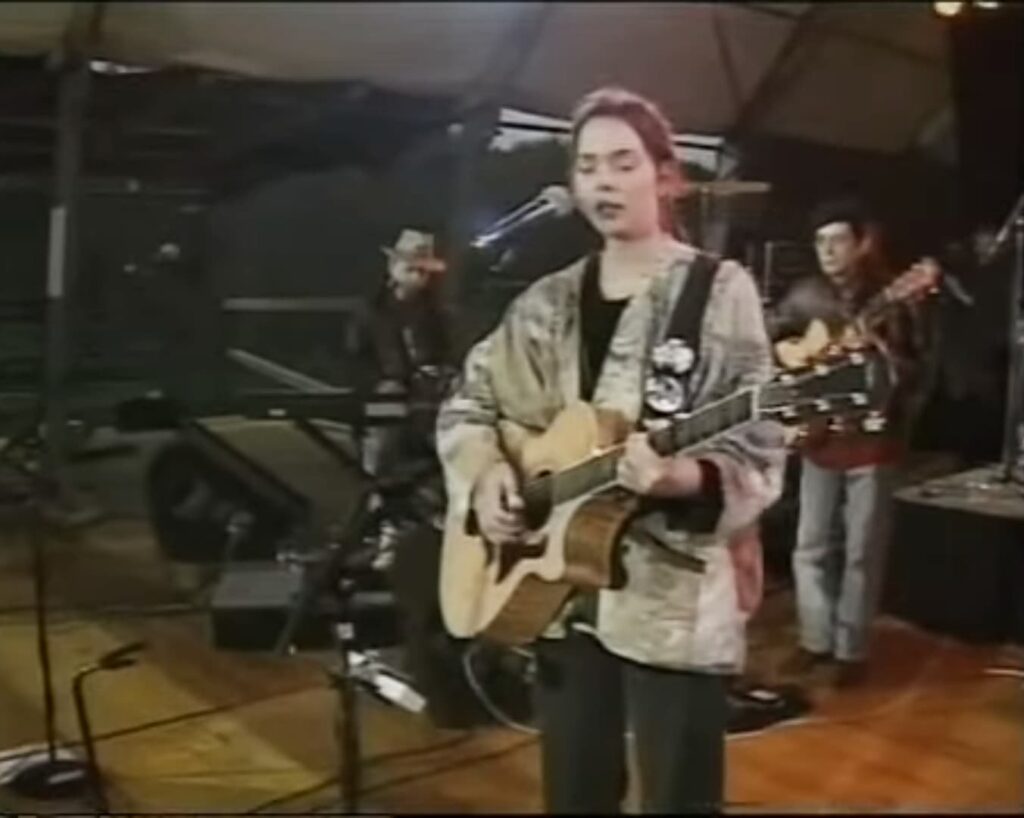
In 1993, during a gentle live appearance in Norway on Down On The Farm, Nanci Griffith delivered a haunting rendition of “Tecumseh Valley”, a song written by Townes Van Zandt that had long been regarded as one of the most heartbreaking narratives in American folk music. Though not her composition, Griffith’s interpretation gave the song a fragile, almost sacred stillness that felt entirely her own.
Originally released by Townes Van Zandt in 1968, “Tecumseh Valley” tells the story of Caroline, a young woman whose life slips quietly into hardship and isolation. By the time Griffith performed it in Norway, the song had already lived many lives. Yet on that stage, far from Texas where its roots began, it felt as if the story was being told for the very first time.
There was no grand introduction, no attempt to dramatize the moment. Griffith stood with her guitar, her voice soft and unguarded. From the opening lines, the room seemed to lean in. Her phrasing was delicate, almost conversational, allowing each word to settle before moving on. She did not rush the story. She carried it.
What made this performance remarkable was its restraint. Griffith did not try to out-sing the sorrow embedded in the lyrics. Instead, she stepped aside and let the song breathe. The tragedy of Caroline unfolded not through force, but through quiet inevitability. Each verse revealed another layer of loneliness, another step toward a fate that felt both distant and painfully familiar.
The Norwegian audience, though separated by language and geography from the song’s origins, responded with profound stillness. That silence became part of the performance itself. It was the kind of silence reserved for moments when music stops being entertainment and becomes something closer to memory.
In Griffith’s hands, “Tecumseh Valley” was not just a story about one life. It became a reflection on all the unnoticed lives that pass through the world without recognition. Her voice, clear yet tender, carried that weight without ever breaking.
When the final note faded, there was no need for explanation. The song had already said everything. And in that quiet space, Nanci Griffith reminded everyone listening that some stories do not need to be changed to remain timeless. They only need to be told with honesty.
 Oldies Songs